
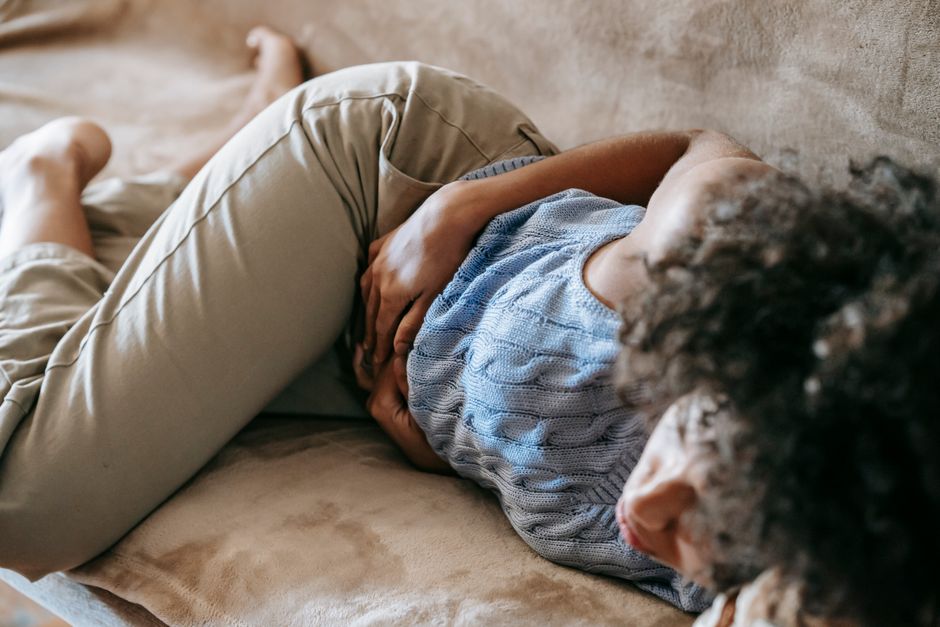
Period bloating usually eases within one to three days after your period starts, and for most people it is gone by the time bleeding ends. The discomfort builds in the days before your period, peaks around the first day or two of bleeding, and then fades as hormone levels change. If bloating lingers well past your period or shows up at other times of the month, that pattern points to something other than the menstrual cycle.
Why Does Period Bloat Happen in the First Place?
Menstrual bloating is driven by shifting hormones, not by eating too much or by poor digestion. In the second half of the cycle, after ovulation, levels of progesterone rise while estrogen fluctuates. Progesterone can slow the movement of the digestive tract, which allows gas and stool to sit longer in the intestines. That slowdown is one reason many people feel heavy, full, or gassy in the days before bleeding starts.
At the same time, estrogen and progesterone influence how the body handles fluid and sodium. Changes in these hormones can lead the body to hold on to more water and salt than usual. Some of that fluid sits in the tissues of the abdomen, which adds to the sense of pressure and puffiness.
It helps to separate two things people call “bloating.” One is water retention — actual fluid in the tissue. The other is gas and stool moving more slowly through the gut. Both happen around the same time in the cycle, so they often get lumped together. The distinction matters because they respond to different things.
Prostaglandins, the chemical messengers that help the uterus contract during a period, also play a role. They can affect the smooth muscle of the bowel, which is part of why some people notice changes in digestion right around the start of bleeding.
When Does Period Bloat Go Away?
For most people, bloating starts to improve within the first day or two of bleeding and is largely resolved by the end of the period. The typical pattern looks like this: symptoms build in the three to five days before bleeding begins, feel worst on the day before or the first day of the period, then steadily ease.
The reason it clears is that hormone levels drop sharply once bleeding starts. Estrogen and progesterone fall to their lowest points early in the cycle. As those levels come down, the fluid and digestive effects they were driving tend to reverse. For many people, the relief is noticeable within a day or two.
Timelines vary. Some people feel back to normal within 24 hours of their period starting. Others notice lingering puffiness for two or three days. Both fall within a normal range. What is not typical is bloating that stays for the whole period, keeps going after bleeding stops, or appears in the middle of the cycle when hormones are not shifting in the same way.
If bloating does not follow this pattern — if it is constant, worsening over time, or tied to other symptoms — that is a reason to look beyond the menstrual cycle. Persistent or progressive bloating is one of those symptoms that deserves a medical conversation rather than a wait-and-see approach.
What Makes Period Bloat Better or Worse?
No single intervention works for everyone, and the evidence for many popular remedies is limited. That said, a few approaches have reasonable support and are commonly recommended by clinicians.
- Watch sodium. High-salt meals tend to worsen water retention. Cutting back on processed and restaurant food in the days before your period is one of the more reliable steps.
- Stay hydrated. Drinking enough water sounds counterintuitive when you feel puffy, but restricting fluids can push the body to hold on to more.
- Move your body. Light activity — walking, stretching, gentle exercise — helps move gas through the digestive tract.
- Limit carbonated drinks and gas-producing foods if you notice they make things worse. This is individual, not universal.
- Consider magnesium. Some studies suggest magnesium may ease premenstrual symptoms including bloating, though results are not consistent across all trials.
On the other side, alcohol and caffeine affect different people differently. Some find they worsen symptoms; others notice no change. There is no strong evidence that either reliably causes or relieves menstrual bloating, so the honest advice is to notice your own pattern.
One thing worth flagging: many products marketed for “hormonal bloat” or “cycle support” have no clinical trials behind them. A supplement being sold for period bloating is not the same as a supplement shown to help it. If a label promises fast, guaranteed relief, that is a marketing claim, not a study result.




How Is Period Bloat Different From Other Bloating?
Bloating that comes and goes with the menstrual cycle has a predictable rhythm. It shows up in the same phase each month, tracks with your period, and resolves on its own. That pattern is the key feature.
Bloating from other causes does not follow that rhythm. It may be constant, get worse over weeks or months, or come with symptoms that have nothing to do with the cycle. Some conditions that cause bloating include digestive disorders, food intolerances, and — less commonly — more serious problems. Bloating that is persistent, new, or accompanied by weight loss, changes in bowel habits, or pain is not something to attribute to hormones without checking.
Tracking your symptoms across two or three cycles can help. If bloating lines up with the days before your period every time, the hormonal explanation is likely. If it does not, the pattern itself is useful information to bring to a clinician.
When Should You Talk to a Doctor About Bloating?
Occasional bloating around your period is normal and does not need medical attention. Certain patterns do warrant a conversation.
- Bloating that lasts longer than your period or does not resolve between cycles
- Bloating that is getting worse over time
- Bloating with significant pain, especially pain that is new or severe
- Bloating with changes in bowel habits that persist
- Bloating with unexplained weight loss or feeling full quickly when eating
- Bloating that starts after menopause
These signs do not mean something serious is present. They mean the symptom does not fit the typical hormonal pattern, and it is worth having a clinician assess it. Persistent bloating in particular is a symptom that guidelines advise taking seriously rather than managing at home indefinitely.
For people whose cyclical bloating is severe and disruptive, there are prescription options a clinician may discuss, including hormonal contraception and certain medications for premenstrual symptoms. These are decisions to make with a doctor, not from a search result.
Does Period Bloat Mean Anything Is Wrong?
No. Cyclical bloating is a normal response to normal hormone changes. It is uncomfortable, but it is not a sign of disease on its own.
The confusion comes from the word itself. “Bloating” describes a sensation — fullness, pressure, tightness — not a single condition. The same word gets used for hormonal water retention, gas from slow digestion, and symptoms of unrelated medical problems. When people search for answers, they often get information meant for a different cause.
That is why the timing matters more than the symptom. Bloating that arrives before your period and leaves with it is behaving the way hormonal bloating behaves. Bloating that ignores your cycle is telling you something different, and that is the version worth investigating.
Frequently Asked Questions
How long does period bloating usually last?
Most people notice bloating easing within one to three days after their period starts, and it is usually gone by the end of bleeding. The worst symptoms tend to fall on the day before or the first day of the period.
Does period bloat go away after your period ends?
For most people, yes — bloating resolves as hormone levels drop early in the cycle. If bloating continues after your period ends or shows up between cycles, that pattern is worth discussing with a doctor.
What helps period bloating go away faster?
Cutting back on salt, staying hydrated, and light movement are the steps with the most consistent support. Magnesium may help some people, though study results vary.
Can bloating after your period mean something else?
Yes. Bloating that does not follow the menstrual cycle, gets worse over time, or comes with pain, bowel changes, or weight loss is not typical hormonal bloating and should be checked by a clinician.
