
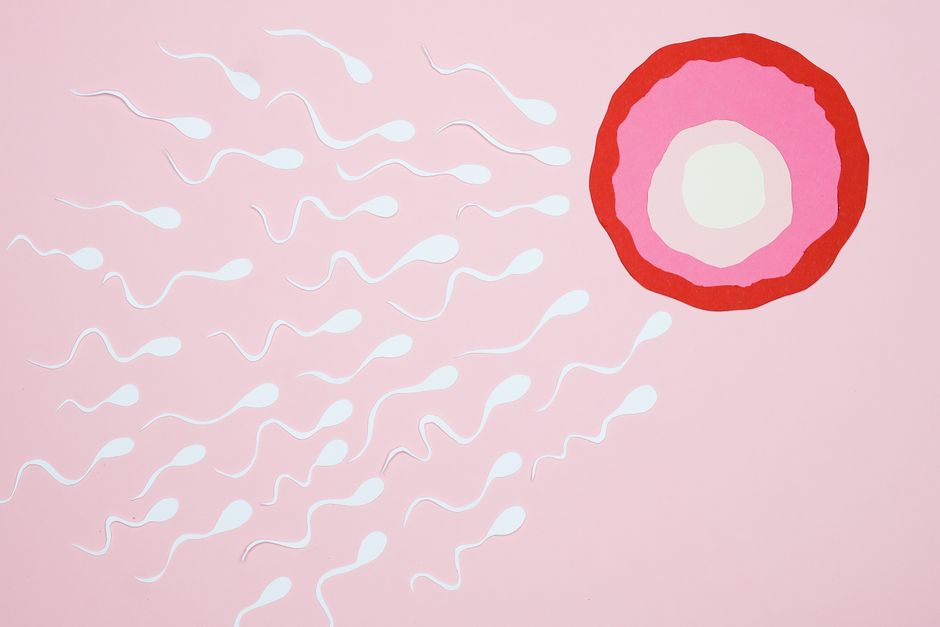
Ovulation cramping — often called mittelschmerz — typically happens about 14 days before your next period begins. In a 28-day cycle, that usually lands around day 14, though the exact timing shifts with your cycle length. The cramp can occur just before, during, or shortly after the egg is released, and it usually lasts anywhere from a few minutes to a couple of days.
When Does Ovulation Cramping Occur In Your Cycle?
Ovulation cramping happens near the midpoint of your cycle, but the midpoint is not always day 14. The timing depends on when you ovulate, and ovulation timing varies from person to person and even from cycle to cycle.
The key fact is that ovulation occurs roughly 14 days before your next period starts. That is more reliable than counting forward from your last period. The second half of the cycle — the luteal phase — is fairly consistent in length for most people. The first half — the follicular phase — is where the variability lives.
So if your cycles run 35 days, ovulation is more likely around day 21. If they run 24 days, it may be closer to day 10. Ovulation cramping would follow that same timing.
What Causes Ovulation Cramping?
The pain comes from the ovary releasing an egg. As the follicle matures, it grows and stretches the surface of the ovary. When it ruptures to release the egg, that stretching and the small amount of fluid or blood that escapes can irritate the surrounding tissue.
That irritation is what you feel. Some people feel a dull ache. Others feel a sharp, sudden twinge. The sensation can last minutes or linger as a mild soreness for a day or two.
Mittelschmerz is not dangerous. It is a normal part of the ovulatory process for people who experience it. Not everyone does — many people ovulate without feeling anything at all.
What Does Ovulation Cramping Feel Like?
Ovulation cramping usually feels different from menstrual cramps. It tends to be:
- One-sided, felt on the left or right lower abdomen
- Sharp or sudden at onset, then fading to a dull ache
- Mild to moderate in intensity
- Short in duration — minutes to about 48 hours
The side can switch from cycle to cycle. Ovaries typically alternate, though not always in a strict pattern. Some people notice the pain on the same side for several cycles, then it changes.
Menstrual cramps tend to be centered lower in the pelvis, come in waves, and last longer — often the first day or two of bleeding. Ovulation pain is more localized to one side and shorter.
Some people also notice a small amount of spotting or a change in cervical mucus around this time. Cervical mucus often becomes clearer, wetter, and more stretchy — similar to raw egg white — as ovulation approaches.


How Can You Tell If Cramping Is From Ovulation?
Timing is the biggest clue. If the cramp shows up roughly two weeks before your expected period, ovulation is a reasonable explanation. Tracking your cycles for a few months can help you see the pattern.
Other signs that tend to cluster around ovulation include:
- A slight rise in basal body temperature — but this happens after ovulation, not before
- Changes in cervical mucus
- A small increase in libido for some people
- Mild breast tenderness in some cases
Basal body temperature is worth a specific note. Many people assume the temperature rise predicts ovulation. It does not. The rise confirms that ovulation has already happened. By the time you see it, the fertile window is largely closing.
Ovulation predictor kits detect a surge in luteinizing hormone (LH) in urine. That surge usually happens about 24 to 36 hours before the egg is released. These kits can help narrow down timing, though they are not perfect and can give false positives in some situations.
When Should Ovulation Pain Be Taken Seriously?
Mild one-sided cramping near midcycle is generally not a concern. But some pain that feels similar can signal something else.
Seek medical evaluation if you have:
- Severe or worsening pain
- Pain that lasts more than a couple of days
- Fever, nausea, or vomiting along with the pain
- Pain during pregnancy — this needs prompt attention
- Heavy bleeding or pain that does not follow a midcycle pattern
Conditions that can mimic ovulation pain include ovarian cysts, endometriosis, appendicitis, and ectopic pregnancy. These are not the same as mittelschmerz, and they need different care. A sharp pain on the lower right side, for example, could involve the appendix rather than an ovary.
This is where self-diagnosis gets risky. If the pain is new, intense, or unusual for you, get it checked. Ovulation cramping is a diagnosis of pattern and timing, not something you can confirm on your own with certainty.
Does Ovulation Cramping Mean You Are Fertile Right Now?
Not exactly. The cramp happens around the time of ovulation, but the fertile window is broader than the moment of the cramp. Sperm can survive in the reproductive tract for several days. The egg survives roughly 12 to 24 hours after release.
That means the days leading up to ovulation are the most fertile, not the day of the cramp itself. If you feel the cramp, ovulation may be happening or may have just happened. The window is closing, not opening.
For anyone trying to conceive, this timing matters. For anyone trying to avoid pregnancy, relying on ovulation pain alone is not a reliable method. It is too variable and too easy to mistake for other sensations.
Can Ovulation Cramping Change Over Time?
Yes. Some people feel ovulation pain for years, then it fades. Others never feel it, then start noticing it later. Hormonal shifts, age, and changes in cycle regularity can all affect whether and how you feel it.
People who use hormonal birth control often do not ovulate, so they typically do not experience mittelschmerz while on it. After stopping, cycles can take time to regulate, and ovulation pain may or may not return in the same way.
Perimenopause is another period of change. Cycles can become irregular, ovulation can become less predictable, and the timing of any midcycle discomfort may shift. This is a normal part of the transition, but new or worsening pain at any age deserves a conversation with a clinician.
How Is Ovulation Cramping Managed?
For mild discomfort, many people find that a warm compress, rest, or an over-the-counter pain reliever helps. Which pain reliever and whether it is appropriate for you depends on your health history, so that is a conversation for a pharmacist or clinician rather than a general recommendation.
If ovulation pain is severe enough to disrupt your life every cycle, that is not something to simply tolerate. Some clinicians recommend hormonal birth control to suppress ovulation, which stops the pain at its source for many people. Whether that is the right option depends on your situation and goals.
There is no treatment that stops normal ovulation pain while preserving ovulation, because the pain is part of the process itself. Management focuses on comfort or on preventing ovulation when the pain is significant.
What Ovulation Cramping Does Not Tell You
A cramp does not confirm that an egg was actually released. It suggests the ovary was active, but the sensation alone is not proof of ovulation. Only tests or monitoring can confirm that.
It also does not tell you the exact day. The pain may come before, during, or after the release. Treating it as a precise marker can lead to miscalculations, especially for anyone timing conception or avoiding pregnancy.
The honest position is that ovulation cramping is a useful clue, not a precise instrument. It works best alongside other signs — cycle tracking, cervical mucus changes, and if needed, ovulation tests — rather than on its own.
Frequently Asked Questions
When does ovulation cramping occur in your cycle?
It usually happens about 14 days before your next period, near the midpoint of your cycle. In a 28-day cycle that is around day 14, but the exact day shifts with your cycle length.
How long does ovulation cramping last?
It can last from a few minutes to about 48 hours. Most people feel a brief sharp twinge followed by mild soreness that fades.
Is ovulation cramping a sign you are fertile?
It suggests ovulation is happening or has just happened, which means the fertile window is closing rather than opening. The most fertile days are usually the ones leading up to ovulation.
Can ovulation cramping happen on both sides?
It is usually felt on one side, on the ovary releasing the egg. The side can switch from cycle to cycle.
