
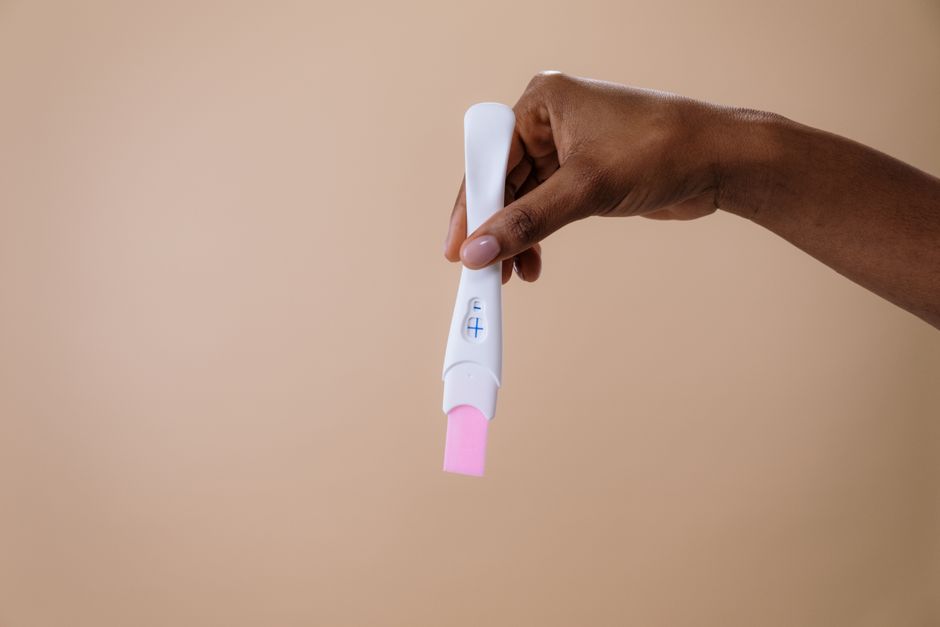
Conception happens when a sperm cell joins with an egg, usually within about 24 hours of ovulation. That window is short because the egg survives roughly 12 to 24 hours after it is released. Sperm, by contrast, can live inside the female reproductive tract for up to five days. This mismatch is why the days just before ovulation are the most fertile part of the cycle.
When Does Conception Occur in the Menstrual Cycle?
Conception occurs at ovulation, or within a day of it. Ovulation is the moment an ovary releases a mature egg. That egg then travels into the fallopian tube, where fertilization normally takes place.
The timing of ovulation is not random. It is controlled by a shift in hormones. Near the middle of the cycle, a surge of luteinizing hormone (LH) triggers the release of the egg. This surge usually happens about 24 to 36 hours before ovulation itself.
For a person with a typical 28-day cycle, ovulation tends to fall around day 14. But “typical” covers a wide range. Cycle length varies from person to person, and ovulation can shift from month to month even in the same person. A 28-day cycle is a reference point, not a rule.
What matters for conception is not the calendar date. It is the relationship between intercourse and ovulation. The fertile window — the days when conception is possible — spans about five days before ovulation plus the day of ovulation itself.
How Long Do Sperm and Eggs Survive?
The egg has a short life. After ovulation, it remains capable of being fertilized for roughly 12 to 24 hours. If no sperm reaches it in that time, it breaks down and is absorbed.
Sperm live longer. In fertile cervical mucus, sperm can survive for up to five days. This is the key fact behind the fertile window. Intercourse several days before ovulation can still lead to conception because sperm are waiting when the egg arrives.
This also explains why the day of ovulation is not the only fertile day. It is the last fertile day. Once the egg is gone, the window closes until the next cycle.
Can You Get Pregnant Right After Your Period?
Yes, though it is uncommon in people with longer, regular cycles. The risk rises when cycles are short.
Consider the math. If a cycle is 21 days, ovulation may occur around day 7 to 10. A period lasting five days ends around day 5. Sperm deposited on day 5 could survive to meet an egg released on day 10. In that scenario, conception is possible from intercourse that happened during or just after the period.
In a 28-day cycle, ovulation around day 14 makes pregnancy right after a period much less likely. But because ovulation timing varies, no day is truly “safe” for someone trying to avoid pregnancy. This is one reason calendar-based methods of contraception have higher failure rates than methods that do not depend on predicting ovulation.





What Are the Signs of Ovulation?
Some people notice physical signs around ovulation. Others notice nothing at all. No single sign confirms that ovulation has occurred.
Common changes include:
- Cervical mucus becomes clear, stretchy, and slippery, similar to raw egg white
- A slight rise in basal body temperature — but only after ovulation, not before
- Mild one-sided pelvic pain, sometimes called mittelschmerz
- A small increase in libido
Basal body temperature is worth understanding clearly. It rises slightly after ovulation because of progesterone. That means it confirms ovulation in hindsight. It cannot tell you ovulation is about to happen, so it is not useful for timing intercourse in the current cycle.
Ovulation predictor kits work differently. They detect the LH surge in urine, which happens before ovulation. A positive result usually means ovulation is likely within the next day or two. These kits are more useful for timing than temperature tracking, though they are not perfect.
How Long Does It Take to Get Pregnant?
For couples under 35 having regular intercourse, most conceive within a year. This is a general pattern, not a guarantee for any individual.
Conception rates per cycle are lower than many people expect. Even with well-timed intercourse, the chance of pregnancy in a single cycle is modest. Several things have to line up: a healthy egg, healthy sperm, open fallopian tubes, and a uterine lining ready to support implantation.
Fertilization is only the first step. The fertilized egg, now called a zygote, must divide and travel down the fallopian tube to the uterus. This journey takes several days. Implantation into the uterine lining typically occurs about 6 to 10 days after ovulation. Pregnancy officially begins at implantation, not at fertilization.
This distinction matters. A fertilized egg that fails to implant does not result in a pregnancy, and this happens fairly often. Many early losses occur before a person even knows they were pregnant.
When Should You Seek Help With Conception?
Guidance on when to seek evaluation depends mainly on age and how long you have been trying.
For people under 35, evaluation is generally recommended after 12 months of trying without success. For those 35 and older, the threshold is often 6 months. These timelines reflect the natural decline in fertility with age, which becomes more pronounced in the mid-to-late 30s.
Some situations warrant earlier evaluation regardless of how long you have been trying:
- Irregular or absent menstrual cycles
- Known conditions affecting fertility, such as endometriosis or polycystic ovary syndrome
- Previous pelvic surgery or infection
- Known sperm abnormalities
- Multiple miscarriages
These are general clinical directions, not personal medical advice. A doctor can assess your specific situation and decide whether testing is appropriate.
Does Timing Intercourse Matter for Conception?
Timing does matter, but not as precisely as many people believe. Intercourse every one to two days during the fertile window gives good coverage without the stress of pinpointing a single moment.
There is a persistent myth that certain positions or lying still after intercourse improves the chance of conception. No well-designed study has confirmed that position affects whether conception occurs. Sperm reach the fallopian tubes quickly regardless of position. Lying down afterward is not harmful, but it is not required.
Another common belief is that abstaining for many days before ovulation improves sperm quality. Prolonged abstinence can actually reduce sperm quality in some men. For most couples, regular intercourse during the fertile window is the practical approach.
What does not help is treating conception as a single event to be scheduled to the hour. The biology is wider than that. The fertile window is days long, and the body does not follow a stopwatch.
Frequently Asked Questions
How soon after ovulation does conception occur?
Conception occurs within about 24 hours of ovulation, since the egg survives roughly 12 to 24 hours. Sperm can already be present in the fallopian tube if intercourse happened in the days before.
Can you get pregnant on the day you ovulate?
Yes, the day of ovulation is part of the fertile window. It is the last fertile day, because the egg does not survive beyond about a day.
How long after conception does implantation happen?
Implantation typically occurs about 6 to 10 days after ovulation. Pregnancy begins at implantation, not at fertilization.
How long does it usually take to conceive?
Most couples under 35 who have regular intercourse conceive within a year. The chance in any single cycle is lower than many people expect, even with good timing.
