
Most babies get their first tooth between 6 and 10 months of age. The two bottom front teeth, called the lower central incisors, usually appear first. Some infants start teething as early as 3 months, while others do not cut their first tooth until after their first birthday. Both are within the normal range.
When Does An Infant Get Teeth?
The timing of tooth eruption follows a general pattern, but every baby is different. The American Academy of Pediatrics considers it normal for a first tooth to appear anywhere from 3 to 15 months of age. By age 3, most children have all 20 primary teeth, also called baby teeth.
Genetics play a large role in timing. If you or your partner teethed early or late, your child will likely follow a similar schedule. Premature infants often get teeth later than full-term babies when adjusted for their due date.
What Is The Typical Order Of Tooth Eruption?
Teeth usually arrive in pairs, starting with the bottom front teeth. The order below reflects the most common pattern, though variations are normal.
- Lower central incisors (bottom front): 6–10 months
- Upper central incisors (top front): 8–12 months
- Upper lateral incisors (next to top front): 9–13 months
- Lower lateral incisors (next to bottom front): 10–16 months
- First molars (back teeth): 13–19 months
- Canines (pointed teeth): 16–23 months
- Second molars (further back): 23–33 months
Molars often cause the most discomfort because they are larger and have a wider surface area breaking through the gums. The order matters less than the fact that teeth eventually arrive. What matters more is that the pattern is roughly symmetrical — teeth usually erupt on both sides at about the same time.
What Are The Signs Of Teething?
Teething symptoms typically begin about 3 to 5 days before a tooth breaks through the gum. Once the tooth cuts through, symptoms usually fade quickly.
Common signs include:
- Increased drooling
- Chewing on fingers, toys, or anything within reach
- Swollen, tender gums
- Irritability or fussiness
- Waking more at night
- Mild decrease in appetite for solid foods
- Rubbing cheeks or pulling ears
Some parents report a slight rise in temperature during teething. Research has not confirmed that teething causes fever. A temperature above 100.4°F (38°C) is not considered a normal teething symptom and should be evaluated by a pediatrician.
Teething does not cause diarrhea, vomiting, or a significant rash beyond mild drool irritation. If your infant has these symptoms, look for another cause. Some research suggests that the mild immune changes during teething may make babies slightly more vulnerable to infections, but the symptoms themselves are not caused by the teeth.





How Can You Soothe A Teething Baby?
Simple home remedies are the first line of comfort. Most parents find that pressure on the gums helps the most.
What works:
- Clean teething rings — chilled, not frozen. Frozen rings are too hard and can bruise already tender gums.
- A clean, damp washcloth — chilled in the refrigerator for 15–20 minutes, then let your baby chew on it. Supervise to prevent choking.
- Gentle gum massage — with a clean finger or a soft silicone finger brush.
- Solid teething biscuits — only if your baby is already eating solids and you watch closely.
- Pain relievers — acetaminophen or ibuprofen can help, but only with your pediatrician’s guidance. Ibuprofen is not recommended for infants under 6 months.
What to avoid:
- Numbing gels with benzocaine — the FDA warns against these for children under 2 years. Benzocaine can cause methemoglobinemia, a rare but serious condition that reduces oxygen in the blood.
- Teething necklaces or bracelets — amber or wooden jewelry poses choking and strangulation risks. There is no evidence they work.
- Homeopathic teething tablets — the FDA has warned about inconsistent ingredients and potential belladonna contamination.
- Alcohol on the gums — never do this. It is dangerous.
- Frozen foods — whole frozen carrots or bagels can break off and cause choking.
When Should You Start Brushing Baby Teeth?
Start cleaning your baby’s gums before the first tooth appears. Use a soft, damp cloth or a silicone finger brush to wipe the gums after feedings. This gets your baby used to oral care and removes bacteria that can build up in the mouth.
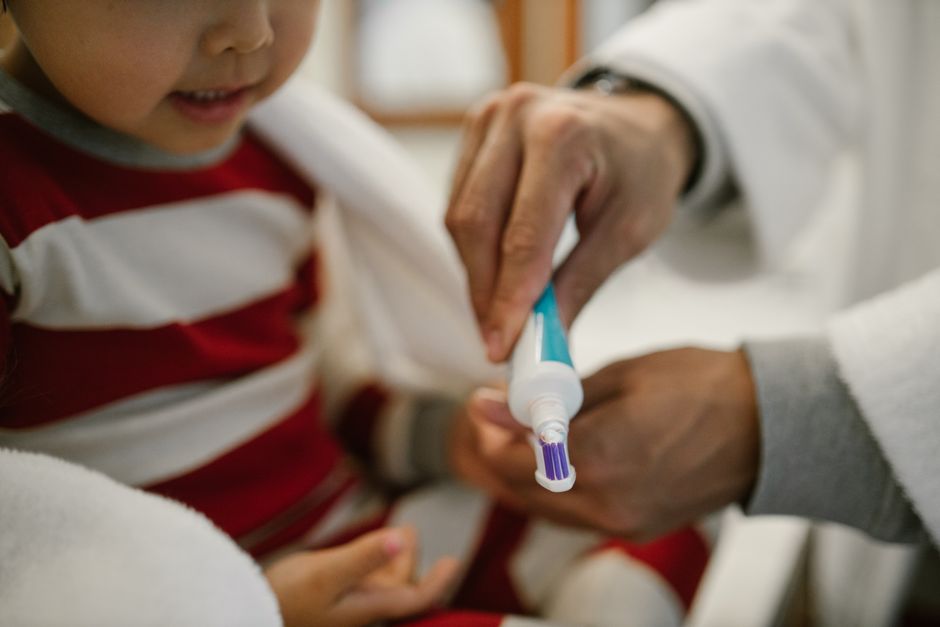
Once the first tooth erupts, switch to a soft-bristled infant toothbrush with a smear of fluoride toothpaste about the size of a grain of rice. Fluoride is safe in this amount and helps prevent cavities. The American Dental Association and the American Academy of Pediatrics both recommend this practice.
At age 3, increase the toothpaste to a pea-sized amount. Brush twice a day, especially before bed. Saliva production drops during sleep, which makes teeth more vulnerable to decay.
What Happens If Teeth Come In Late?
Delayed tooth eruption is usually not a cause for concern. Some healthy babies simply get teeth later than average.
However, if your baby has no teeth by 18 months, it is reasonable to mention it to your pediatrician or pediatric dentist. They may evaluate for underlying conditions such as nutritional deficiencies, hypothyroidism, or rare genetic syndromes. In most cases, the evaluation finds nothing wrong and the teeth simply arrive on their own schedule.
Early tooth loss in infancy is rare and should be evaluated promptly. If a tooth appears and then falls out or is knocked out, see a dentist right away.
Can Breastfeeding Continue During Teething?
Yes. Many babies continue to nurse successfully after teeth appear. A baby cannot bite while actively nursing because the tongue covers the lower gum and the latch positions the teeth away from the nipple.
Biting is more likely to happen at the end of a feeding or when the baby is distracted or done. If your baby bites, break the latch gently by sliding a clean finger into the corner of the mouth. Say “no” firmly but calmly, and end the feeding. Most babies learn quickly that biting ends nursing.
Breastfeeding does not cause dental problems. In fact, breast milk alone does not promote tooth decay the way sugary liquids do. The risk of early childhood cavities comes mainly from bottles of juice, formula, or milk left in the mouth during sleep.
What Is The Difference Between Teething And An Ear Infection?
Teething babies often pull at their ears because the pain radiates from the jaw. This makes it easy to confuse teething with an ear infection.
Key differences:
- Fever — ear infections often cause fever above 100.4°F. Teething does not.
- Cold symptoms — nasal congestion, cough, or runny nose point toward an ear infection.
- Sleep — ear infection pain is worse when lying flat. A teething baby may sleep poorly but does not usually cry out in pain when laid down.
- Response to pressure — babies with ear infections often resist lying on the affected side. Teething babies generally do not.
- Duration — teething symptoms resolve within a few days. Ear infections persist or worsen.
When in doubt, see a pediatrician. Ear infections are the most common reason for pediatric visits, and untreated infections can lead to complications.
Frequently Asked Questions
What is the earliest an infant can get teeth?
Some babies are born with a tooth already visible, though this is rare. More commonly, the first tooth appears around 6 months, but 3 months is within the normal range.
Is it normal for a 12-month-old to have no teeth?
Yes. About 1 in 10 infants has no teeth at 12 months. A pediatrician or pediatric dentist should check if no teeth appear by 18 months.
Do babies get fevers when teething?
No. Research does not support teething as a cause of fever. A temperature above 100.4°F warrants a call to your pediatrician.
When should I take my baby to the dentist for the first time?
The American Dental Association recommends a first dental visit by the first birthday or within 6 months of the first tooth appearing, whichever comes first.
