
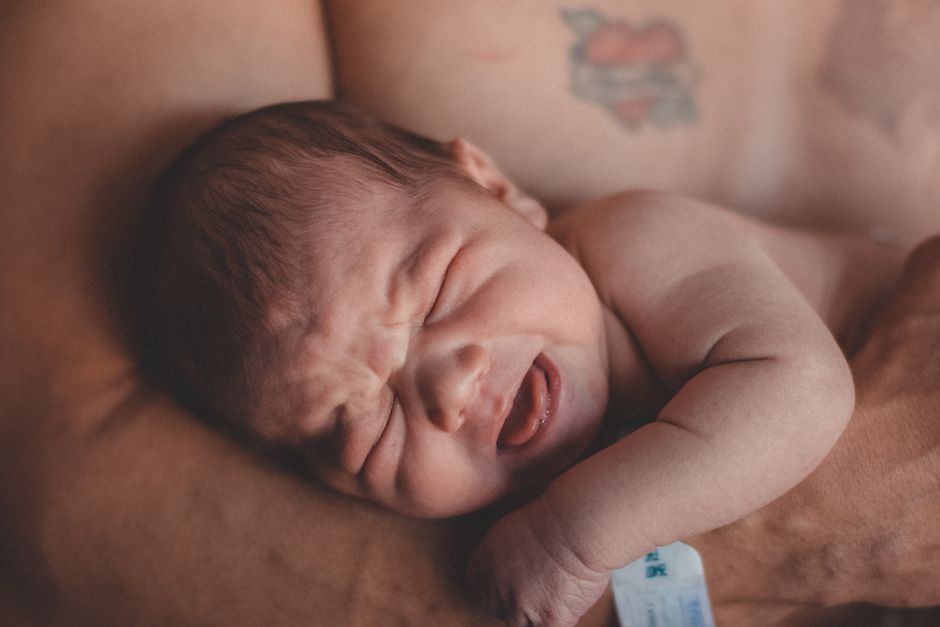
Most newborns cry more at two weeks old than they did on day one. Crying tends to build through the first weeks of life, peak somewhere between six and eight weeks, and then slowly ease off. By about three to four months, most babies are crying far less than they did at their peak. That pattern is one of the most consistent findings in infant behavior research.
When Does a Newborn Stop Crying So Much?
There is no single day when a baby flips a switch. The change is gradual.
Crying usually starts increasing around two weeks of age, peaks between six and eight weeks, and declines steadily after that. By four months, many babies cry for a fraction of the time they did at two months. By six months, most parents describe the worst of it as behind them.
This curve was described decades ago by researchers studying normal infant behavior, and it has held up since. It is so consistent that some clinicians call it the “crying curve.”
What matters is the shape of it. If you are in week six, you are likely near the peak. Week twelve usually feels different. Week sixteen often feels different again.
Why Do Newborns Cry So Much in the First Place?
Crying is a newborn’s only reliable way to signal a need or a discomfort. They cannot reach for you, point, or speak. The cry is the message.
In the early weeks, a lot of crying is tied to normal physical states:
- Hunger — the most common cause in the first month
- Fatigue — overtired babies often cry more, not less
- Discomfort from a wet diaper, tight clothing, or temperature
- Overstimulation — too much light, noise, or handling
- Wanting physical contact and comfort
- Normal digestive activity, including gas and stooling
None of this means something is wrong. It means the baby is doing what newborns do.
One point that surprises many parents: crying in the first three months is not primarily a sign of bad parenting. Research on early infant crying shows it follows a predictable developmental pattern that appears across cultures. How caregivers respond matters for comfort and bonding, but the underlying curve is largely built in.
What Is the Period of Purple Crying?
The Period of PURPLE Crying is an educational program used by many hospitals and pediatric practices to help parents understand early infant crying. It was developed by researchers who study infant behavior and is widely used in newborn education.
PURPLE is an acronym that describes normal crying in the first months:
- P — Peak of crying. It increases in the first two months, then decreases.
- U — Unexpected. Crying can start and stop without an obvious reason.
- R — Resists soothing. Sometimes nothing you try works.
- P — Pain-like face. Babies may look like they are in pain even when they are not.
- L — Long-lasting. Crying can go on for stretches that feel endless.
- E — Evening. Crying often clusters in the late afternoon and evening.
The program’s central message is that this pattern is normal and temporary — and that no caregiver should ever shake a baby out of frustration. Shaking an infant can cause severe brain injury or death. If you feel overwhelmed, it is safer to put the baby down in a safe sleep space and step away for a few minutes than to handle the baby roughly.





Is It Colic, or Just Normal Crying?
Colic is a term clinicians use for excessive crying in an otherwise healthy infant. The traditional definition, sometimes called the “rule of three,” describes crying for more than three hours a day, more than three days a week, for more than three weeks.
That definition has been criticized because it is somewhat arbitrary. Many healthy babies cry more than that at their peak and are not considered medically abnormal. Some clinicians now use broader descriptions based on how much the crying distresses the family rather than a strict hourly cutoff.
What is worth knowing: colic is generally a description, not a diagnosis with a single cause. The evidence does not support one clear explanation. Some research points to differences in gut bacteria, some to infant temperament, some to feeding factors. No single cause has been confirmed.
Colic usually resolves on its own by around three to four months. That timing lines up with the normal crying curve.
What Actually Helps Reduce Crying?
Some soothing methods have better evidence behind them than others. None of them stop crying entirely, and none work every time.
Methods with reasonable support:
- Feeding — if hunger is the cause, feeding resolves it
- Skin-to-skin contact — holding a baby against bare skin can lower crying and stress in both baby and parent
- Rhythmic movement — gentle rocking, swaying, or walking
- White noise — steady, low-level sound can calm some babies; keep the volume low and the source away from the baby’s head
- Swaddling — wrapping snugly can help young infants settle; stop swaddling once a baby shows signs of rolling over
- Reducing stimulation — dim lights, quiet room, less handling
Methods with weaker or mixed evidence:
- Simethicone drops for gas — studies have generally not shown a clear benefit for colic
- Herbal remedies and gripe waters — evidence is limited, and some contain ingredients that are not safe for infants; check with a pediatrician before using any
- Probiotics — some studies suggest a possible benefit for breastfed infants with colic, but results vary and the evidence is not strong enough for a general recommendation
- Switching formulas — sometimes helps if there is a specific intolerance, but it is not a general fix for crying
The honest position on colic treatments is that nothing has strong, consistent evidence of working for all babies. Some things help some babies. That is worth knowing before spending money on products that promise more than they can deliver.
When Should You Call a Doctor About Crying?
Excessive crying is usually normal. But some signs mean you should get medical advice.
Contact a pediatrician or seek care if:
- The baby has a fever. In an infant under three months, a rectal temperature of 100.4°F (38°C) or higher is a reason to call right away.
- The crying sounds different — high-pitched, weak, or unusual for your baby
- The baby is not feeding well, is feeding much less than usual, or is refusing feeds
- There are fewer wet diapers than usual
- The baby is unusually sleepy, hard to wake, or floppy
- There is vomiting that is forceful or green
- There is blood in the stool
- The baby seems to be in pain, with a swollen or tender belly, or drawing the legs up repeatedly with distress
- The crying is getting worse instead of following the usual pattern of easing after two months
Trust your instinct. If something feels wrong to you, it is reasonable to call. Clinicians would rather answer a question than miss a problem.
How Long Does the Hardest Part Last?
For most families, the most intense stretch runs from about two weeks to about three months. The peak is usually around six to eight weeks.
After the peak, the decline is gradual rather than sudden. Some weeks feel better, then a growth spurt or a developmental leap brings more crying again. That back-and-forth is normal.
By four to six months, most babies cry far less and are more able to self-soothe, engage with the world, and go longer stretches content. By then, crying usually has a clearer cause — hunger, tiredness, boredom, or a specific need — rather than the long unexplained stretches of the newborn period.
If you are in the middle of it, the calendar is on your side. The curve trends down. It just does not feel that way at 7 p.m. on a Tuesday in week seven.
Frequently Asked Questions
At what age does a newborn stop crying so much?
Crying usually peaks between six and eight weeks and then declines steadily. Most babies cry noticeably less by three to four months, and far less by six months.
Is it normal for a newborn to cry for hours every evening?
Yes, evening clustering of crying is common in the first two to three months. If the crying comes with fever, poor feeding, or unusual sleepiness, call a doctor.
Does colic go away on its own?
Colic generally resolves on its own by around three to four months. There is no treatment with strong evidence of stopping it sooner.
Can you spoil a newborn by picking them up when they cry?
No. You cannot spoil a newborn. Responding to crying in the first months supports comfort and bonding and does not create bad habits.
