
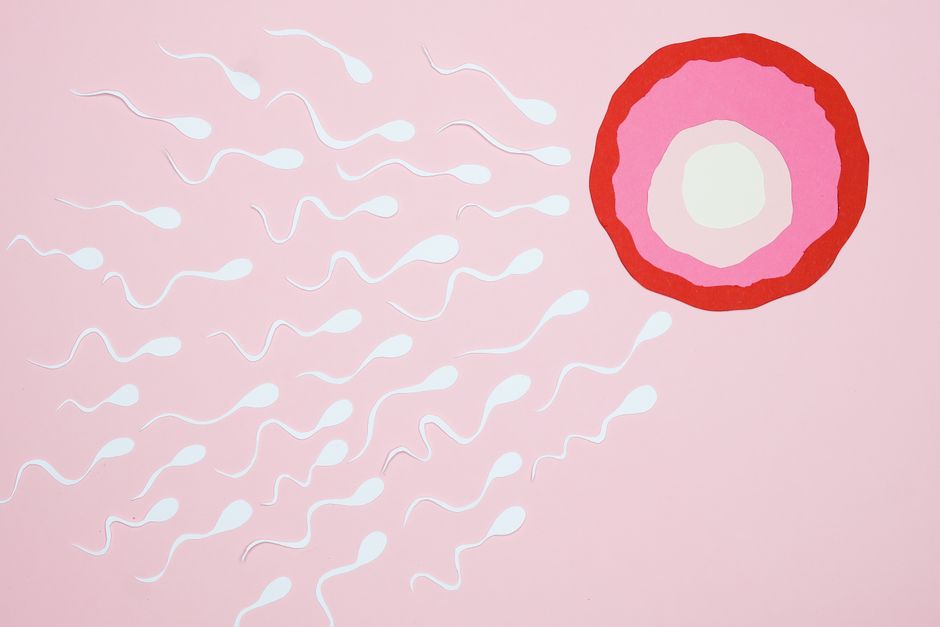
Ovulation usually happens about 14 days before your next period begins. That is the most reliable anchor point in the menstrual cycle. For someone with a 28-day cycle, ovulation tends to fall around day 14. For someone with a 32-day cycle, it lands closer to day 18. The part that surprises many people: the time from ovulation to your period is fairly constant, while the first half of the cycle is the part that stretches and shrinks.
Understanding this timing matters whether you are trying to conceive, trying to avoid pregnancy, or simply trying to understand what your body is doing each month. Below is a clear breakdown of the ovulation timeline, the signs that signal it, and where the common assumptions fall short.
When Do You Usually Ovulate in a Typical Cycle?
Ovulation typically occurs 12 to 16 days before the first day of your next period, with about 14 days being the average. This window is called the luteal phase — the stretch after ovulation and before menstruation.
The luteal phase is the steady part. In most people it lasts between 11 and 16 days and varies by only a day or two from cycle to cycle. The follicular phase — the first half, from the start of your period to ovulation — is where the variability lives. That is why counting 14 days from the first day of your period only works if your cycle is exactly 28 days long. For anyone with shorter or longer cycles, that “day 14” rule gives the wrong answer.
To estimate ovulation, subtract 14 from your typical cycle length. A 26-day cycle points to roughly day 12. A 35-day cycle points to roughly day 21. This is an estimate, not a guarantee. Cycle length can shift with stress, illness, travel, and changes in sleep.
What Happens During Ovulation, Step by Step?
Ovulation is the release of a mature egg from one ovary. The process builds over the first half of the cycle and unfolds in a predictable sequence.
- Follicle growth: Rising estrogen causes a follicle in the ovary to mature, containing one egg.
- Estrogen surge: Estrogen climbs to a peak, which triggers a sharp rise in luteinizing hormone (LH).
- LH surge: This spike is the trigger. Ovulation usually follows within about 24 to 36 hours of the LH surge beginning.
- Egg release: The follicle ruptures and releases the egg, which is swept into the fallopian tube.
- Corpus luteum: The emptied follicle becomes a temporary gland that releases progesterone, which stabilizes the uterine lining for a possible pregnancy.
The egg itself has a short window. It survives roughly 12 to 24 hours after release. Sperm, by contrast, can survive in the reproductive tract for up to about five days. That asymmetry is why the fertile window opens before ovulation, not on the day of it.
What Are the Physical Signs of Ovulation?
Many people notice physical changes around ovulation, though not everyone does. These signs are clues, not proof.
Cervical mucus changes are among the more reliable body signals. Around ovulation, mucus becomes clear, slippery, and stretchy — often compared to raw egg white. This texture helps sperm travel and survive. Outside the fertile window, mucus tends to be thicker or drier.
Mild one-sided pelvic pain, sometimes called mittelschmerz, occurs in some people around ovulation. It can last minutes to a day or two. Not everyone feels it, and it does not confirm that ovulation happened.
Basal body temperature rises slightly after ovulation, driven by progesterone. The catch: temperature confirms ovulation after the fact. It tells you ovulation happened, not that it is about to. That makes it more useful for understanding your pattern over several cycles than for timing intercourse in the current one.
Libido and breast sensitivity can shift around mid-cycle for some people, but these changes are inconsistent and not reliable on their own.
How Can You Track Ovulation More Accurately?
Ovulation predictor kits detect the LH surge in urine, which usually appears about a day or two before ovulation. They are more precise than calendar counting for many people, especially those with irregular cycles.
The evidence on tracking methods is mixed in terms of how well each predicts the exact day. Some studies suggest that combining methods — tracking cervical mucus alongside LH tests — gives a clearer picture than any single sign. No method is perfect, and none guarantees conception timing.
For people with very irregular cycles, or those who have been trying to conceive without success, a clinician can offer more direct assessment. That may include blood tests for progesterone or ultrasound monitoring of follicle development. These are clinical tools, not home methods.
Can You Ovulate on a Different Day Each Month?
Yes. Ovulation day can shift from cycle to cycle, even in people with generally regular periods. The luteal phase stays fairly steady, but the follicular phase can lengthen or shorten.
This is why calendar-based predictions are approximate. A cycle that is usually 28 days might occasionally run 30 or 26. Ovulation moves with it. Stress, illness, disrupted sleep, significant weight change, and intense exercise can all influence timing.
Age matters too. Cycle patterns often change through the late 30s and 40s as hormone levels shift, and ovulation can become less predictable during that transition.
When Does Ovulation Not Happen?
Not every cycle produces ovulation. A cycle without ovulation is called an anovulatory cycle, and it can happen occasionally even in people who usually ovulate.
Common contexts include the years around menopause, significant stress, very low body weight, intense athletic training, and certain medical conditions such as polycystic ovary syndrome (PCOS). Thyroid problems can also affect ovulation. In these situations, predicting ovulation by calendar or symptoms becomes unreliable.
A period can still occur without ovulation, which is why bleeding alone does not confirm that a cycle was ovulatory. If cycles are consistently irregular or absent, that is a reason to talk with a clinician rather than guess at timing.
How Long Is the Fertile Window?
The fertile window is roughly five days before ovulation plus the day of ovulation itself — about six days total. This reflects sperm survival of up to five days and egg survival of about 12 to 24 hours.
Pregnancy is most likely from intercourse in the two to three days before ovulation. Intercourse after ovulation has a much narrower chance, because the egg does not last long. This is why timing relative to ovulation matters more than frequency alone.
For those avoiding pregnancy, it is worth being direct: symptom-based and calendar-based methods carry a real risk of error, because ovulation timing can shift and signs can be misread. More structured fertility awareness methods exist, but they require training and consistent tracking. No method short of abstinence or a barrier or hormonal contraceptive is reliably effective on its own.
What If Your Cycle Is Irregular?
Irregular cycles make ovulation harder to predict but not impossible to understand. The 14-days-before-your-period rule still applies in principle, but if your cycle length swings widely, you cannot pin down the date with confidence.
In that case, tracking multiple signs over several months gives a better sense of your pattern than any single calculation. If irregularity is new, persistent, or accompanied by other symptoms, a clinical evaluation can identify causes such as thyroid dysfunction or PCOS.
Frequently Asked Questions
How many days after your period do you ovulate?
It varies with cycle length, but ovulation typically occurs 12 to 16 days before your next period, not a fixed number of days after your period ends. For a 28-day cycle, that usually falls around day 14.
Can you ovulate on day 10 of your cycle?
Yes, especially with shorter cycles. If your cycle is around 24 days, ovulation could fall near day 10, since it tends to occur about 14 days before your next period.
How do you know if you have already ovulated?
A sustained rise in basal body temperature and a shift in cervical mucus from stretchy to thicker are common signs that ovulation has passed. Only a progesterone blood test or ultrasound can confirm it clinically.
Can you get pregnant right after your period?
It is possible, particularly with short cycles, because sperm can survive up to about five days and ovulation may come earlier than expected. The fertile window can overlap with the days just after bleeding ends.
