
Ovulation usually happens about 14 days before your next period begins, not 14 days after your last one started. That single fact is the key to every ovulation calculator, and it is where most calendar-based guesses go wrong. An ovulation calculator estimates your fertile window by counting backward from your expected next period, which works best if your cycles are fairly regular.
Here is what these tools actually do, where they can mislead you, and how to read your own body’s signals instead of trusting a number on a screen.
When Do You Ovulate Calculator? What the Tool Actually Calculates
An ovulation calculator estimates the day an egg is released based on your cycle length and the date your last period began. It does this by subtracting the luteal phase — the stretch from ovulation to your next period — from your expected next period date.
The luteal phase is the anchor. It is generally more consistent from cycle to cycle than the first half of your cycle, which can shift with stress, illness, travel, and sleep changes. That is why counting backward tends to be more reliable than counting forward from day one of your period.
Most calculators assume a 14-day luteal phase. That is a population average, not a personal constant. Luteal phases in healthy women commonly range from about 11 to 16 days. If yours runs longer or shorter, a standard calculator will place your ovulation day on the wrong date.
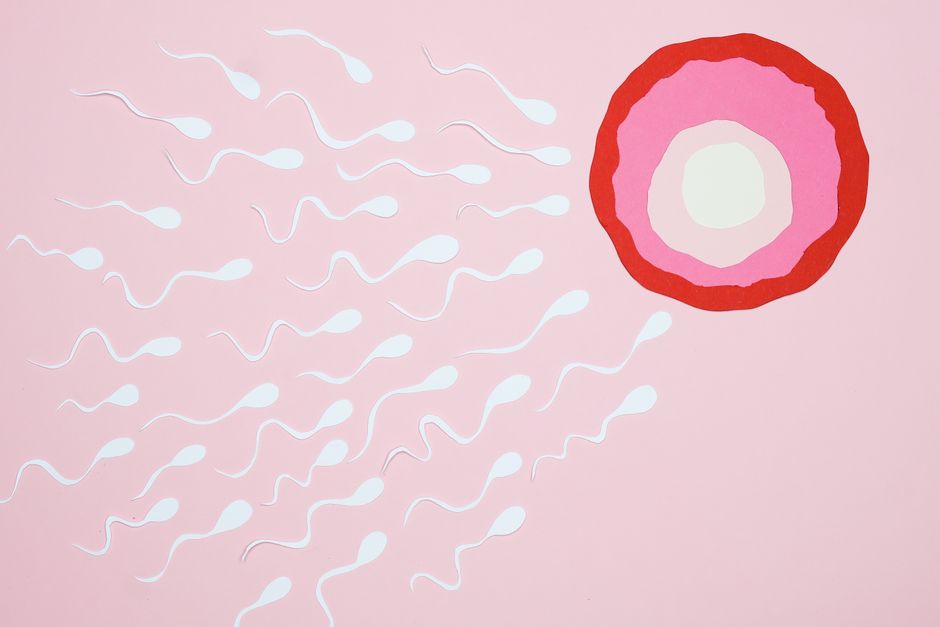
These tools also assume you ovulate exactly once per cycle, on a single day. In reality, the fertile window is a span of days, not a pinpoint. Sperm can survive in the reproductive tract for up to about five days, while the egg is viable for roughly 12 to 24 hours after release. That biology is why the days before ovulation matter as much as the day itself.
How Do You Calculate Your Ovulation Date Step by Step?
You need two pieces of information: the first day of your last period and your average cycle length. From there the math is simple.
Count the number of days from the first day of one period to the day before your next period starts. That is one full cycle. Track this for several months to get a realistic average, because a single cycle can be misleading.
Then subtract 14 from your average cycle length. If your cycle runs 28 days, that puts estimated ovulation around day 14. A 32-day cycle puts it around day 18. A 24-day cycle puts it around day 10.
Remember that this is an estimate built on an average. It tells you a likely window, not a guaranteed date. If your cycles vary by more than a few days from month to month, the calculator’s output becomes much less useful — sometimes off by a week or more.
Why Calendar Calculators Can Be Wrong
Calendar methods fail most often in women whose cycles are irregular. That includes people with polycystic ovary syndrome (PCOS), thyroid conditions, significant weight changes, or those approaching perimenopause. In these situations, ovulation timing can shift substantially from one cycle to the next.
Even in regular cycles, ovulation does not always land on the predicted day. Research tracking ovulation directly has found that even women with consistently regular cycles ovulate on a range of days, not a fixed one. A calculator gives you the center of a target, not a bullseye.
There is another limitation worth naming. A calculator cannot tell you whether you ovulated at all. An anovulatory cycle — one where no egg is released — can still produce bleeding that looks like a period. The tool assumes ovulation happened; it does not confirm it.
Which Body Signs Give a More Accurate Picture?
Tracking physical signs gives you real-time information a calculator cannot. No single sign is perfect on its own, but combining them improves accuracy.
- Cervical mucus changes. As estrogen rises before ovulation, mucus typically becomes clearer, wetter, and stretchier — often compared to raw egg white. This is one of the more reliable fertile signs for many women.
- Basal body temperature (BBT). Your resting temperature rises slightly — usually by a few tenths of a degree Fahrenheit — after ovulation, driven by progesterone. BBT confirms that ovulation likely happened, but it does so after the fact, so it is better for tracking patterns than predicting the current cycle.
- Ovulation predictor kits (OPKs). These urine tests detect a surge in luteinizing hormone (LH), which typically precedes ovulation by roughly 24 to 36 hours. They are more precise than calendar math for many women, though conditions like PCOS can cause false positives from chronically elevated LH.
- Mittelschmerz. Some women feel a one-sided twinge or ache around ovulation. It is a useful clue for some, but not everyone experiences it, and it is not a reliable standalone indicator.
A non-obvious point: BBT and OPKs answer different questions. OPKs help predict upcoming ovulation; BBT helps confirm it already occurred. Using both together gives a fuller picture than either alone.
How Long Is the Fertile Window Around Ovulation?
The fertile window spans roughly five days before ovulation plus the day of ovulation itself. That is because sperm can survive for several days in the reproductive tract while waiting for an egg, but the egg survives only about a day after release.
This means the days leading up to ovulation are the most fertile, not necessarily the day of ovulation alone. A calculator that marks a single “ovulation day” can give a false sense of precision. The window matters more than the point.
If you are trying to conceive, the practical takeaway is that intercourse in the days before estimated ovulation is more likely to align with the fertile window than waiting for a specific predicted day.
When Should You See a Healthcare Provider?
Talk to a clinician if your cycles are consistently shorter than about 21 days or longer than about 35 days, if they vary widely from month to month, or if you have gone three months or more without a period and are not pregnant. These patterns can point to conditions that affect ovulation.
Seek care sooner if you have very heavy bleeding, severe pelvic pain, or bleeding between periods. These are not normal cycle variations and deserve evaluation.
If you have been trying to conceive for about a year without success — or around six months if you are 35 or older — that is a reasonable point to seek guidance. These general timeframes reflect common clinical guidance, and a provider can tailor advice to your situation.
An ovulation calculator is a starting point, not a diagnosis. It works best as one tool among several, alongside attention to your body’s signals and, when needed, professional guidance.
Frequently Asked Questions
How accurate is an ovulation calculator?
It is reasonably accurate for women with regular cycles who have a luteal phase close to 14 days. Accuracy drops sharply with irregular cycles or when your luteal phase differs from the assumed average.
Can you ovulate on a different day each month?
Yes. Even in regular cycles, ovulation can shift by several days from one month to the next. This is why tracking multiple cycles gives a better estimate than relying on a single calculation.
Do you ovulate 14 days after your period or before your next one?
Ovulation typically occurs about 14 days before your next period, not 14 days after your last one. Counting backward from your expected period is the more reliable approach.
Can you get pregnant without ovulating?
No. Pregnancy requires the release of an egg, so ovulation must occur. Some cycles are anovulatory, meaning no egg is released, and pregnancy cannot result from those cycles.
