
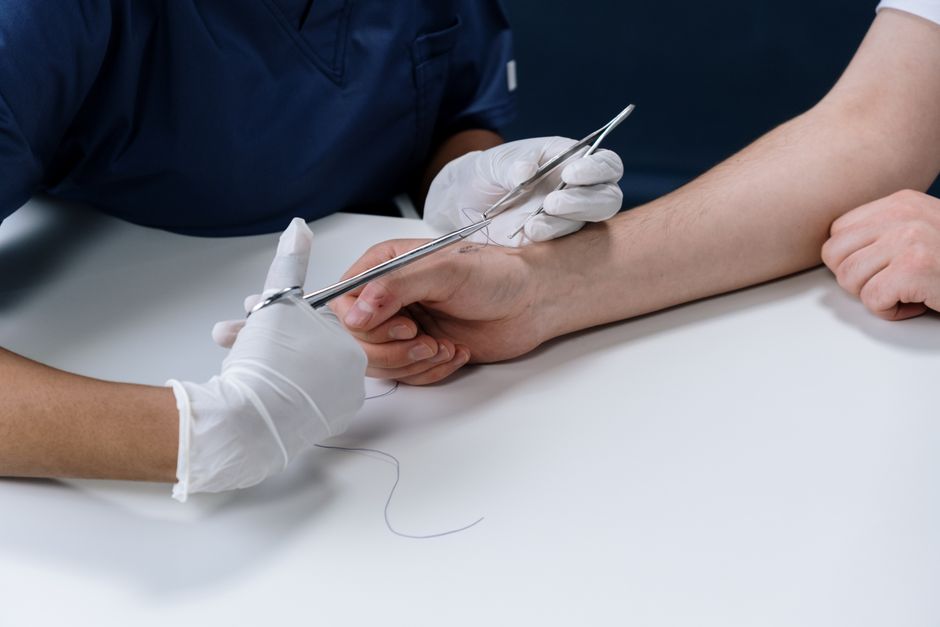
Sutures that dissolve do so on a schedule set by the material they are made from, not by the wound they close. Absorbable stitches typically lose their strength somewhere between one and eight weeks, depending on the specific product, and the leftover material is usually gone within a few weeks to a few months after that. The timeline for any given stitch depends on which suture was used, where it sits in the body, and how the manufacturer designed it to break down.
Most people asking this question have a specific stitch in mind and want to know when it will be gone. The short answer is that no single timeline exists. A stitch in the mouth may dissolve in days. A stitch holding a deep layer of muscle may take months. What follows explains why, and what you can reasonably expect.
When Do Sutures Dissolve?
The dissolving process is a chemical breakdown, and it varies by material. Absorbable sutures are made of polymers that the body gradually breaks apart through hydrolysis, a reaction with water, or through enzymes. As the polymer chains shorten, the stitch weakens and eventually the body clears the fragments.
Two numbers matter, and people often confuse them. The first is how long the suture keeps its strength. The second is how long until the material is fully absorbed. A stitch can stop holding the wound together long before it physically disappears. That distinction matters because a wound needs support during healing, and a suture that loses strength too early can let the edges separate.
Here is a general picture of the main absorbable suture types. These are approximate ranges from product information and surgical references, and individual products within each category vary.
| Suture type | Typical strength retention | Typical full absorption |
|---|---|---|
| Fast-absorbing gut | About 1 week or less | Around 2 to 3 weeks |
| Plain gut | About 1 to 2 weeks | Around 3 to 6 weeks |
| Chromic gut | About 2 to 3 weeks | Around 3 to 4 months |
| Polyglactin 910 (Vicryl) | About 3 to 4 weeks | Around 8 to 12 weeks |
| Polyglycolic acid (Dexon) | About 3 to 4 weeks | Around 8 to 12 weeks |
| Poliglecaprone 25 (Monocryl) | About 1 to 2 weeks | Around 3 to 4 months |
| Polydioxanone (PDS) | About 6 weeks or longer | Around 6 months |
These numbers describe the material under controlled conditions. In living tissue, absorption can be faster or slower. The body’s healing response, the amount of blood supply to the area, and whether the wound becomes infected all affect the pace.
Why Different Sutures Take Different Amounts of Time
Each suture is engineered for a specific job, and the breakdown timeline is a design choice rather than a side effect. A surgeon picks a material based on how much tension the wound carries and how quickly the tissue underneath is expected to regain its own strength.
Skin on the face heals quickly and carries little tension. A fast-dissolving stitch suits it. Skin on the back or a joint under constant movement needs support for longer, so a slower material makes sense. Internal tissues have their own timelines. The lining of the mouth, for instance, heals fast and is bathed in saliva, so short-lived sutures are common there.
One point that surprises people: a suture can be fully absorbed while the scar is still maturing. The wound’s collagen continues to remodel for months after the stitch is gone. Absorption of the suture is not the same as the end of healing.
The choice also reflects what happens if the material lingers. Some absorbable sutures trigger more local inflammation as they break down than others. That is part of why a surgeon may prefer one product over another for a given patient or location.
What Affects How Fast Your Sutures Dissolve
Several factors shift the timeline in either direction, and they apply on top of the material’s baseline.
- Location. Areas with rich blood supply tend to break down absorbable material faster than areas with poor circulation.
- Infection. An infected wound can speed up the loss of suture strength and change how the material behaves.
- Tissue type. Sutures placed in the mouth, the urinary tract, or other moist environments may dissolve differently than those in dry skin.
- Individual healing. Age, nutrition, and certain medical conditions such as diabetes can affect the healing environment around the stitch.
- Product variation. Two sutures in the same chemical family can have different absorption profiles depending on how they were made.
Because of these variables, no one can give you an exact date from the outside. A clinician familiar with the specific suture used can give a realistic range.
How Do You Know If Your Stitches Are Dissolvable?
You usually cannot tell by looking. Absorbable and non-absorbable sutures can look similar, and the color varies by product. The most reliable way to know is to ask the clinician who placed them or to check your discharge paperwork, which typically names the suture type.
Some clues are common but not reliable on their own. Absorbable stitches are often used on the surface for children, for facial wounds, and inside the mouth. They are also frequently used in deeper layers that you never see. Non-absorbable stitches, such as nylon or silk, are typically removed by a clinician after a set number of days.
If you are unsure, do not assume a stitch will dissolve and leave it in place indefinitely. A non-absorbable suture left too long can cause irritation, leave a mark, or become harder to remove. When in doubt, ask.
What to Expect as Sutures Dissolve
Most people notice little as the material breaks down. Some absorbable sutures are designed to fall away on their own, and you may simply find a small piece on a dressing or feel a stitch loosen.
It is common for the area to feel itchy or slightly irritated as the stitch weakens. Mild redness at the stitch site can occur. These are typical and often settle without treatment.
Some signs are not typical and deserve prompt attention. Contact a clinician if you notice:
- Increasing pain, swelling, or warmth around the wound
- Redness that spreads or streaks
- Pus, cloudy fluid, or a bad smell
- Fever
- The wound edges pulling apart
- A stitch that will not come out or that seems stuck after the expected time
These can signal infection or a wound that is not holding together. They are not things to wait out. This is general information and not a substitute for advice from your own clinician, who knows your wound and the material used.
Do Dissolvable Stitches Ever Need to Be Removed?
Sometimes. Absorbable sutures are designed to break down, but a clinician may still remove visible ends that are slow to fall away, or trim a stitch that is catching on clothing or causing irritation. Removal of a stray end is usually quick and minor.
There are situations where an absorbable stitch is placed but the clinician still wants to check the wound at a set time. The stitch dissolving does not replace a follow-up visit. Healing is judged by how the wound looks and feels, not only by whether the stitch is gone.
Occasionally an absorbable suture can cause a localized reaction, sometimes called a stitch abscess or spitting suture, where a small piece works its way to the surface. This is not always a sign of a serious problem, but it should be looked at so it can be managed properly.
How Long Until the Stitch Is Completely Gone?
Full absorption usually takes longer than most people expect. Even a fast suture can take weeks to disappear completely, and slower materials can take months. The visible stitch on the skin may fall off or be trimmed well before the deeper material is fully absorbed.
What matters most is not the exact date the stitch vanishes but whether the wound stays closed and heals cleanly along the way. If you were given a timeline by your clinician, treat it as an estimate. The material, the location, and your own healing all shift it.
Frequently Asked Questions
How long do dissolvable stitches take to dissolve?
Most absorbable sutures lose their strength within one to eight weeks and are fully absorbed within a few weeks to a few months, depending on the material. Fast gut can be gone in about two to three weeks, while polydioxanone can take around six months.
Do dissolvable stitches fall out on their own?
Many do fall away or loosen as they break down, and you may find small pieces on a dressing. A clinician may still trim a visible end that is slow to come away or is causing irritation.
What happens if a dissolvable stitch does not dissolve?
It may simply be slower than expected, or it may be a non-absorbable suture that was mistaken for a dissolvable one. Have a clinician look at any stitch that remains past the expected time or causes pain, redness, or discharge.
Can you shower with dissolvable stitches?
Often yes, but follow the specific instructions you were given, since wound type and location affect this. Avoid soaking the area and pat it dry gently unless your clinician says otherwise.
