
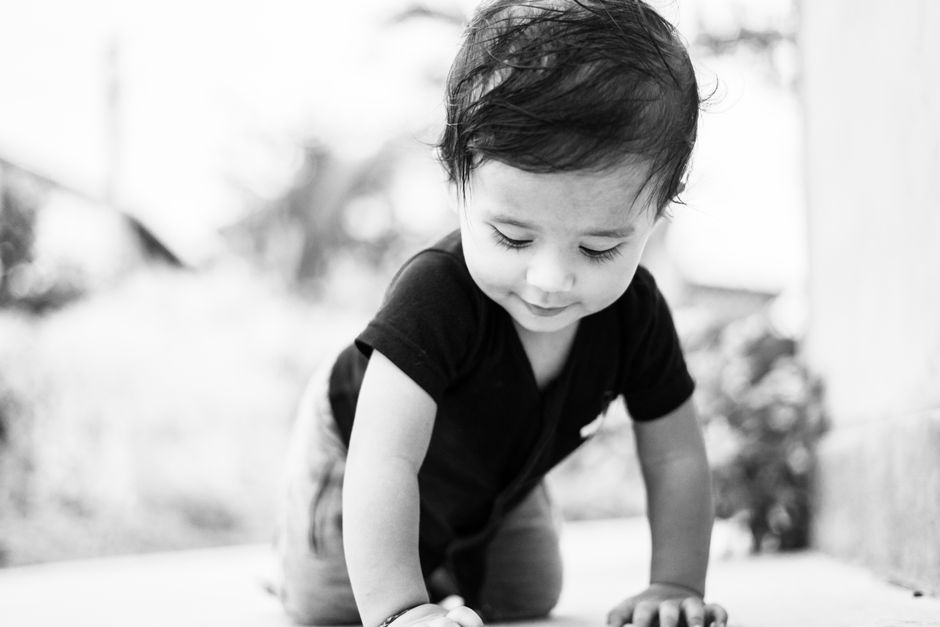
Newborns do not crawl. That is the short answer. Crawling is a milestone that comes much later, typically between 6 and 10 months of age. In the first few months, your baby is building the strength and coordination needed for that big moment, starting with tummy time and simple reflexes.
When Do Newborns Crawl? The Real Timeline
Most babies begin crawling between 6 and 10 months. Some start as early as 5 months. Others skip crawling entirely and go straight to pulling up and walking around 12 months. All of these patterns are within the normal range.
What you see in a newborn is not crawling. It is a reflex. If you place a newborn on their stomach, they may push with their legs and move their arms in a swimming motion. This is called the crawling reflex, and it usually disappears by 2 months of age. It is not voluntary movement. It is an automatic response.
Real crawling requires three things to come together: arm strength, leg strength, and coordination. A newborn has none of these developed yet. Their muscles are weak. Their nervous system is still maturing. The brain must learn to send the right signals to the right muscles in the right order.
What Crawling Actually Looks Like as It Develops
Before a baby crawls, they go through several stages. These stages are not mandatory, but most babies follow a similar path.
Around 2 to 3 months, babies learn to lift their heads while lying on their stomach. This builds neck and upper back strength. By 4 months, most babies can push up on their forearms. By 5 to 6 months, they often rock back and forth on their hands and knees. This rocking motion is practice. The brain is figuring out how to shift weight from one side to the other.
Some babies develop a unique crawling style. They may drag one leg. They may crawl with one arm and one leg on each side, or move both arms together and then both legs together. This is called a lateral or “bear” crawl. As long as your baby is moving and using both sides of their body, the exact style matters less than the movement itself.
One important point: some babies never crawl on their hands and knees. They may scoot on their bottom, roll across the floor, or shuffle on their belly. Research indicates that these variations are normal. The key milestone is independent movement, not the specific method.
Why Tummy Time Matters for Crawling
Tummy time is the foundation for crawling. It strengthens the muscles babies need to push up, balance, and move.
When a baby lies on their stomach, they work against gravity. This builds strength in the neck, shoulders, arms, back, and core. These are the exact muscle groups used in crawling. Without this strength, a baby cannot support their body weight on their hands and knees.
The American Academy of Pediatrics recommends starting tummy time in the first week of life. Begin with short sessions of 1 to 2 minutes, two to three times a day. Work up to longer sessions as your baby gets stronger. By 2 months, aim for about 15 minutes total per day spread across several sessions.
Some babies dislike tummy time at first. This is common. Try placing a mirror in front of them, getting down on the floor at eye level, or placing them on your chest. The goal is to make it a positive experience, not a battle.
Evidence strongly supports tummy time as a way to prevent flat spots on the back of the head and to promote motor development. It is one of the most well-established recommendations in infant care.





Signs Your Baby Is Getting Ready to Crawl
You can watch for specific signs that crawling is approaching. These usually appear in the weeks before a baby takes their first crawl.
Look for these milestones:
- Pushing up on straightened arms during tummy time
- Rocking back and forth on hands and knees
- Sitting without support
- Reaching for toys while on their stomach
- Pivoting or turning in circles on their belly
- Getting into a hands-and-knees position on their own
Sitting independently is closely linked to crawling readiness. It requires the same core strength and trunk control. Most babies sit without support between 4 and 7 months, and crawl between 6 and 10 months.
If you see your baby rocking on all fours, crawling is likely weeks away. The rocking motion is how they practice weight shifting. It looks like they are building momentum. In a sense, they are.
What If My Baby Is Not Crawling?
It is natural to worry when your baby seems behind. Here is the honest picture: the range for normal crawling is wide.
Some healthy babies do not crawl until 11 or 12 months. Others skip crawling altogether. A 2012 study in the journal Pediatrics found that only about half of babies crawl on their hands and knees at 9 months. The rest use other methods or have not started moving yet.
Talk to your pediatrician if your baby is not showing any interest in movement by 9 months. Also seek advice if your baby favors one side of their body consistently, cannot bear weight on their legs by 9 months, or loses milestones they had already achieved.
Keep in mind that crawling is not a required milestone for walking. Some babies skip it entirely and walk normally. The medical community does not consider skipping crawling a problem on its own. What matters is that your baby is developing new motor skills over time.
How to Help Your Baby Practice Crawling
You cannot force a baby to crawl. But you can create conditions that make it easier and more likely.
Give your baby plenty of floor time. A firm, flat surface is better than a bouncy seat or a crib. Place toys just out of reach to encourage movement. This simple setup motivates babies to shift, rock, and eventually move toward what they want.
Get down on the floor with your baby. Model crawling yourself. Babies learn by watching. Some research suggests that babies who see others crawl attempt the movement sooner.
Avoid excessive time in containers like swings, bouncers, and car seats. These devices limit movement and do not build the muscles needed for crawling. The American Academy of Pediatrics advises that babies spend limited time in these products and get plenty of unrestricted floor time instead.
You can also try gentle assisted practice. Place your hands behind your baby’s feet while they are on their stomach. Light pressure against the feet can give them something to push against. This is not a technique with strong clinical evidence behind it, but it is commonly recommended by pediatric physical therapists and is not harmful.
Safety Once Your Baby Starts Moving
The moment your baby starts crawling, your home changes. Baby-proofing becomes urgent.
Get down to your baby’s eye level and look for hazards. Cover electrical outlets. Secure furniture that could tip over. Move cleaning supplies, medications, and small objects out of reach. Install safety gates at the top and bottom of stairs.
Keep in mind that babies can move faster than you expect. A baby who was stationary one day can be across the room the next. It is better to baby-proof before you think you need to.
Also remember that crawling babies put everything in their mouths. Check the floor daily for small objects, coins, and other choking hazards. This is not paranoia. It is standard safety practice recommended by pediatric organizations.
Frequently Asked Questions
When do babies start crawling?
Most babies crawl between 6 and 10 months of age. Some start earlier, and some skip crawling entirely.
Is it normal for a baby to skip crawling?
Yes. Some babies skip crawling and go straight to pulling up and walking. This is considered a normal variation in development.
How much tummy time does my baby need?
Start with a few minutes several times a day from the first week, working up to about 15 minutes total daily by 2 months. The goal is frequent short sessions rather than one long session.
When should I worry about my baby not crawling?
Talk to your pediatrician if your baby shows no interest in movement by 9 months or is not using both sides of their body. Losing previously gained skills is also a reason to seek advice.
