
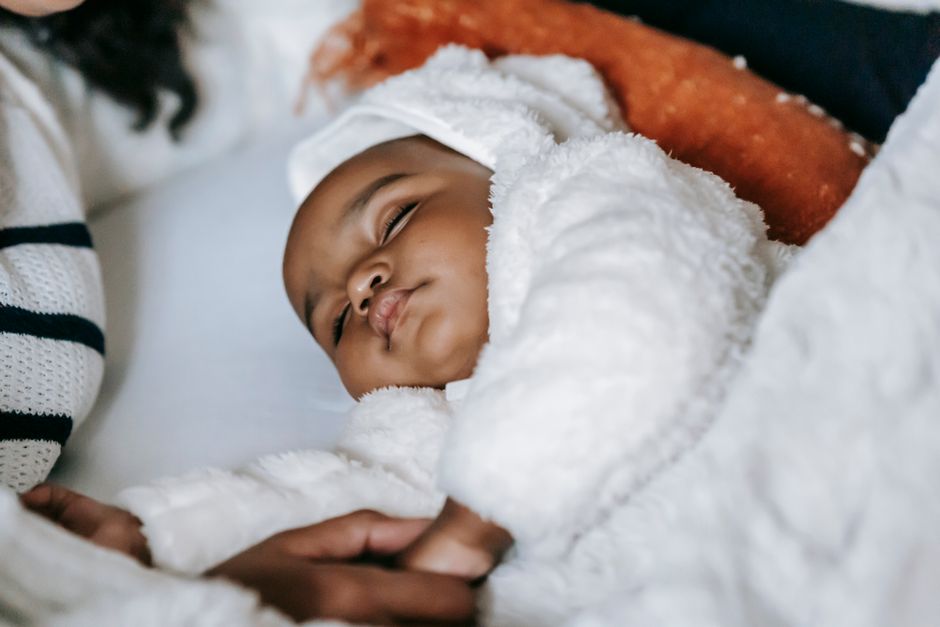
Most babies start sleeping through the night between 4 and 6 months old. That means a stretch of 6 to 8 hours without waking for a feed. Some babies get there earlier. Some take longer. Both are normal. The key is understanding what “sleeping through” really means and why your baby’s age and development matter more than any sleep training method.
What Does Sleeping Through the Night Actually Mean?
Sleeping through the night does not mean 12 hours of uninterrupted sleep. That is a common misunderstanding. For babies, a “full night” of sleep is usually 6 to 8 hours straight. The National Sleep Foundation defines it as 6 to 9 hours for infants under 12 months.
Many babies wake briefly during the night and go back to sleep on their own. Parents may not even notice. The goal is not zero wakings. It is that your baby can settle back to sleep without needing your help every time.
Newborns wake every 2 to 3 hours to eat. Their stomachs are tiny and they need frequent feeding. By 3 or 4 months, many babies can go 5 to 6 hours. By 6 months, some can manage 8 hours. But every baby is different and that is okay.
When Do Babies Sleep Through the Night by Age?
Here is a general timeline based on what research and pediatric guidelines suggest. Remember these are averages, not deadlines.
| Age Range | Typical Night Stretch | What’s Happening |
|---|---|---|
| 0-2 months | 2-4 hours | Frequent feeding needs; no day-night rhythm yet |
| 2-4 months | 4-6 hours | Melatonin production starts; longer stretches possible |
| 4-6 months | 6-8 hours | Many babies can sleep through; some still need one feed |
| 6-9 months | 8-10 hours | Most babies can sleep through without feeding |
| 9-12 months | 9-12 hours | Sleep patterns stabilize; separation anxiety may cause wakings |
Notice the range at each stage. A 4-month-old who sleeps 6 hours is doing great. A 6-month-old who still wakes once to eat is also normal. The American Academy of Pediatrics says most babies achieve this milestone by 6 to 9 months. But 20 to 30 percent of healthy babies still wake regularly at 12 months. That is not a problem unless it bothers you or your baby.
What Actually Helps Babies Sleep Longer?
Research published in the journal Pediatrics found that babies who slept longer at night had a few things in common. They had consistent bedtime routines. They were put down drowsy but awake. And they were not fed to sleep every time.
Here are evidence-based strategies that can help:
- Establish a consistent bedtime routine. A bath, a book, and a lullaby signal to your baby that sleep is coming. The same order every night helps their brain prepare.
- Put your baby down drowsy but awake. This is the single most recommended approach from sleep researchers. Babies who learn to fall asleep on their own at bedtime are more likely to settle themselves when they wake at night.
- Maximize daytime feeds. Babies who get enough calories during the day may need fewer night feeds. Offer full feeds every 2.5 to 3.5 hours during the day for younger infants.
- Create a dark, cool sleep environment. A room temperature around 68-72°F and blackout curtains can help. Light disrupts melatonin production.
- Watch wake windows. Overtired babies sleep worse. For a 4-month-old, wake windows are about 1.5 to 2 hours. For a 6-month-old, about 2 to 3 hours.
None of these guarantee your baby will sleep through the night. They just improve the odds. Some babies are naturally better sleepers regardless of what parents do.





What Does Research Say About Sleep Training?
Sleep training is a loaded topic. Some parents swear by it. Others find it upsetting. The research is actually reassuring for both sides.
A 2016 study published in Pediatrics followed infants whose parents used graduated extinction (Ferber method) or bedtime fading. Researchers measured stress hormones and attachment security. They found no negative effects on either. The sleep-trained babies slept longer and woke less often. Their parents reported less depression and better sleep themselves.
But the same study also found that babies in the control group who were not sleep trained eventually slept through the night too. It just took longer. By 12 months, there was no meaningful difference between groups.
What this means: Sleep training is not harmful. It can help exhausted parents. But it is not necessary for healthy development. Some babies respond well to gentle methods like fading. Others need more structure. There is no one right way.
One clarification that matters: Sleep training is not the same as night weaning. Some babies still need a night feed even after they learn to self-settle. Premature babies and those with growth concerns may need nighttime calories longer. Talk to your pediatrician before cutting night feeds entirely.
Why Some Babies Do Not Sleep Through the Night
If your baby is not sleeping through the night at 6 months, do not panic. Many factors are at play. Some are developmental. Some are temperament. Some are just luck.
Growth spurts can disrupt sleep temporarily. Babies often wake more around 3 weeks, 6 weeks, 3 months, and 6 months. These phases usually last a few days and pass on their own.
Teething is a common culprit. But the evidence is mixed. A 2016 study in Pediatrics found that teething symptoms were mild and lasted only a few days. If your baby is waking more and has other signs like drooling or chewing, it may be teething. But do not assume every sleep regression is teeth.
Separation anxiety peaks around 8 to 10 months. Babies realize you exist even when you leave the room. They call for you because they want you there. This is a sign of healthy attachment, not a sleep problem to fix.
Illness or ear infections can cause night wakings. If your baby seems uncomfortable, has a fever, or pulls at their ears, check with your doctor.
Some babies are simply light sleepers. Just like adults, babies have different sleep architectures. Some spend more time in light sleep stages. They wake more easily. That is not something you can change. It is part of who they are.
Common Misconceptions About Baby Sleep
There is a lot of bad information out there. Here are three myths that need to go.
Myth: Rice cereal in the bottle helps babies sleep longer. The American Academy of Pediatrics strongly advises against this. It is a choking hazard. Research shows it does not improve sleep. It can lead to overfeeding and weight gain. Do not do it.
Myth: Breastfed babies wake more than formula-fed babies. Some studies suggest formula-fed babies may sleep slightly longer stretches in the first few months. But by 6 months, the difference disappears. Breast milk digests faster, so younger breastfed babies may wake more often. But that is not a reason to switch to formula. The long-term health benefits of breastfeeding are well established.
Myth: If you do not sleep train by 6 months, you have missed the window. This is not true. Babies are capable of learning to self-settle at any age. Older babies may take longer to adjust because they have stronger habits. But they can still learn. Some parents prefer to wait until after the first birthday. That is fine.
When to Talk to Your Pediatrician
Most sleep issues are normal and temporary. But there are times when a medical check is warranted.
If your baby is not gaining weight appropriately, night wakings may be necessary for feeding. Do not restrict feeds without medical guidance.
If your baby snores loudly, gasps during sleep, or has pauses in breathing, that could be sleep apnea. This is rare in infants but worth mentioning to your doctor.
If your baby seems excessively sleepy during the day, is hard to wake, or sleeps much more than expected for their age, that could signal an underlying issue.
Trust your instincts. You know your baby better than any book or article. If something feels off, ask.
Frequently Asked Questions
When do most babies start sleeping through the night?
Most babies begin sleeping 6 to 8 hours straight between 4 and 6 months old. Some take until 9 months or longer, and that is normal.
Should I wake my baby to feed at night?
Only wake your baby to feed if your pediatrician advises it due to weight concerns. Once your baby has regained their birth weight, you generally do not need to wake them.
Is sleep training safe for my baby?
Research shows that methods like graduated extinction and bedtime fading are safe and do not harm attachment or stress levels. Talk to your pediatrician before starting any method.
What is the best way to help my baby sleep longer?
Establish a consistent bedtime routine and put your baby down drowsy but awake. This helps them learn to self-settle when they wake during the night.
