
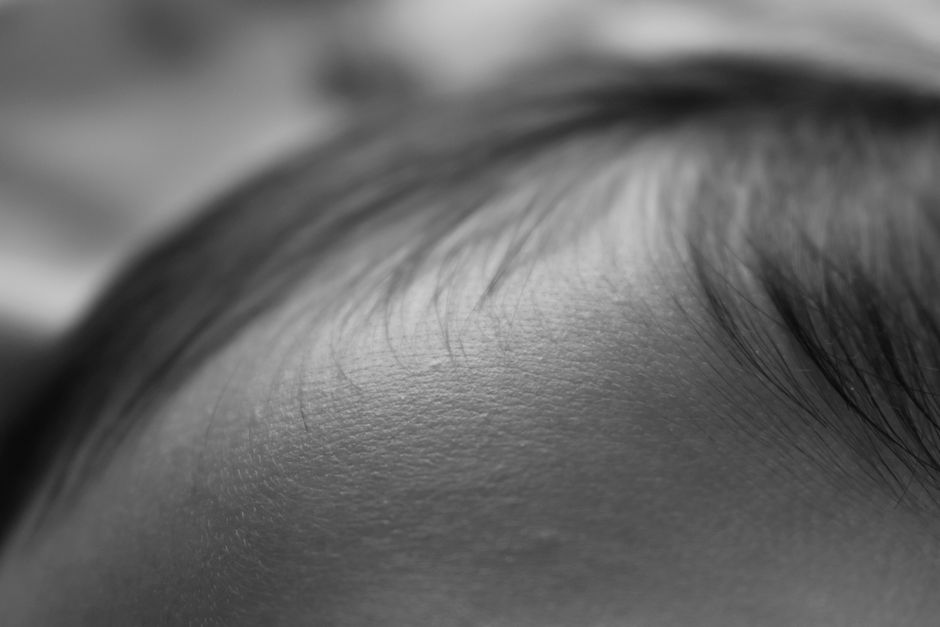
Babies can lose their first hair and grow in a very different texture within the first year, and the change often happens gradually between about 3 and 12 months. Some babies keep the same hair they were born with. Others go from dark and straight to light and curly, or the reverse. The final texture usually is not clear until toddlerhood, and for many children it keeps shifting into the school-age years.
When Do Babies Hair Texture Change What To Expect?
There is no single week or month when this happens. Hair texture changes on its own schedule, and that schedule is set largely by genetics.
What parents most often notice is a sequence rather than a single event. A newborn may have a full head of soft, fine hair. Around 3 to 6 months, much of that hair sheds. New hair grows in over the following months. By the first birthday, the texture may look nothing like it did at birth.
Two things are happening at once. First, babies cycle through hair growth phases faster than adults do, so the original hair falls out sooner. Second, the new hair follicles are producing a different kind of hair fiber than the ones that made the newborn hair.
Hair texture is not a fixed trait that switches on at a certain age. It is the product of follicle shape, fiber thickness, and curl pattern, all of which are genetically programmed. Those traits can express themselves differently as hair grows and as hormone levels shift.
Why Does Baby Hair Change Texture At All?
The main driver is the growth cycle of hair itself. Every hair follicle moves through phases: a growing phase, a resting phase, and a shedding phase. In newborns, many follicles are synchronized, which is why hair loss can look sudden.
Newborn hair is often finer and softer than the hair a child will eventually have. As follicles mature, they begin producing hair with a different diameter and a different shape. The shape of the follicle largely determines whether hair comes out straight, wavy, or curly. A round follicle tends to produce straighter hair. A flatter, more oval follicle tends to produce curl.
Hormones also play a role, though the details are not fully understood. Babies are exposed to maternal hormones before birth, and those levels drop after delivery. This shift is part of why some newborns shed hair in the first few months.
Genetics set the ceiling and floor. If both parents have curly hair, a child is more likely to develop curl, but the timing and final pattern still vary. Hair traits are influenced by many genes, not one, which is why siblings can have very different hair.
What Is The Typical Timeline For Baby Hair Changes?
The timeline below reflects what parents commonly report and what is generally described in pediatric references. It is a general pattern, not a rule.
- Birth to 3 months: Newborn hair is often fine and soft. Some babies have a lot, some have almost none.
- 3 to 6 months: Many babies shed much of their newborn hair. This is normal and not a sign of a problem.
- 6 to 12 months: New hair grows in and may look different in color, thickness, and texture.
- 12 to 24 months: Texture continues to settle. Curl pattern may become more obvious.
- 2 years and beyond: Hair keeps changing. Many children’s hair texture shifts again during the school-age years.
Some babies never go through a noticeable shed. Their hair simply grows and gradually changes. Others lose hair in patches that look uneven for a few weeks. Both are within the range of normal.
Color can change too. Many babies are born with dark hair that lightens over the first year. This is common and does not indicate any health issue.





Does Hair Texture Change Again Later In Childhood?
Yes. Hair texture is not locked in at age one or two. It can keep changing through early childhood and even into the teen years.
A child who had straight hair as a toddler may develop waves by age five. A child with tight curls may find the curl loosens as the hair grows longer and heavier. These shifts are normal and reflect ongoing changes in follicle activity and hormone levels.
Puberty is another point when hair can change. Hormonal shifts during adolescence can affect thickness, oiliness, and sometimes curl pattern. This is well established, though the exact reasons for individual variation are not fully understood.
Because hair traits are influenced by many genes and by hormones, no one can predict with certainty what a baby’s final hair will look like. Parents often find that the hair a child has at age seven or eight is closer to their adult hair than what they had as a baby.
Is Baby Hair Loss Something To Worry About?
Hair shedding in the first six months is normal and expected. It reflects the natural cycling of newborn hair, not a deficiency or disease.
There are situations where hair loss deserves a closer look. These include:
- Patchy bald spots with red, scaly, or crusty skin
- Hair loss accompanied by itching, rash, or broken hairs
- Loss that continues well past the first year without new growth
- Loss in a child who also has poor growth, fatigue, or other symptoms
One common cause of hair loss in babies is friction. A baby who sleeps on one side or rubs their head against a mattress can develop a bald patch. This is mechanical, not medical, and it resolves as the baby becomes more mobile.
Another pattern is a ring of thinning around the back of the head. This is often just friction from lying down. It is not a sign of illness.
If you are unsure whether your baby’s hair loss is typical, a pediatrician can assess it. In most cases, no treatment is needed.
What Determines A Baby’s Final Hair Texture?
Genetics is the biggest factor. Hair texture is a polygenic trait, meaning many genes contribute. This is why a child’s hair can resemble one grandparent more than either parent.
The physical structure of the hair fiber matters too. Three things shape how hair looks and feels:
- Follicle shape: Round follicles tend to produce straight hair. Flatter follicles tend to produce curl.
- Fiber diameter: Thicker fibers feel coarser. Thinner fibers feel finer and softer.
- Curl pattern: Determined by how the fiber twists as it grows.
These traits are set by genetics, but their expression can shift with age and hormones. That is why baby hair and adult hair often differ.
There is no product, food, or routine that changes a child’s natural hair texture. Claims that a shampoo, oil, or supplement can alter texture are not supported by clinical evidence. Hair texture is structural, not something that can be reshaped from the outside.
How Should Parents Care For Changing Baby Hair?
Baby hair does not need much. Gentle care is enough.
Wash with a mild baby shampoo a few times a week. Daily washing is not necessary and can dry out the scalp. Use a soft brush or a wide-tooth comb. Avoid tight hairstyles that pull on the scalp, since constant tension can damage hair follicles over time.
If your baby has curls, detangle gently when the hair is damp. Do not yank through knots. Curly hair tends to be drier, so a small amount of a gentle conditioner or leave-in product can help, but keep it simple.
Do not use adult hair treatments, chemical straighteners, or dyes on a baby or toddler. These products are not designed for young children and can irritate the scalp.
If you notice a rash, persistent bald patches, or broken hairs, talk to your pediatrician rather than trying over-the-counter remedies.
When Should You Talk To A Doctor About Baby Hair?
Most hair changes in the first two years are normal. A doctor visit is reasonable if hair loss is accompanied by other symptoms or if you are concerned.
Signs that warrant a check include hair loss with scaling or redness, brittle hair that breaks easily, hair loss along with poor weight gain or delayed development, or loss that does not improve over several months.
In many cases, a pediatrician can reassure you after a simple exam. If a medical cause is suspected, they may order basic tests. Most babies with typical hair shedding need no testing at all.
Frequently Asked Questions
When do babies hair texture change?
Most babies begin shedding their newborn hair between 3 and 6 months, with new hair growing in over the following months. By the first birthday, the texture often looks different from birth, though timing varies widely.
Can a baby’s hair texture change more than once?
Yes. Hair texture can keep shifting through early childhood and again during puberty. Many children’s final texture is not clear until they are older.
Is it normal for a baby to lose hair?
Yes. Shedding newborn hair in the first six months is normal and expected. Hair loss with rash, scaling, or that continues past the first year without regrowth should be checked by a doctor.
Can you change a baby’s hair texture with products?
No. Hair texture is determined by follicle shape and genetics, and no shampoo, oil, or supplement has been shown to change it. Products can only affect how hair looks temporarily.
