
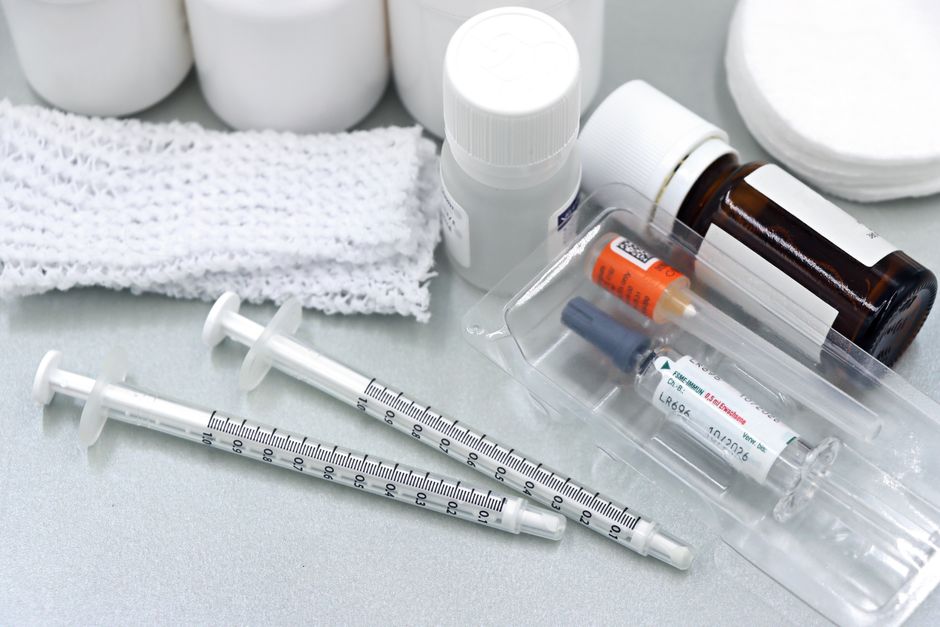
The polio vaccine was given on sugar cubes in the United States starting in the early 1960s, after the oral polio vaccine (OPV) was licensed in 1961. The sugar cube was simply a delivery method for the liquid vaccine — a way to get children to swallow it without a needle. This approach was used widely through the 1960s and into the 1970s, and it helped the U.S. eliminate wild polio by 1979.
When Did They Give The Polio Vaccine In Sugar Cubes?
The sugar cube era began in 1961, when the U.S. licensed the oral polio vaccine developed by Albert Sabin. The vaccine was a live, weakened (attenuated) form of poliovirus given by mouth. Public health teams needed a way to give it to millions of children quickly, and a sugar cube soaked with the liquid vaccine was practical and easy to swallow.
Mass immunization campaigns used sugar cubes throughout the 1960s. School gymnasiums, health clinics, and community centers became distribution points. Children lined up, received a cube, and that was it — no injection, no needle, no crying.
The sugar cube method faded in the U.S. after 2000. That year, the country switched back to the injectable inactivated polio vaccine (IPV) for routine childhood immunization. The reason was a rare but real risk: the live weakened virus in OPV could, in extremely rare cases, mutate and cause paralysis. The U.S. has used only IPV since then. Sugar cubes remain part of polio history in America, not its present.
Globally, the story is different. The oral vaccine is still used in many countries, though often as drops rather than on sugar cubes. The drops are simpler to store and transport than sugar cubes, and they work the same way.
Why Was The Polio Vaccine Put On A Sugar Cube?
The sugar cube solved a practical problem: how to give a liquid vaccine to a young child without a syringe. The oral vaccine was swallowed, so it needed a vehicle that children would accept. Sugar worked.
There were other advantages. Oral delivery meant no needles, so no need for sterile injection equipment and no needle-stick injuries. Volunteers and school staff could help distribute the vaccine without medical training for injections. In mass campaigns, that mattered enormously.
The sugar cube also had a psychological effect. Children who feared shots would take a sweet cube without protest. Parents who might have hesitated about needles were more willing to bring their children in. Public health officials understood that ease of delivery was not a minor detail — it was the difference between a campaign that reached millions and one that stalled.
How Did The Sugar Cube Polio Vaccine Work?
The oral polio vaccine contained live but weakened poliovirus. When a child swallowed it, the weakened virus multiplied briefly in the gut. That triggered an immune response — the body produced antibodies against poliovirus without the child ever getting sick.
The weakened virus was also shed in stool for a short time. In places with poor sanitation, that shedding could spread the weakened virus to others, indirectly immunizing some people who never received the vaccine themselves. This “passive” spread was one reason OPV was so effective in mass campaigns. It was also one reason the vaccine carried a small risk.
In rare cases, the weakened virus could mutate back toward a form that causes paralysis. This condition is called vaccine-associated paralytic polio (VAPP). It is estimated to occur in roughly one in every 2 to 3 million doses, though exact figures vary by study and population. A related problem, circulating vaccine-derived poliovirus (cVDPV), can emerge when the weakened virus spreads for a long time in under-immunized communities and regains the ability to cause disease.
This is why the U.S. stopped using OPV. The injectable vaccine (IPV) uses killed virus. It cannot cause polio because the virus is not alive. It provides excellent protection against paralysis, though it does not produce the same gut immunity as OPV, meaning it is somewhat less effective at stopping person-to-person transmission. For a country with high vaccination coverage and no circulating wild virus, that trade-off made sense.
What Was The Difference Between The Salk And Sabin Polio Vaccines?
The two polio vaccines were developed by different scientists and worked in different ways. Jonas Salk’s vaccine, licensed in 1955, was an injectable vaccine made from killed virus. Albert Sabin’s vaccine, licensed in 1961, was an oral vaccine made from live weakened virus.
| Feature | Salk (IPV) | Sabin (OPV) |
|---|---|---|
| Delivery | Injection | Oral (drops or sugar cube) |
| Virus type | Killed | Live, weakened |
| Prevents paralysis | Yes | Yes |
| Limits spread in gut | Less so | Yes |
| Risk of vaccine-caused polio | None | Rare (VAPP, cVDPV) |
| Ease of mass distribution | Requires injection supplies | Simple |
Both vaccines played major roles in reducing polio worldwide. The Salk vaccine was the first to be used widely in the U.S., and it drove cases down sharply in the late 1950s. The Sabin vaccine, because it was easier to give and provided gut immunity, became the backbone of global eradication efforts.
When Did The U.S. Stop Using The Oral Polio Vaccine?
The U.S. stopped using OPV for routine childhood vaccination in 2000. Before that, a sequential schedule had been used for a few years — children received IPV for the first two doses and OPV for later doses. The full switch to IPV in 2000 eliminated the small risk of vaccine-associated paralytic polio entirely.
The change was recommended by public health advisory bodies and adopted by the Centers for Disease Control and Prevention and the American Academy of Pediatrics. The reasoning was straightforward: the U.S. had eliminated wild polio in 1979, so the risk of wild virus importation was low. The tiny risk of VAPP, while rare, was no longer worth accepting when a safe injectable alternative existed.
Globally, OPV remains in use in many countries because it is cheaper, easier to administer, and better at stopping transmission. The World Health Organization’s polio eradication strategy has relied heavily on OPV, though there has been a gradual shift toward IPV in some settings to reduce the risk of vaccine-derived outbreaks. The global picture is complex and continues to evolve.
Does The Sugar Cube Polio Vaccine Still Exist?
No. The sugar cube method is no longer used in the United States. Routine polio vaccination in the U.S. now uses the injectable IPV, given at 2 months, 4 months, 6 through 18 months, and 4 through 6 years of age. The CDC publishes the current schedule, and it has not changed in its core structure for years.
In some lower-income countries, OPV is still given — but usually as liquid drops directly into the mouth, not on sugar cubes. The drops are simpler and cheaper to produce and distribute. Sugar cubes were a clever solution for a particular time and place, but they have largely been replaced by more practical delivery methods.
Some countries use a combination approach: IPV for the first dose to reduce VAPP risk, followed by OPV for subsequent doses to build gut immunity. This strategy has been adopted in parts of the world where both vaccines are available.
What Should Parents Know About Polio Vaccination Today?
Polio is still a real threat in a few parts of the world. Wild poliovirus remains endemic in Afghanistan and Pakistan, and vaccine-derived outbreaks have appeared in several countries with low immunization coverage. Until polio is eradicated everywhere, unvaccinated children remain at risk, even in countries that have been polio-free for decades.
The injectable vaccine used in the U.S. is safe and effective. It cannot cause polio. The most common side effects are mild — redness or soreness at the injection site. Serious reactions are extremely rare. The CDC and the American Academy of Pediatrics both recommend the full series for all children.
Adults who were never vaccinated, or who are unsure of their status, should talk to their doctor. The CDC recommends that adults who are at increased risk of exposure — travelers to polio-endemic areas, laboratory workers handling poliovirus, and healthcare workers in contact with infected patients — receive a booster dose of IPV. For most adults who were fully vaccinated as children, no booster is needed.
One point worth clarifying: the sugar cube itself was never the medicine. It was a delivery device. The protection came from the vaccine, not the sugar. That distinction matters when people hear stories about “the sugar cube vaccine” and wonder whether the sugar had some special role. It did not.
Frequently Asked Questions
When did they stop giving the polio vaccine on sugar cubes?
The U.S. stopped using the oral polio vaccine in 2000 and switched to the injectable form. Sugar cubes were phased out well before that as drops became the preferred oral method.
Was the sugar cube polio vaccine safe?
It was effective and saved millions of children from paralysis. It carried a very rare risk of causing polio — roughly one in every 2 to 3 million doses — which is why the U.S. switched to the injectable vaccine.
Why did they put the polio vaccine on a sugar cube?
The sugar cube made the liquid vaccine easy for children to swallow without a needle. It allowed mass campaigns to vaccinate millions of children quickly and with less fear.
Do kids still get the polio vaccine on a sugar cube today?
No. Children in the U.S. receive the injectable polio vaccine, not the oral form. Some countries still use oral drops, but sugar cubes are no longer part of routine vaccination.
