
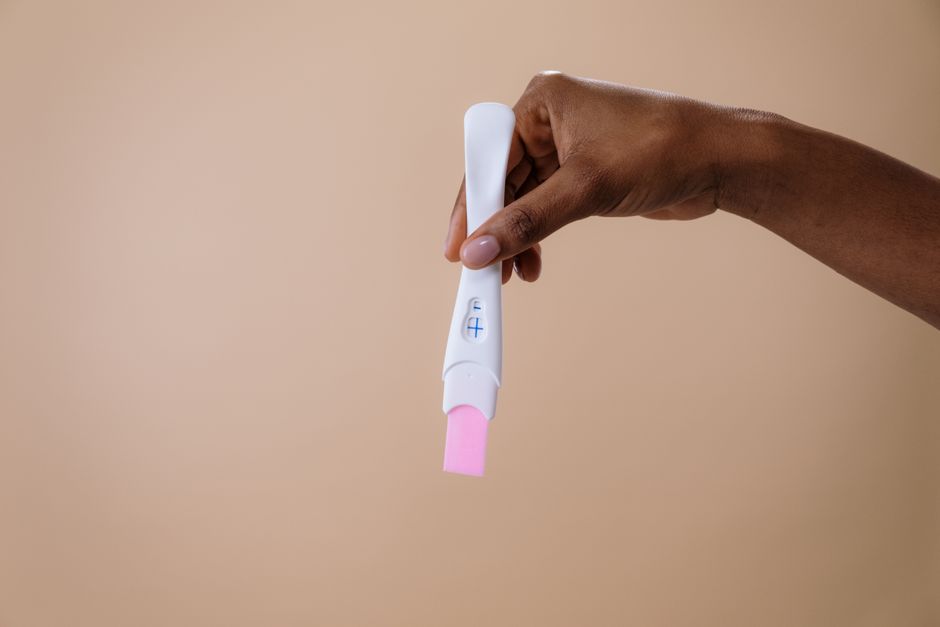
You can check for pregnancy as soon as the day your period is due to start. At that point, a home urine test is accurate for most people. Testing much earlier than that raises the chance of a false negative, because the hormone these tests detect may not have built up to a detectable level yet.
The biology behind that timing is straightforward once you know what the tests are measuring. What follows explains how pregnancy tests work, why timing matters so much, and what can throw a result off in either direction.
How Do Home Pregnancy Tests Actually Work?
Home pregnancy tests detect a hormone called human chorionic gonadotropin, usually shortened to hCG. This hormone is produced by the cells that will become the placenta, and it appears in urine and blood only after an embryo has implanted in the lining of the uterus.
Implantation is the key event. A fertilized egg travels down the fallopian tube and attaches to the uterine wall. That attachment is what triggers hCG production. Before implantation happens, there is no hCG to detect, no matter how early you test.
Implantation usually occurs somewhere between 6 and 12 days after ovulation, though the range varies. This is why the timing of ovulation matters more than the timing of sex. A test taken two days after intercourse tells you nothing useful, because even if fertilization occurred, implantation may not have happened yet.
Urine tests are designed to give a visual result, usually a line or a plus sign, when hCG crosses a certain threshold. Blood tests, done at a doctor’s office, measure the exact amount of hCG and can detect much lower levels. That is why a blood test can turn positive slightly earlier than a urine test.
When Can You Check Pregnancy With a Home Test?
The most reliable time to use a home test is the first day of a missed period. By that point, enough time has usually passed since ovulation for implantation to occur and for hCG to reach a level most urine tests can detect.
Testing a few days before a missed period is possible, and some tests are marketed for early detection. But earlier testing comes with a real trade-off. A negative result taken too soon does not mean you are not pregnant. It may simply mean hCG has not risen high enough yet.
If you test early and get a negative result, the standard advice is to wait a few days and test again. hCG levels rise quickly in early pregnancy, roughly doubling every couple of days in the earliest stages. A few extra days can turn a negative into a positive if pregnancy has occurred.
First morning urine is often recommended for early testing because it tends to be more concentrated after hours without drinking. This matters most when hCG levels are still low. Once a period is clearly missed, concentration is less of a factor.
Why Does Testing Too Early Give a False Negative?
A false negative happens when you are pregnant but the test reads negative. In early testing, this is usually a timing problem, not a faulty test.
Three things have to line up before a urine test can turn positive:
- An embryo must have implanted in the uterus
- The placenta cells must have started producing hCG
- Enough hCG must have accumulated in urine to reach the test’s detection threshold
Each of these takes time. Ovulation itself can shift from cycle to cycle, even in people who usually have regular periods. If ovulation happened later than expected, implantation happens later too, and hCG appears later. A test taken on the expected day of a missed period could be too early simply because the whole sequence started later that month.
This is also why two people with the same last menstrual period can get different results on the same day. The calendar date of a period is a rough guide, not a precise measure of when implantation occurred.
Can a Pregnancy Test Be Positive Before a Missed Period?
Yes, it can. Some people do get a positive result a few days before their period is due. Whether that happens depends on how early implantation occurred and how quickly hCG rose, along with the sensitivity of the specific test.
A positive result is generally more trustworthy than a negative one taken at the same early point. That is because a positive means hCG was present at a detectable level. False positives are uncommon, though they can happen for specific medical reasons covered below.
The reverse is not true. A negative result before a missed period is weak evidence. It does not rule out pregnancy. It only tells you that hCG was not detectable at that moment.
What Can Cause a False Positive or False Negative?
False negatives are mostly about timing, as described above. But there are other factors worth knowing.
Some medications can affect results. Fertility treatments that contain hCG, such as certain trigger shots, can cause a false positive if you test too soon after receiving them. The hCG in the medication is the same hormone the test detects. If you have had a trigger shot, it is worth asking your clinic how long to wait before testing at home.
Blood in the urine or certain proteins can occasionally interfere with a test, which is one reason to follow the instructions carefully. Testing too soon after drinking a large amount of fluid can dilute urine and lower hCG concentration.
False positives are less common but do occur. A very early miscarriage, sometimes called a chemical pregnancy, can produce a positive test followed by a period. The test was accurate at the time. The pregnancy simply did not continue. Certain medical conditions and, rarely, some medications can also cause a positive result without a pregnancy. If a positive result does not fit your situation, a clinician can confirm with a blood test.
Urine Test or Blood Test: What Is the Difference?
Urine tests are convenient, private, and inexpensive. Blood tests are more sensitive and give an actual number rather than a yes or no. The table below shows how they compare.
| Feature | Home Urine Test | Blood Test (at a clinic) |
|---|---|---|
| Where it is done | At home | Doctor’s office or lab |
| What it measures | Presence of hCG above a threshold | Exact amount of hCG |
| Earliest detection | Usually around a missed period | Slightly earlier, because it detects lower levels |
| Result type | Positive or negative | Numeric value |
| Typical use | First check at home | Confirmation and monitoring |
Blood tests come in two forms. A qualitative test simply confirms whether hCG is present. A quantitative test, often called a beta hCG test, measures the amount. Quantitative tests are used to track early pregnancy and to monitor situations where the level needs to be followed over time.
What Should You Do After a Positive or Negative Result?
After a positive home test, the usual next step is to contact a healthcare provider. They can confirm the result, discuss timing, and arrange appropriate early care. A home test is a screening tool, not a diagnosis, and confirmation is standard practice.
After a negative test, the right next step depends on timing. If your period has not started and you tested early, wait a few days and test again. If your period is late and repeated tests stay negative, or if you have symptoms that concern you, talk to a clinician. There are reasons for a late period other than pregnancy, and a doctor can help sort out what is going on.
One point that often gets lost: a home test tells you whether hCG is present, not whether a pregnancy is progressing normally. That is why confirmation with a clinician matters, especially if you have pain, heavy bleeding, or other symptoms that feel wrong.
Frequently Asked Questions
How soon after sex can I take a pregnancy test?
Wait until around the time your period is due, since a test can only turn positive after implantation and hCG production begin. Testing a day or two after sex will not give a meaningful result.
Can I be pregnant and still get a negative test?
Yes, especially if you test too early, because hCG may not have reached a detectable level yet. Waiting a few days and retesting usually resolves this.
Is it better to test in the morning?
First morning urine is often recommended for early testing because it is more concentrated. Once your period is clearly missed, the time of day matters less.
Can a pregnancy test be wrong?
Home tests are generally reliable when used correctly and timed well, but false negatives from early testing are common. A clinician can confirm with a blood test if a result does not fit your situation.
