
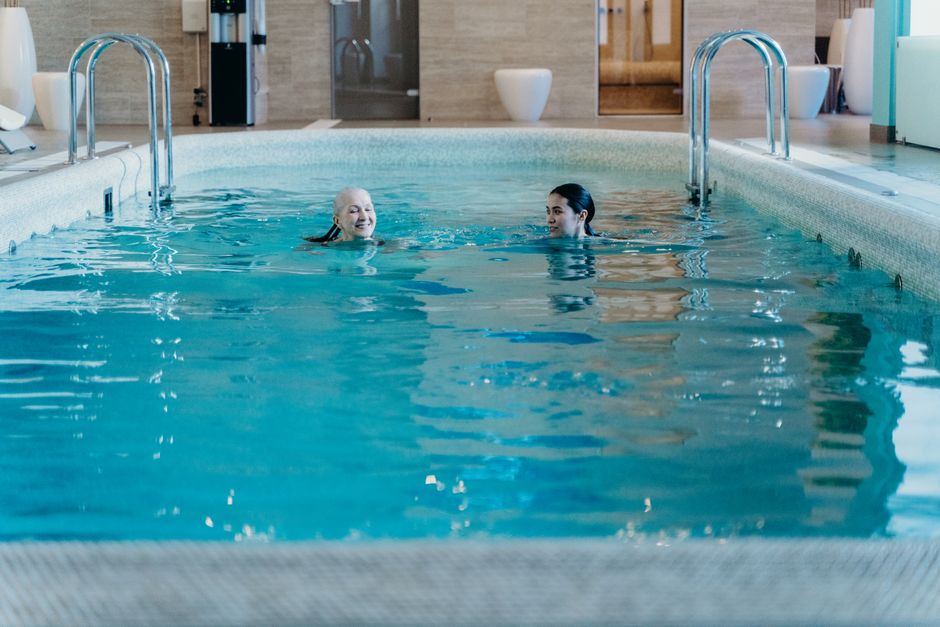
Most surgeons allow swimming once the surgical incision is fully closed and healed, which usually happens around two to three weeks after total knee replacement. That timeline is about the skin, not the joint. The deeper tissues and the implant itself are not the reason for the wait. Until that outer layer seals, pool water can carry bacteria into an open wound and, in rare cases, down to the new joint.
This is why the answer is never a single date. It is a milestone. Your wound has to be closed with no scabs, no drainage, and no crusting. Once your surgeon confirms that, swimming is often one of the first activities you can return to, and it is frequently encouraged.
Why Does the Incision Have to Be Fully Closed Before You Swim?
A healing incision is a direct opening into your body. Pool water, lake water, and hot tub water all contain microorganisms. A closed wound keeps them out. An open one does not.
The concern with a knee replacement is not a surface infection. It is that bacteria could reach the implant. Periprosthetic joint infection, an infection around the artificial joint, is uncommon but serious. It often requires additional surgery and long courses of antibiotics. This is the reason surgeons are cautious about anything that exposes an unhealed wound to water, including pools, baths, lakes, and the ocean.
Scabs and crusts can hide small openings. A wound that looks mostly healed may still have tiny breaks in the skin. That is why the standard is a fully intact surface, not “it looks pretty good.”
Swimming pools are not sterile, but properly chlorinated water is generally less of a bacterial concern than lakes, oceans, or hot tubs. Hot tubs are a particular issue because warm water and heavy use can make them harder to keep clean. Even so, no water is risk-free while the incision is open. The wound, not the water source, is the deciding factor.
When Can I Swim After Total Knee Replacement?
For most people, the window opens somewhere between two and four weeks after surgery, once the incision is completely sealed. Some surgeons use a fixed rule, such as no swimming for three weeks. Others check the wound at a follow-up visit and give the go-ahead then.
Your own timeline depends on a few things:
- How quickly your incision closes, which varies from person to person
- Whether you had any wound drainage or delayed healing
- Your surgeon’s specific protocol, which can differ from one practice to another
Because protocols vary, the only reliable answer is the one your surgeon gives you after looking at your knee. Do not rely on a general number from the internet, including this one, over your own surgeon’s instruction.
One point worth separating: getting in the water and doing formal aquatic therapy are not the same thing. Some surgeons start supervised pool therapy earlier than they would clear you for independent swimming, because the session is controlled and the wound is protected. Ask specifically which one you are being cleared for.
What About Showering and Bathing?
Showering is usually allowed much earlier than swimming, often within days of surgery, depending on how the wound was closed and what your surgeon recommends. Many surgeons permit a short shower once the dressing is removed or changed to a waterproof one. Soaking is different.
Baths, hot tubs, and soaking in any water are treated more like swimming. The reason is the same: prolonged immersion gives water more time to reach the incision. A quick shower with water running over and off the wound is not the same as sitting in a tub.
If you have staples or stitches, follow the removal schedule your care team gives you. Once those are out and the wound is closed, the rules for bathing usually relax as well.


Is Swimming Good Exercise After Knee Replacement?
Yes, once you are cleared. Water supports your body weight, which means less load through the knee compared with walking or standing on land. Many surgeons and physical therapists use pool exercise as part of rehabilitation because it lets people move the joint with less pain and stress.
Water also provides resistance. Moving your leg through water works the muscles around the knee without the pounding of land-based exercise. For many people recovering from knee replacement, this makes swimming and water exercise a useful bridge between early rehab and fuller activity.
What swimming does not do is replace your land-based physical therapy. Range of motion, strength, and walking mechanics still need to be built on solid ground. Think of the pool as one tool, not the whole program.
If you are not a confident swimmer, water walking, leg lifts at the pool edge, and gentle kicking drills can give you much of the benefit without swimming laps. A physical therapist can design a pool routine matched to where you are in recovery.
Which Swimming Strokes Are Easiest on a New Knee?
Freestyle and backstroke are usually the most comfortable early on, because the legs move in a relatively straight, gentle flutter. Breaststroke is often the hardest. The whip kick that drives breaststroke puts the knee into a position that can stress the new joint and the surrounding soft tissue.
That does not mean breaststroke is off-limits forever. It means it is usually not the stroke to start with. Build up your tolerance with easier strokes first, and add breaststroke later only if it feels comfortable.
Kicking from the hip with a light flutter is gentler than a hard, fast kick. Fins and kickboards can increase the load on the knee, so use them cautiously and only when your therapist or surgeon is comfortable with it.
What Precautions Should You Take When You Start Swimming Again?
Start slow. A new knee is still healing internally for months after the skin closes, even though the wound looks fine. The incision sealing is the gate for getting in the water. It is not a signal that the knee is fully recovered.
A few practical habits help:
- Use pool steps or a handrail to enter and exit, and take them one at a time
- Keep sessions short at first and see how your knee responds the next day
- Avoid slippery pool decks, which are a fall risk when your balance and strength are still returning
- Rinse off after swimming to remove chlorine and keep the skin around the scar healthy
- Stop and check with your surgeon if you notice new swelling, warmth, redness, or pain that lingers
Watch the wound after your first few swims. If the incision stays closed and calm, you are likely fine to continue. If it opens, weeps, or becomes irritated, stop and contact your care team.
When Should You Call Your Surgeon Instead of Swimming?
Certain signs mean the wound is not ready, or that something else is going on. Contact your surgeon if you notice:
- Any drainage, weeping, or new opening in the incision
- Increasing redness, warmth, or swelling around the wound
- Fever or chills
- Pain that is getting worse rather than better
These can be signs of infection, and infection around a joint replacement needs prompt attention. Do not wait to see if it clears up on its own, and do not get in the water while any of these are present.
It is also worth knowing that infection risk around a replaced joint does not disappear entirely after the wound heals. This is why dentists and some other providers ask about joint replacements before certain procedures, and why it matters to mention your knee replacement to any clinician treating you for a possible infection elsewhere in the body. The risk is low, but it is real enough that surgeons take it seriously.
Frequently Asked Questions
How soon after knee replacement can I get in a pool?
Most surgeons allow it once the incision is fully closed, which is often around two to three weeks after surgery. Your exact timing depends on how your wound heals and your surgeon’s protocol.
Can I swim if my incision still has a scab?
No. A scab or crust can hide small openings in the skin, so the wound is not considered closed. Wait until the surface is fully intact and your surgeon confirms it is healed.
Is a hot tub safe after knee replacement?
Not until your incision is completely closed, and even then it carries more risk than a pool. Warm water and heavy use make hot tubs harder to keep clean, so ask your surgeon before using one.
Does swimming help my knee replacement recover faster?
Water exercise can help you move the joint with less load and pain, and many surgeons use it in rehab. It does not replace land-based physical therapy, which is still needed for strength and walking.
