
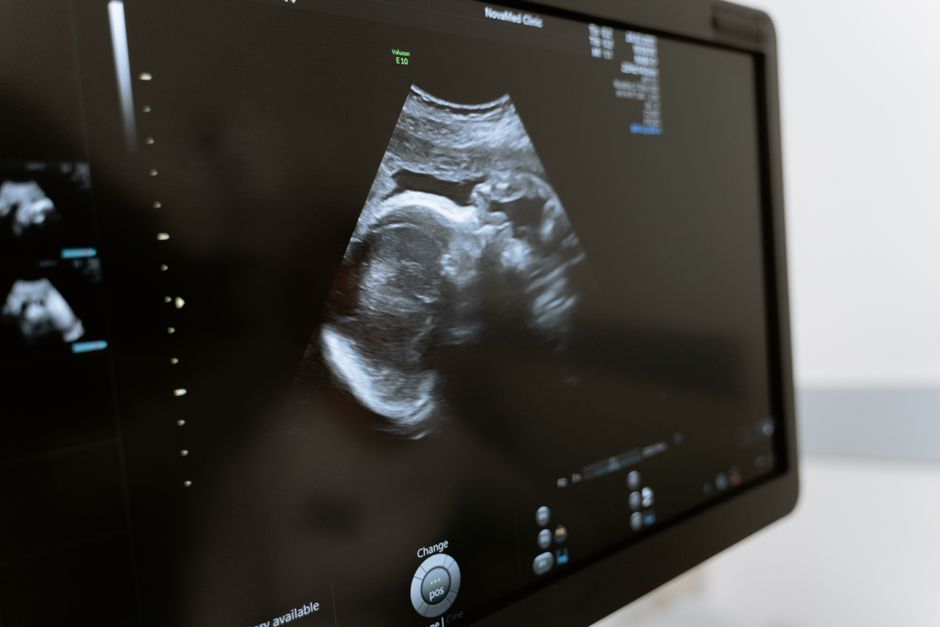
Your baby can start hearing sounds around 18 weeks of pregnancy. By 25 to 26 weeks, their hearing is developed enough to respond to voices and music. This is not a myth or a guess. Research from fetal development studies shows the inner ear structures form early and become functional in the second trimester.
When Does a Fetus Start Hearing?
A fetus begins developing ear structures very early. The inner ear starts forming around the 8th week of pregnancy. But hearing does not happen right away. The small bones and nerves need time to connect to the brain.
Studies have found that by 18 weeks, the cochlea — the part of the ear that turns sound waves into signals — is mostly formed. The American Academy of Pediatrics notes that the fetus can detect sounds between 18 and 20 weeks. These early sounds are muffled. Your baby hears your heartbeat, your breathing, and the gurgle of your digestive system first.
Loud external sounds can be heard around 22 weeks. By 25 to 26 weeks, the hearing is more refined. Your baby can recognize your voice and respond to music. This timeline comes from research published in journals like Developmental Psychobiology and Ultrasound in Obstetrics & Gynecology.
What Sounds Can a Fetus Actually Hear?
The womb is not silent. It is actually quite noisy. Your baby hears a mix of internal and external sounds. But the quality is different from what you hear.
Internal sounds are the loudest. Your heartbeat is about 72 beats per minute. Your blood whooshing through vessels creates a constant hum. Your stomach growls and your lungs expand. These sounds provide a steady background rhythm.
External sounds come through your abdominal wall and the fluid in the womb. They are muffled, like hearing someone talk through a thick wall. High-pitched sounds are filtered out more than low-pitched ones. Your voice is easier for your baby to hear because it travels through your body directly. A stranger’s voice is quieter and less clear.
Research using microphones inside the womb has measured sound levels. A normal conversation outside measures around 60 decibels. Inside the womb, it drops to about 30 to 40 decibels. Loud noises like a vacuum cleaner or a car horn are still loud enough to be heard, but they are softened.
Can Playing Music for Your Baby in the Womb Help Development?
This is a popular idea, and some evidence supports it. But the claims online often go too far. Let’s look at what studies actually show.
Research published in Frontiers in Psychology found that fetuses exposed to music showed more movement and changes in heart rate. This suggests they are paying attention. Some studies suggest that babies exposed to music before birth may show stronger language development later. But these effects are small and not guaranteed.
There is no evidence that playing Mozart or classical music makes your baby smarter. This idea, sometimes called the “Mozart effect,” has been widely debunked. Playing music does not boost IQ. It may simply provide a familiar sound that is calming after birth.
What about headphones on the belly? Some products sell devices that strap speakers to your pregnant belly. The American College of Obstetricians and Gynecologists has not endorsed these. The sound inside the womb is already loud enough from your own body. Adding more volume could overstimulate the baby. Loud sounds, especially prolonged ones, may raise stress hormones in the fetus. Stick to normal music played at a moderate volume in the room.
| Sound Source | Volume Outside Womb | Volume Inside Womb | Effect on Fetus |
|---|---|---|---|
| Normal conversation | 60 dB | 30-40 dB | Muffled but detectable |
| Your voice | 60-70 dB | 40-50 dB | Clearer than other voices |
| Loud music (speakers) | 80-90 dB | 50-60 dB | May cause movement or heart rate change |
| Headphones on belly | 90-100 dB | 60-70 dB | Potentially overstimulating |





Does Talking to Your Baby Before Birth Make a Difference?
Yes, talking to your baby matters. But not in the way you might think. Your voice is the most consistent sound your baby hears. By the third trimester, your baby can recognize it and distinguish it from other voices.
A study from the University of Helsinki found that fetuses showed a change in heart rate when hearing their mother’s voice compared to a stranger’s voice. After birth, newborns prefer their mother’s voice and even the same stories read aloud during pregnancy. This is not about teaching words. It is about creating familiarity and comfort.
Reading aloud, singing, or just talking about your day all help. The content does not matter. The rhythm and tone of your voice are what your baby learns. This familiarity may help with bonding after birth. Some research suggests that babies whose mothers spoke to them in the womb cry less and are more soothed by their mother’s voice.
Do not stress about saying the right thing. Your baby does not understand words. They respond to the sound pattern. A calm, consistent voice is the most beneficial thing you can offer.
Can Loud Noises Harm a Fetus’s Hearing?
This is a real concern. A fetus’s ears are delicate. The inner ear structures are still developing through the second trimester. Very loud noises can potentially cause damage.
The CDC warns that prolonged exposure to noise above 115 decibels can be harmful during pregnancy. This is about as loud as a rock concert or a chainsaw. Occasional loud noises, like a car horn or a dog bark, are unlikely to cause harm. But regular exposure to loud environments is different.
Studies on pregnant women who work in noisy factories or attend loud concerts regularly show mixed results. Some research has found higher rates of hearing loss in children whose mothers were exposed to chronic loud noise. Other studies found no link. The evidence is not strong enough to say loud noise definitely causes harm, but it is enough to be cautious.
What about ultrasound? Medical ultrasounds use sound waves, but they are very high frequency and not audible. They are considered safe for the fetus. The American Institute of Ultrasound in Medicine states that there are no confirmed harmful effects from diagnostic ultrasound when used properly.
How Can You Support Your Baby’s Hearing Development?
You do not need special products or expensive classes. Your daily life already provides plenty of sound. Here are practical steps based on what research shows.
Talk to your baby. Speak in a normal voice. You do not need to shout or hold your belly. Your voice travels through your body clearly. Sing if you want. Babies do not care if you are off-key. The rhythm and emotion in your voice are what matter.
Play music at a moderate volume. Keep it in the background. Classical, lullabies, or even your favorite pop songs work. Avoid anything so loud it makes you want to leave the room. Your baby hears it too.
Read aloud. You can read a children’s book or a novel you enjoy. The sound of your reading voice is consistent and rhythmic. Some studies suggest that newborns recognize stories read to them in the womb. This is not about early education. It is about building a familiar sound environment.
Reduce exposure to very loud environments. If you attend a concert, stand far from speakers. If you work in a noisy job, talk to your doctor about hearing protection. Your body does not filter out loud sounds for your baby. They hear them too.
- Talk to your baby in a normal voice daily
- Play music at moderate volume in the background
- Read aloud from any book or magazine
- Avoid prolonged exposure to sounds over 115 decibels
- Do not use belly speakers or headphones on your abdomen
Your baby’s hearing is a natural process. You do not need to force it. Your voice and the sounds of your daily life are enough.
Frequently Asked Questions
When can a fetus hear my voice?
Your baby can hear your voice around 22 to 24 weeks of pregnancy. It becomes clearer by 26 weeks.
Does playing music for my baby in the womb make them smarter?
No. There is no evidence that music improves intelligence. It may be calming, but it does not boost IQ.
Can loud noises hurt my unborn baby’s hearing?
Prolonged exposure to very loud noises above 115 decibels may cause harm. Occasional loud sounds are unlikely to cause damage.
Should I talk to my baby bump or is that silly?
Talking to your bump is not silly. Your voice is familiar and calming to your baby. It helps with bonding after birth.
