
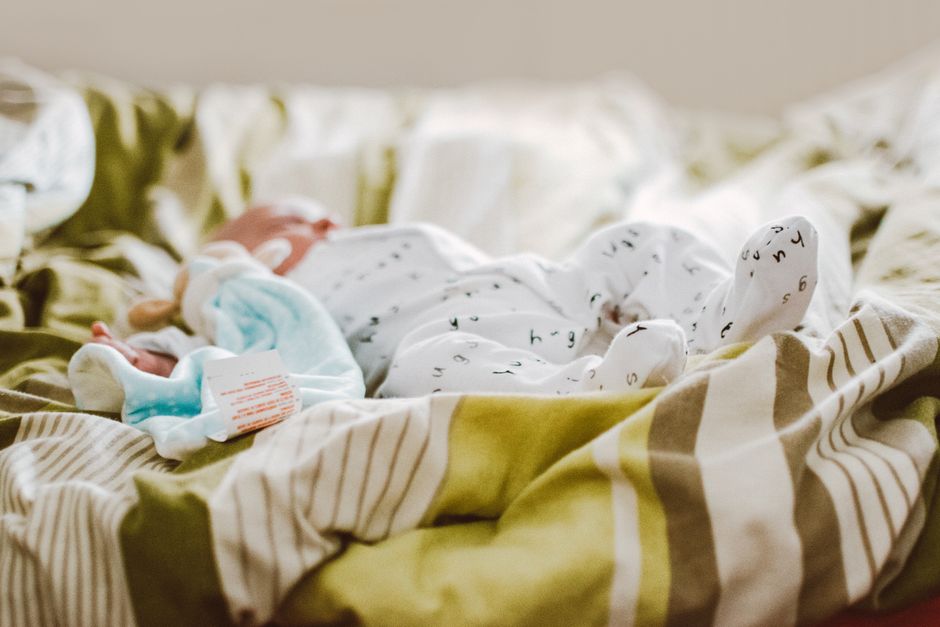
The short answer: wait until your baby is 1 year old before placing them on their stomach to sleep. Before that first birthday, babies should always be put to sleep on their backs. That advice comes from years of research linking back sleeping to a lower risk of sudden infant death syndrome (SIDS).
Once a baby can roll over both ways on their own, usually around 4 to 6 months, they may turn onto their stomach during sleep. At that point you do not have to keep flipping them back. But you still start every sleep on the back. The difference between placing a baby on their stomach and a baby rolling there themselves matters a great deal.
When Can A Baby Sleep On Their Stomach?
The American Academy of Pediatrics recommends back sleeping for every sleep until a child turns 1 year old. That includes naps and nighttime sleep. Placing a baby on their stomach to sleep before age 1 raises the risk of SIDS.
SIDS is the sudden, unexplained death of a baby younger than 1 year. It is rare, but it is the leading cause of death in babies between 1 month and 1 year of age in the United States. The link between stomach sleeping and SIDS is one of the strongest findings in infant health research.
Why does position matter so much? When a baby sleeps face down, they rebreathe their own exhaled air. That air is higher in carbon dioxide and lower in oxygen. Young babies also have weaker control over their head and neck, so they may not turn away from a surface that blocks their breathing. Back sleeping keeps the airway open and the face clear.
Here is the part many parents miss. The age of 1 year is not a magic switch. It is a practical cutoff based on when most babies have the strength and coordination to move freely during sleep. If your baby is close to their first birthday and rolling easily, the risk has already dropped a lot. The guidance is a broad safety rule, not a sharp biological line.
What If My Baby Rolls Onto Their Stomach While Sleeping?
If your baby can roll from back to stomach and back again on their own, you do not need to roll them back over. This usually starts around 4 to 6 months. The key is that they can roll both directions, not just one.
Once a baby can roll both ways, they have the strength to change position and turn their head. You should still place them on their back at the start of every sleep. What they do after that is up to them.
Watch for the one-direction roller. Some babies learn to roll onto their stomach before they can roll back. If your baby gets stuck face down and cannot return to their back, gently turn them over. This stage is usually brief.
Do not prop your baby on their side with pillows or rolled blankets. Side sleeping is not a safe middle ground. Babies placed on their side can roll onto their stomach more easily, and the side position itself carries a higher risk than back sleeping.
Why Is Stomach Sleeping Risky For Babies?
Stomach sleeping increases the chance a baby will breathe in their own exhaled air. It also puts more pressure on the face and jaw, which can narrow the airway. And it makes it harder for a baby to lose heat, which may play a role in SIDS.
Researchers have studied this for decades. The Back to Sleep campaign, launched in the 1990s, told parents to put babies on their backs. Rates of stomach sleeping fell, and SIDS deaths dropped sharply. That pattern has held up across many countries. When back sleeping became common, SIDS rates fell. It is one of the clearest examples of a public health change that saved lives.
Some parents worry a baby will choke on spit-up while on their back. This is a common fear, but it is not supported by the evidence. Babies on their back have a gag reflex and swallow that protect the airway. The windpipe sits above the food pipe, so spit-up tends to pool and drain rather than go down the wrong way. Stomach sleeping does not protect against choking.
What Makes A Safe Sleep Space?
Sleep position is only one part of safe sleep. The surface and surroundings matter just as much. A firm, flat mattress with a fitted sheet is the standard. Soft bedding, pillows, bumpers, and stuffed toys all raise the risk of suffocation and should stay out of the crib.
Here are the core safe sleep practices for the first year:
- Place your baby on their back for every sleep, naps included.
- Use a firm, flat sleep surface covered by a fitted sheet.
- Keep the crib bare. No pillows, blankets, bumpers, or toys.
- Share a room but not a bed. Room-sharing is recommended, ideally for the first 6 to 12 months.
- Keep the sleep area free of overheating. Dress your baby in light layers.
- Offer a pacifier at sleep time once breastfeeding is established.
- Keep the baby away from smokers and vaping.
Bed-sharing is a separate issue from room-sharing. The AAP advises against bed-sharing, especially for babies under 4 months and for babies born early or with low birth weight. The risk is higher when a parent has used alcohol, drugs, or certain medications, or when the sleep surface is soft.
Does Tummy Time Help?
Yes, but tummy time is not the same as stomach sleeping. Tummy time is supervised awake time on the stomach. It builds neck, shoulder, and arm strength and helps prevent flat spots on the back of the head.
Start tummy time early, even in the first weeks, for short stretches while your baby is awake and you are watching. Build up the time as your baby gets stronger. Never leave a baby on their stomach to sleep or unattended.
The strength babies build during tummy time is part of why rolling becomes possible. That same strength is why back sleeping does not delay development when babies also get supervised tummy time.
When Is It Safe To Stop Worrying About Sleep Position?
After the first birthday, the risk of SIDS drops very low, and sleep position is no longer a major safety concern. That is why the guidance sets 1 year as the point when stomach sleeping is considered safe.
Even so, some children keep sleeping on their back or side out of habit. There is no need to force a change. Let your child sleep in whatever position they choose once they are past their first birthday.
One more point on timing. The risk is not the same across the whole first year. SIDS risk is highest in the first few months of life and drops steadily after that. This is why back sleeping matters most in early infancy, though the recommendation stays in place until age 1.
What About Car Seats, Swings, and Other Seats?
Babies often fall asleep in car seats, swings, and bouncers. These are not safe sleep surfaces. If your baby falls asleep in one, move them to a firm, flat crib or bassinet as soon as you can.
Car seats are designed for travel, not sleep. A baby who slumps forward in a car seat can have their airway partly blocked. For long trips, take breaks and check on your baby. Never leave a baby sleeping in a car seat once you have arrived.
Frequently Asked Questions
At what age can a baby sleep on their stomach?
Wait until your baby is 1 year old before placing them on their stomach to sleep. Before that, always start sleep on the back, even if your baby can roll.
Can my baby sleep on their stomach if they roll there themselves?
Yes, once your baby can roll both from back to stomach and back again on their own, you do not need to turn them over. This usually happens around 4 to 6 months.
Is it safe for a baby to sleep on their side?
No. Side sleeping is not recommended because babies can roll onto their stomach more easily from that position. Back sleeping is the safe choice for the first year.
What if my baby spits up while sleeping on their back?
Back sleeping does not increase choking risk. A baby’s gag reflex and airway anatomy help protect them, so spit-up usually drains safely.
