
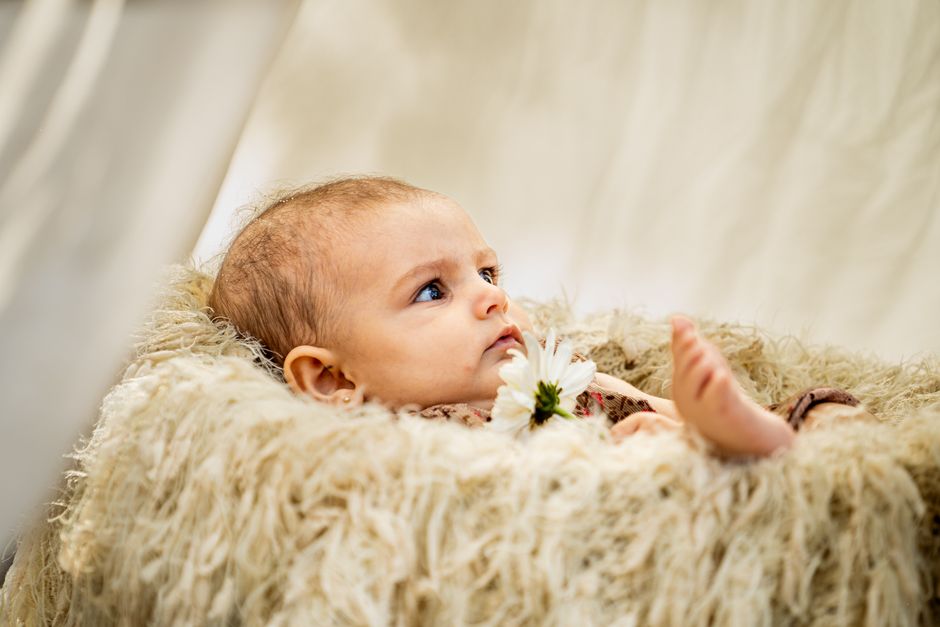
Most babies are born with hair that is lighter than what it will become by the time they are toddlers. The color change is not instant. It happens slowly over months and sometimes years. For most children, the hair color you see at age 2 or 3 is close to what they will have as adults. But some children see shifts well into elementary school. The key driver is melanin — the same pigment that colors skin and eyes. Your baby’s hair color at birth tells you very little about their permanent shade.
What determines a baby’s hair color at birth?
Hair color comes from two types of melanin: eumelanin (brown and black) and pheomelanin (red and yellow). The mix of these two pigments is set by genetics. But the amount of melanin in the hair follicle at birth is often much lower than it will be later.
At birth, many babies have not yet produced full melanin. The hair follicles are still maturing. This is why so many white or light-skinned babies are born with blonde or light brown hair even though both parents have dark hair. The pigment production system is simply not running at full speed yet.
Race and ethnicity play a role. Babies of African descent are more likely to be born with dark hair that stays dark. But even among these babies, subtle shifts in shade and tone can occur over the first few years. No rule applies to every child.
When does baby hair color start to change?
For most babies, the first noticeable change happens between 3 and 6 months old. This is when melanin production ramps up. A baby born with nearly white hair may start showing blonde or light brown roots. A baby born with light brown hair may darken to medium brown.
Research published in the Journal of Investigative Dermatology has shown that melanin production in hair follicles increases significantly during the first year of life. The hair itself is also being replaced. Newborn hair is shed and replaced by a coarser, more pigmented version. This shedding typically peaks around 3 to 4 months. So the hair you see at 6 months is often not the same hair the baby was born with.
The most dramatic changes usually happen between 6 months and 2 years. After age 2, changes tend to be slower and subtler. But some children continue to darken until age 5 or 6, especially if they have naturally light hair.
Does baby hair color change from blonde to brown?
Yes. This is one of the most common shifts. Many children who are born with light blonde or strawberry blonde hair end up with medium or dark brown hair by age 5. The change is usually gradual. Parents often notice it in photos taken year to year.
This happens because the hair follicles produce more eumelanin over time. The child’s genetic code for dark hair was always there. It just took time for the pigment system to turn on fully. The American Academy of Dermatology notes that this is normal and not a sign of any health issue.
A less common but real shift is from dark to light. This can happen in children with red hair genes. Some children born with brown hair lighten to auburn or copper as they get older. This is also tied to changes in the ratio of eumelanin to pheomelanin.




What role do genetics play in hair color changes?
Genetics are the entire story. Hair color is controlled by multiple genes. The most well-studied are MC1R, OCA2, and HERC2. Variations in these genes determine how much eumelanin and pheomelanin your child will produce. But genes do not always turn on at birth.
Some genes are expressed later in development. This is why a child can be born with light hair and later develop dark hair. The genetic potential was always there. It just activated over time. The same mechanism explains why some children’s eye color also changes in the first year.
There is no reliable way to predict a baby’s final hair color from newborn hair. Even a DNA test cannot tell you with certainty. The interaction of multiple genes and their timing of expression is too complex for simple prediction.
Can stress or illness change a baby’s hair color?
There is no strong evidence that stress or common childhood illnesses permanently change hair color in babies. Temporary changes can happen. Some children develop lighter stripes in their hair after a high fever. This is called banding and it is rare. It usually grows out as the hair is replaced.
Severe malnutrition can affect hair color. Protein deficiency, in particular, can cause hair to become lighter or reddish. This is seen in children with kwashiorkor, a form of severe malnutrition. In the United States, this is extremely rare. If your child is growing well and eating a normal diet, hair color changes are almost certainly genetic, not nutritional.
Some parents worry that hair loss or thinning is related to color changes. In most cases, it is not. Normal shedding of newborn hair can look alarming but is part of typical development. The new hair that grows in may be a different color. That is the change, not the loss itself.
When should parents be concerned about hair color changes?
Almost never. Hair color changes in infancy and early childhood are normal. But there are a few rare situations where a doctor should be involved.
- If hair color changes suddenly and dramatically over a few weeks, not months.
- If the hair is falling out in patches along with the color change.
- If the scalp shows redness, scaling, or bald spots.
- If the child is not growing or gaining weight normally.
These signs may point to an autoimmune condition like alopecia areata or a thyroid problem. But these are uncommon. The vast majority of parents who notice gradual darkening or lightening have nothing to worry about.
The CDC does not list hair color changes as a developmental milestone or a red flag. Pediatricians are not trained to track hair color. They care about growth, motor skills, and social development. Hair color is cosmetic, not medical.
Common misconceptions about baby hair color changes
One widespread myth is that rubbing a baby’s head or using certain shampoos can change hair color. This is false. Hair color is determined by melanin inside the hair shaft. No external product can alter that. Some products claim to darken or lighten hair temporarily but they are not safe for infants.
Another myth is that a baby’s hair color at birth predicts their adult hair color. This is not reliable. Many babies born with dark hair stay dark, but many do not. The reverse is also true. The only way to know is to wait.
A third myth is that cutting a baby’s hair makes it grow in thicker or darker. Hair thickness and color are controlled by the follicle, not the tip. Cutting does not change the follicle. The appearance of thicker hair after a haircut is an optical illusion caused by the blunt edge.
How does baby hair color compare to adult hair color?
The table below summarizes common patterns. These are trends, not rules.
| Hair color at birth | Common color by age 2-3 | Common color by adulthood |
|---|---|---|
| Very light blonde | Blonde to light brown | Light to medium brown |
| Strawberry blonde | Light auburn or copper | Red or brown-red |
| Light brown | Medium to dark brown | Dark brown |
| Dark brown or black | Dark brown or black | Dark brown or black |
| Red | Red or auburn | Red or auburn |
Notice that the most change happens in lighter shades. Babies born with very dark hair tend to stay dark. Babies born with lighter shades have more room to shift. This is because the melanin system starts at a low baseline and increases over time.
Does hair texture also change with color?
Sometimes. Hair texture and color are controlled by different genes, but they can change together. Many babies are born with fine, straight hair that later becomes coarser or curlier. This is especially common in children of mixed ethnic backgrounds.
The same hormonal and developmental signals that ramp up melanin production can also change the shape of the hair follicle. A round follicle produces straight hair. An oval follicle produces wavy hair. A flat follicle produces curly hair. These shapes can shift as the child grows.
Hair texture changes are normal and do not indicate any health problem. They are simply part of how the body matures. Parents often notice that their child’s hair at age 5 looks nothing like their baby hair in color or texture.
Frequently Asked Questions
Can a baby’s hair color change from dark to light?
Yes but it is less common than darkening. This usually happens in children with red hair genes.
At what age is a child’s permanent hair color set?
Most children reach their adult hair color by age 3 to 5. Some continue to darken until age 7.
Does breastfeeding affect baby hair color?
No. Breast milk does not change hair color. Hair color is determined by genetics, not diet.
Can a baby be born with hair that is not their real color?
Yes. Many babies are born with hair that is lighter or different from their genetic potential. The real color appears as melanin production increases.
