
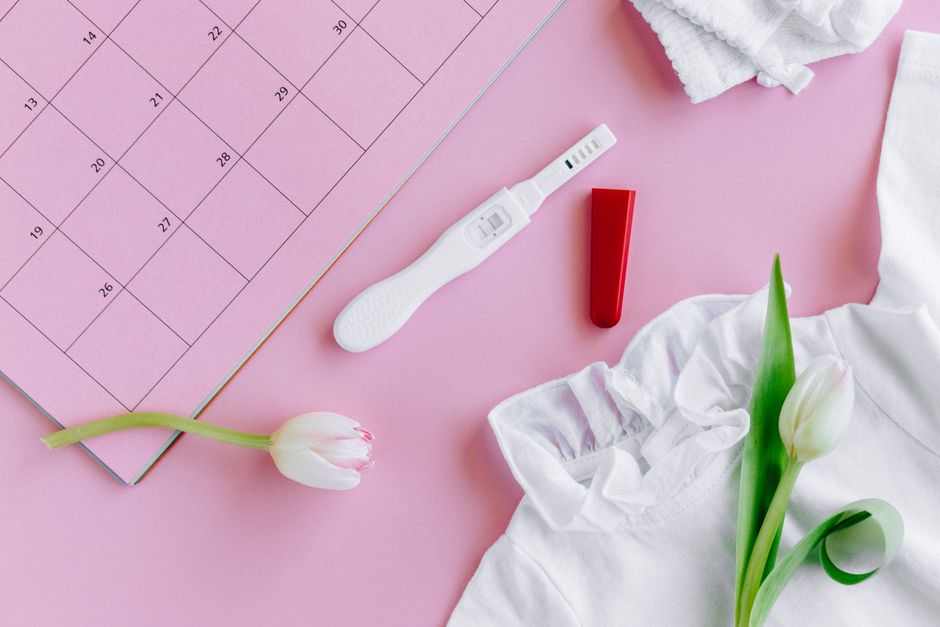
Ovulation is the moment your ovary releases an egg, and it usually happens about 14 days before your next period starts. For most women with a 28-day cycle, that lands around day 14, but cycles vary — so the exact day shifts too. If you are trying to conceive or simply want to understand your body, knowing the signs of ovulation can help you predict your most fertile window with more accuracy than a calendar alone.
What Exactly Happens During Ovulation?
Ovulation is one step in a longer hormonal sequence. In the first half of your cycle, estrogen rises as an egg matures inside a follicle in your ovary. When estrogen peaks, the brain releases a surge of luteinizing hormone (LH). This LH surge triggers the follicle to release the egg — that release is ovulation.
The egg then travels down the fallopian tube, where it can be fertilized for about 12 to 24 hours. If sperm is already waiting in the reproductive tract, fertilization is possible. If not, the egg dissolves and hormone levels drop, which eventually triggers your period about two weeks later.
This timeline is consistent for most women. The luteal phase — the time between ovulation and your next period — is usually 12 to 14 days. That is why ovulation is more predictable when counted backward from your period than forward from your last one.
When Are U Ovulating? How to Calculate Your Fertile Window
Your fertile window is the five days before ovulation plus the day of ovulation itself. Sperm can survive inside the female reproductive tract for up to five days, so having sex in the days leading up to ovulation can result in pregnancy even if you do not have sex on the exact day of ovulation.
To estimate your ovulation day, track your cycle length for a few months. Count the first day of your period as day one. Then subtract 14 days from the total length of your cycle. For a 28-day cycle, ovulation is around day 14. For a 32-day cycle, it is around day 18. For a 24-day cycle, it is around day 10.
This method works well for women with regular cycles. If your cycle length varies by more than a week from month to month, calendar-based prediction becomes unreliable. In that case, physical signs and ovulation tests are more helpful.
Physical Signs That Ovulation Is Near
Your body gives off signals when ovulation is approaching. Learning to read them can help you time intercourse more effectively.
Cervical mucus changes. In the days before ovulation, estrogen causes cervical mucus to become clear, stretchy, and slippery — similar to raw egg whites. This fertile mucus helps sperm swim and survive. After ovulation, progesterone makes mucus thick and sticky again.
Basal body temperature shift. Your resting temperature drops slightly just before ovulation, then rises about 0.5 to 1 degree Fahrenheit after ovulation. The temperature rise is caused by progesterone. You are most fertile in the two to three days before the rise. This method confirms ovulation happened but does not predict it in real time — by the time you see the rise, the egg is already on its way out.
Mild pelvic pain. Some women feel a twinge or cramp on one side of the lower abdomen around ovulation. This is called mittelschmerz. It can last from a few minutes to a few hours. It is not a reliable predictor for everyone, but if you feel it consistently, it can be a useful clue.
Breast tenderness and increased libido. Hormonal shifts around ovulation can make breasts feel sore or sensitive. Some women also notice a natural increase in sexual desire during this window. These signs are less reliable than mucus and temperature, but they can add context.



Ovulation Predictor Kits and Fertility Monitors
Ovulation predictor kits (OPKs) detect the LH surge in urine. The surge usually happens 24 to 36 hours before ovulation, so a positive test means your fertile window is open right now. These tests are highly accurate at detecting the LH surge itself — but they do not confirm that ovulation actually occurred.
Some women have an LH surge without releasing an egg. This is called luteinized unruptured follicle syndrome. It is not common, but it happens. If you get positive OPKs month after month and do not conceive, talk to a clinician about further evaluation.
Fertility monitors that track both LH and estrogen can give more advance notice. Rising estrogen levels signal that ovulation is approaching days before the LH surge. These devices are more expensive but can be helpful for women with irregular cycles.
What If Your Cycle Is Irregular?
Irregular cycles make ovulation prediction harder. Cycles that vary by more than 7 to 9 days from month to month are considered irregular. Causes include stress, significant weight changes, thyroid disorders, polycystic ovary syndrome (PCOS), perimenopause, and breastfeeding.
If your cycles are irregular, calendar methods and OPKs become less reliable. OPKs still work because they detect the LH surge whenever it happens — you just do not know when to start testing. Some women with irregular cycles test daily for weeks to catch the surge.
If you have gone more than 35 days without a period, or if your cycles are consistently shorter than 21 days, it is worth discussing with a clinician. These patterns can signal anovulation — cycles where no egg is released at all.
Can You Ovulate Without a Period?
Yes, but it is uncommon. Ovulation can happen before your first period after childbirth, after stopping birth control, or during perimenopause. The egg is released, hormone levels rise and fall, and a period follows about two weeks later. In these cases, the first ovulation of a new cycle happens without a preceding period — which is why women can get pregnant before their first postpartum period.
The reverse is also true. You can have a period without ovulating. Anovulatory bleeding happens when estrogen builds up, thickens the uterine lining, and then drops — causing a bleed that looks like a period. This is common in the first year after menarche and in the years leading up to menopause.
How Long Does Ovulation Last?
The release of the egg itself takes only a few minutes. But the egg remains viable for 12 to 24 hours after release. If sperm is present in the fallopian tube during that window, fertilization can occur.
Because sperm can survive up to five days, your total fertile window is about six days each cycle — the five days before ovulation plus the day of ovulation itself. Having sex every one to two days during this window maximizes the chance of conception.
When to See a Clinician About Ovulation
If you are under 35 and have been having regular unprotected sex for 12 months without conceiving, it is reasonable to seek evaluation. If you are 35 or older, the recommended waiting period is six months. If you are over 40, many clinicians recommend evaluation sooner rather than later.
See a clinician sooner if you have irregular or absent periods, a history of pelvic inflammatory disease, endometriosis, or prior abdominal or pelvic surgery. These conditions can affect ovulation or fallopian tube function.
No home test can confirm that an egg is actually being released. Blood tests for progesterone about seven days after suspected ovulation can confirm it happened. Ultrasound monitoring can also track follicle development and release directly.
Frequently Asked Questions
Can I get pregnant if I have sex after ovulation?
The egg only survives 12 to 24 hours after release, so pregnancy is unlikely if you have sex more than a day after ovulation. Sperm can wait for the egg, but the egg cannot wait for sperm.
How many days after ovulation does your period start?
Your period usually starts 12 to 14 days after ovulation. This luteal phase is remarkably consistent for most women, even when total cycle length varies.
Does ovulation pain mean I am ovulating?
Mittelschmerz — the one-sided pelvic twinge some women feel — often coincides with ovulation, but it is not proof. Some women feel the pain and do not release an egg, and many women ovulate without any pain at all.
Can stress stop ovulation?
High stress can delay or suppress ovulation by disrupting the hormones that trigger it. If stress is prolonged, it can cause missed periods entirely, but ovulation typically returns once stress levels decrease.
