
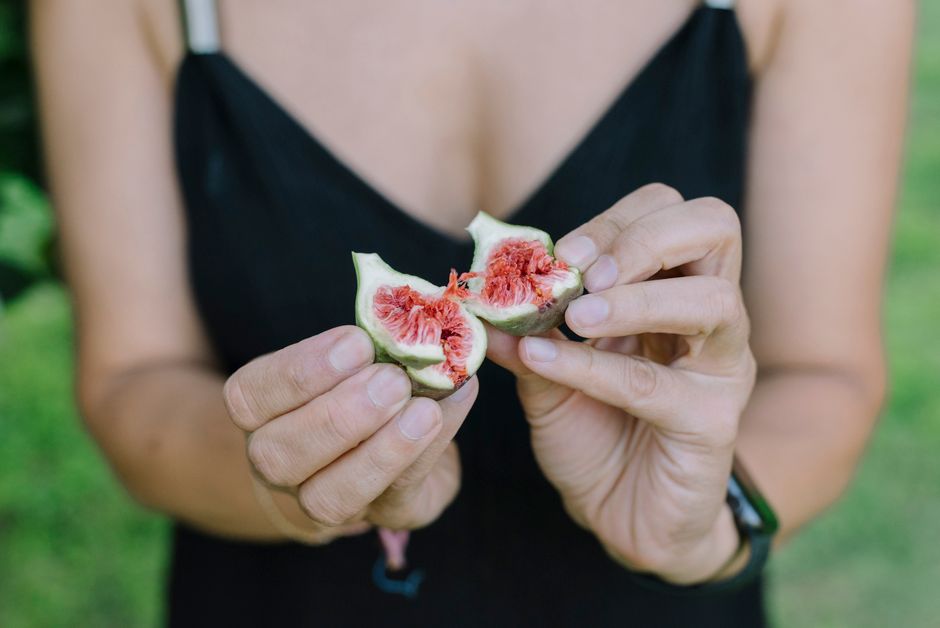
Figs do not ripen after picking. That single fact drives everything about harvest timing. A fig left on the tree will keep sweetening and softening, but the moment you snap it off, the clock stops. So the real question is not when to pick figs in general — it is how to tell the exact day a specific fig is ready.
Most figs ripen in late summer through early fall, though the timing depends heavily on variety and climate. There are two harvest windows for many types: a lighter “breba” crop in early summer on last year’s growth, and a main crop in late summer or fall on new growth. The main crop is usually larger and better quality. The fig itself tells you when it is ready — color, softness, and a drop of nectar at the eye are the signals that matter.
How Do You Know When a Fig Is Ripe?
A ripe fig is soft, heavy for its size, and often weeping a drop of clear or amber syrup from the small opening at the bottom. That opening is called the eye, or ostiole. When you see nectar there, the fruit is at peak sugar.
Color is the most obvious cue, but it is variety-specific. A fig that stays green when ripe will never turn purple, no matter how long you wait. Learn your tree’s ripe color rather than assuming all figs darken.
Softness is the more reliable test. A ripe fig yields to gentle pressure like a ripe peach or a water balloon with a little resistance left. An unripe fig feels firm and rubbery. An overripe fig feels mushy and may smell fermented.
One detail that surprises many growers: figs do not ripen all at once. On a single tree, you may pick a handful a day for several weeks. This is normal. Figs ripen individually, not as a synchronized crop.
What Does the Ripening Timeline Look Like?
From the moment a fig forms until it is ready to pick, the process takes roughly one to two months, depending on temperature and variety. Warm, sunny weather speeds it up. Cool or cloudy weather slows it down.
Here is the general arc, though exact timing shifts with climate:
- Stage 1 — Fruit set: Tiny green nubs appear at the leaf nodes.
- Stage 2 — Swelling: The fig enlarges and firms up over several weeks.
- Stage 3 — Color change: The skin shifts toward its ripe color, whether that is purple, brown, yellow-green, or gold.
- Stage 4 — Softening: The fig turns slightly soft and begins to droop at the stem.
- Stage 5 — Nectar and drop: A bead of syrup appears at the eye, and the fig may bend downward. Pick now.
The last stage moves fast. A fig can go from almost-ready to overripe in a day or two, especially in heat. Check daily once color starts to change.
What Is the Difference Between the Breba Crop and the Main Crop?
Many fig varieties produce two crops a year. The breba crop grows on wood from the previous season and ripens in early summer. The main crop grows on the current season’s new growth and ripens in late summer to fall.
The breba crop is usually smaller in quantity and often lower in quality. The main crop is the one most growers care about. Not every variety produces a breba crop, and some produce a breba crop only in certain climates.
If you are trying to time your harvest, know which crop you are dealing with. A fig ripening in June is almost certainly a breba. A fig ripening in September is almost certainly main crop.



Why Do Figs Sometimes Fail to Ripen?
Figs need heat and sun to ripen properly. A cool, cloudy summer can leave fruit hanging on the tree well into fall without ever reaching full sweetness. When temperatures drop, ripening stalls.
Other common reasons figs stay green or hard:
- Not enough sun: Figs in shade ripen slowly or not at all.
- Too much nitrogen: Fertilizer high in nitrogen pushes leafy growth instead of fruit.
- Immature tree: Young trees sometimes drop fruit or fail to ripen it in the first year or two.
- Cool climate: In short-season regions, some late figs simply will not finish before frost.
- Overwatering or drought stress: Both can interfere with normal fruit development.
If a fig is still hard when cold weather arrives, it will not ripen off the tree. You can pick it, but do not expect it to sweeten on the counter. Some people cook unripe figs, but they are not a substitute for ripe fruit.
Should You Pick Figs Before They Are Fully Ripe?
No. Picking early does not help. Unlike tomatoes or bananas, figs are non-climacteric, meaning they do not continue ripening after harvest. A fig picked firm and green will stay firm and green — and taste bland.
This is the opposite of how many fruits work, and it trips up new growers every year. Wait until the fig is soft and showing nectar at the eye. There is no benefit to picking sooner.
The one exception is weather. If a hard frost is coming and you have near-ripe figs, you can pick them and use them in cooking, but they will not reach full flavor. That is a salvage move, not a harvest strategy.
How Should You Harvest and Store Figs?
Pick figs by cutting or gently twisting the stem, leaving a short piece attached. The stem end can leak a milky sap that irritates some people’s skin, so gloves help if you are picking a lot.
Handle figs carefully. Ripe figs bruise easily and do not keep long. They last only a few days in the refrigerator, and cold can dull their flavor. For best taste, eat them within a day or two of picking.
If you have more than you can eat, figs freeze well and dry well. Freezing works best for figs you plan to cook or blend. Dried figs keep for months.
How Does Climate Affect Fig Ripening?
Figs grow best in warm, dry summers. In hot regions, the main crop can ripen from midsummer into fall. In cooler regions, the season is shorter and some varieties never fully ripen.
If you garden in a short-season area, choose early-ripening varieties and plant them against a warm, south-facing wall. That extra heat can make the difference between a ripe crop and a failed one.
Rain matters too. Heavy rain near harvest can split ripe figs and dilute their flavor. A dry finish produces the sweetest fruit.
What About Figs That Never Seem to Ripen?
Some fig varieties need a specific pollinating wasp to develop fruit properly. These are called Smyrna-type figs, and without the wasp, the fruit drops before ripening. Most home gardeners grow common figs, which ripen without pollination.
If your tree drops fruit before it ripens and you are not sure of the variety, that is one possibility worth checking. Another is simply that the fruit is not getting enough heat or sun.
Before assuming something is wrong, give a young tree a few seasons. Fig trees often take a few years to settle into reliable fruiting.
Frequently Asked Questions
Do figs ripen after picking?
No. Figs are non-climacteric and stop ripening the moment they are picked. A firm, underripe fig will not sweeten on the counter.
What month are figs ready to pick?
Most figs ripen from late summer into early fall, with a smaller breba crop in early summer for some varieties. Exact timing depends on your climate and the variety you grow.
How can you tell a fig is ripe without picking it?
A ripe fig is soft, slightly heavy, and often shows a drop of nectar at the eye. Color change toward the variety’s ripe shade is another clear sign.
Can you eat figs straight off the tree?
Yes, ripe figs are commonly eaten fresh right after picking. Wash them first, since the skin can carry dust or insects.
