
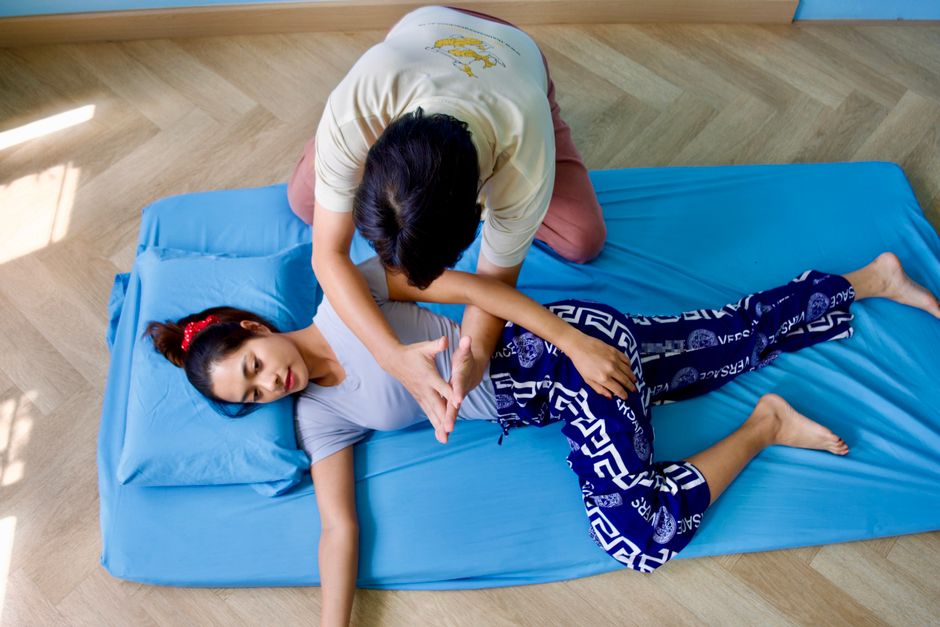
A Thai massage is a form of bodywork that combines gentle rocking, rhythmic compression, and assisted stretching. The person receiving it stays fully clothed, usually on a padded floor mat rather than a table. The practitioner uses their hands, forearms, elbows, knees, and feet to press and move the body through a series of positions.
It is sometimes called “lazy person’s yoga” because the practitioner does much of the stretching work for you. Unlike a Swedish massage, which often uses oil and long gliding strokes on bare skin, Thai massage works through clothing and focuses on pressure points, joint movement, and whole-body flexibility.
Where Did Thai Massage Come From?
Thai massage has roots in traditional Thai medicine that stretch back centuries, with influences from Indian Ayurvedic and Buddhist traditions. It is often linked to an ancient figure named Shivaga Komarpaj, though the historical details are hard to verify and much of the origin story is wrapped in tradition rather than documented record.
What is clearer is how it developed. For a long time, Thai massage was practiced in temples and by monks as part of a broader system of healing. Families passed the techniques down through generations. The Wat Pho temple in Bangkok became a well-known center for teaching it, and stone plaques there show pressure points mapped on the body.
In the 20th century, Thai massage spread beyond Thailand. A school was founded in Chiang Mai that helped standardize teaching for Western students. Today you can find Thai massage in spas and clinics worldwide, though the style and quality vary widely depending on who trained the practitioner.
One thing worth knowing: traditional Thai massage and the “Thai massage” you find at a typical spa are not always the same thing. Some places use the name loosely for any firm massage with stretching. If you are seeking the traditional form, it helps to ask about the practitioner’s training.
What Actually Happens During a Session?
A traditional session usually lasts somewhere between 60 and 120 minutes, with 90 minutes being common. You wear loose, comfortable clothing you can move in. No oil is used, so you stay dressed the whole time.
You lie on a mat on the floor. The practitioner works systematically through the body, often starting at the feet and moving upward. The sequence typically includes:
- Rhythmic pressing and rocking along energy lines the tradition calls sen lines
- Compression with palms, thumbs, forearms, elbows, knees, and sometimes feet
- Gentle twisting and stretching of the spine and limbs
- Assisted stretches that move joints through their range of motion
- Positions similar to yoga poses, but guided by the practitioner
The pressure can range from light to quite firm. A good practitioner checks in with you and adjusts. You should speak up if something hurts. Discomfort during a stretch is not the goal, and sharp pain is a signal to stop.
The rhythm is often slow and steady rather than fast. Many people describe the experience as relaxing, though it can also feel like a workout because your body is being moved into positions it may not normally reach.
How Does It Differ From Other Massages?
The main differences come down to clothing, tools, and movement. Here is a simple comparison:
| Feature | Thai Massage | Swedish Massage |
|---|---|---|
| Clothing | Fully clothed | Undressed, covered with a sheet |
| Oil or lotion | Usually none | Commonly used |
| Surface | Floor mat | Massage table |
| Main techniques | Pressing, rocking, stretching | Long gliding strokes, kneading |
| Body movement | Large, with assisted stretches | Minimal, you stay mostly still |
Deep tissue massage is another point of comparison. It also uses firm pressure, but it typically works on specific areas of muscle and connective tissue on a table, often with oil. Thai massage covers the whole body and adds stretching and joint movement that deep tissue usually does not include.





What Are the Reported Benefits?
People commonly report feeling more relaxed, looser, and more flexible after a Thai massage. Those reports are real, but it is important to separate how people feel from what research has actually measured.
Some studies suggest Thai massage may help reduce muscle tension and improve flexibility in the short term. A smaller body of research has looked at whether it helps with low back pain, and some results point toward modest short-term relief. The evidence is mixed and the studies tend to be small, so no strong conclusions can be drawn about lasting effects.
There is also research on Thai massage for specific groups, such as people with certain chronic conditions, but the quality and size of these studies limit what can be claimed. This is not unusual. Many massage styles have far more tradition and clinical experience behind them than large, rigorous trials.
What the evidence does not support is the idea that Thai massage treats or cures specific diseases. Claims that it detoxifies the body, fixes organ problems, or replaces medical treatment are not backed by clinical evidence. The sen lines of tradition do not correspond to any known anatomical structure like nerves or blood vessels, even though the massage can still feel good and may help with relaxation and flexibility.
So the honest position is this: Thai massage appears to be a reasonable option for general relaxation and short-term flexibility, and it may help some people with muscle or back discomfort. It is not a proven treatment for medical conditions.
Is Thai Massage Safe for Everyone?
For most healthy adults, Thai massage is generally considered low risk when performed by a trained practitioner. The main concerns come from the stretching and joint movement, which can be more forceful than people expect.
Some situations call for caution or a conversation with a doctor first. These include:
- Recent surgery, fractures, or injuries
- Osteoporosis or other conditions that weaken bones
- Pregnancy, especially in the first trimester and later stages
- Blood clotting disorders or a history of blood clots
- Heart conditions or uncontrolled high blood pressure
- Certain cancers, particularly with bone involvement
- Skin infections or open wounds
Pregnancy deserves special mention. No clinical guidelines currently exist for Thai massage during pregnancy, and the deep abdominal work and strong stretches used in some styles raise theoretical concerns. Some practitioners are trained in prenatal modifications, but the evidence base for safety is limited. Talk to your doctor before booking a session.
If you have any medical condition, tell both your doctor and your practitioner. A trained practitioner will adjust the session or refer you elsewhere if Thai massage is not appropriate for you.
How Do You Choose a Practitioner?
Training standards for Thai massage vary a lot between countries and even between schools. There is no single global license, so the quality of a session depends heavily on the individual practitioner.
Look for someone who has completed a recognized training program and can tell you how long they studied and where. Traditional Thai massage training often runs several hundred hours, though requirements differ. Ask whether they have experience with any condition you have.
During the session, a good practitioner will ask about your health history, check in about pressure, and stop if you say something hurts. If a practitioner ignores your feedback or pushes through pain, that is a red flag.
Afterward, some soreness is possible, similar to what you might feel after a workout. It usually fades within a day or two. Drink water, move gently, and give your body time to settle.
Frequently Asked Questions
Do you take your clothes off for a Thai massage?
No. You stay fully clothed in loose, comfortable clothing for a traditional Thai massage. This is one of the main differences from Swedish or deep tissue massage, which typically use oil on bare skin.
Is Thai massage painful?
It can feel intense, especially during deep stretches, but it should not be sharply painful. A trained practitioner adjusts pressure based on your feedback, so speak up if something hurts.
What is Thai massage good for?
People use it mainly for relaxation, flexibility, and short-term relief of muscle tension. Some studies suggest it may help with low back discomfort, but the evidence is limited and it is not a proven treatment for medical conditions.
Is Thai massage safe during pregnancy?
No clinical guidelines currently exist for Thai massage during pregnancy, and the deep stretches raise theoretical concerns. Talk to your doctor before booking a session, and look for a practitioner trained in prenatal modifications.
