
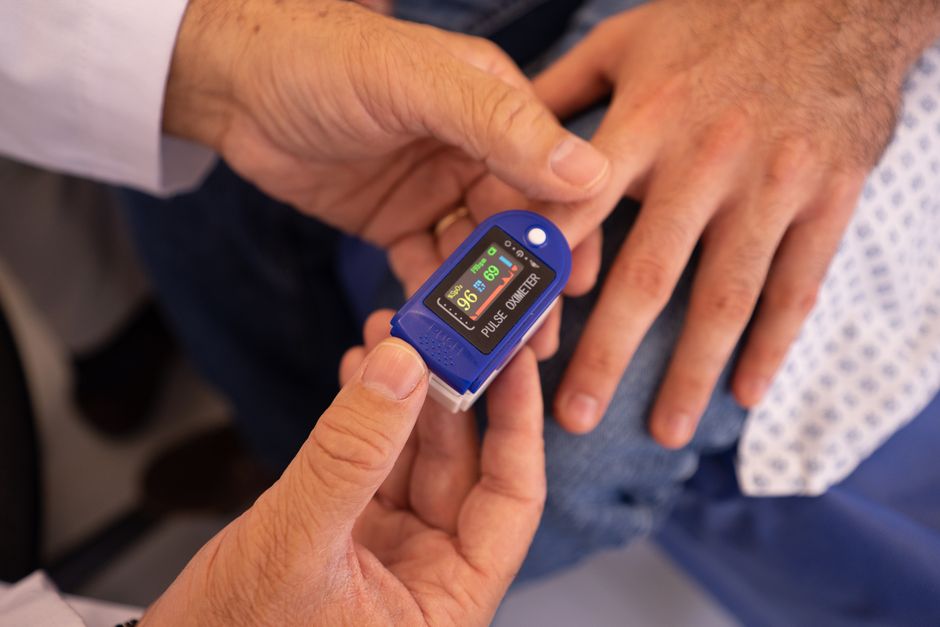
A good resting pulse rate for most adults is between 60 and 100 beats per minute. That range comes from the American Heart Association and applies to healthy adults at rest, sitting quietly for at least five minutes. Many people sit closer to 60 to 80, and athletes who train hard often rest in the 40s or 50s without any medical problem.
Your pulse is one of the simplest signals your body gives you about how your heart and circulation are doing. It is also easy to measure at home with no equipment beyond a clock. This article explains what the numbers mean, when a pulse is worth mentioning to a doctor, and why a single reading rarely tells the whole story.
What Is a Normal Pulse Rate by Age?
A normal resting heart rate is 60 to 100 beats per minute for adults and children over age 10. For younger children, the range is naturally higher because their hearts are smaller and their bodies are still growing.
Here is how resting pulse ranges generally break down by age. These figures come from standard pediatric and cardiac reference ranges used in clinical practice.
| Age group | Typical resting pulse (beats per minute) |
|---|---|
| Newborns (0–1 month) | 70–190 |
| Infants (1–11 months) | 80–160 |
| Toddlers (1–2 years) | 80–130 |
| Preschoolers (3–5 years) | 80–120 |
| Children (6–10 years) | 70–110 |
| Children over 10 and adults | 60–100 |
These are ranges, not targets. A healthy 8-year-old with a resting pulse of 72 is not “too slow,” and a healthy adult at 95 is not automatically in trouble. Context matters. Fever, dehydration, stress, caffeine, and recent exercise all push the number up temporarily.
One detail worth knowing: a pulse rate is not the same as a heart rhythm. A pulse can fall inside the normal range while the rhythm itself is irregular. That is why feeling the rate alone is not a complete check of heart health.
What’S A Good Pulse Rate During Exercise?
During exercise, a good pulse rate is one that rises with effort and recovers afterward. There is no single “correct” number during a workout, because it depends on your age, fitness, medication, and how hard you are pushing.
The commonly used estimate for maximum heart rate is 220 minus your age. A 50-year-old would estimate a maximum of about 170 beats per minute. This formula is a rough guide, not a precise measurement. Individual maximums can vary by 10 to 15 beats per minute or more in either direction.
Moderate-intensity activity is often described as roughly 50 to 70 percent of your estimated maximum. Vigorous activity is often described as roughly 70 to 85 percent. A simpler way to judge moderate effort is the talk test: you can speak in short sentences but not sing.
If you take a beta blocker or certain other heart medications, your heart rate will not rise the way the formulas predict. Those estimates do not apply to you. Ask your doctor what target range fits your situation.
What Does a Low Resting Pulse Mean?
A resting pulse below 60 beats per minute is called bradycardia. In healthy, fit people it is usually a sign of an efficient heart, not a problem.
Endurance athletes often have resting pulses in the 40s or 50s. Their hearts pump more blood with each beat, so they need fewer beats per minute to move the same amount of blood. This is a normal training adaptation.
A low pulse is worth medical attention when it comes with symptoms. Watch for:
- Dizziness or lightheadedness
- Fainting or near-fainting
- Unusual fatigue or weakness
- Shortness of breath with light activity
- Chest discomfort
- Confusion or trouble concentrating
Without symptoms, a low resting pulse in a fit person is generally not concerning. With symptoms, it needs evaluation. The difference is not the number itself but how your body is handling it.
Some medications slow the heart rate on purpose. Beta blockers, calcium channel blockers, and certain drugs for arrhythmia all lower pulse rate as part of their intended effect. If you take one of these, a lower resting pulse may be expected. Your prescribing doctor can tell you what range is appropriate for you.
What Does a High Resting Pulse Mean?
A resting pulse above 100 beats per minute is called tachycardia. It can be temporary and harmless, or it can point to an underlying issue.
Common temporary causes include fever, dehydration, anxiety, pain, caffeine, alcohol, and strenuous activity in the hour before you measure. Some over-the-counter cold medicines and decongestants raise heart rate too. So do some asthma inhalers and thyroid medications.
A persistently high resting pulse is more meaningful. Research has linked a consistently elevated resting heart rate to higher cardiovascular risk in large population studies. That does not mean a fast pulse causes heart disease. It means the two tend to appear together, and a fast resting pulse can be a marker worth investigating.
Other causes of a sustained high resting pulse include:
- Anemia, especially iron-deficiency anemia
- An overactive thyroid
- Infection or ongoing illness
- Poor physical fitness
- Chronic stress or poor sleep
- Heart rhythm problems such as atrial fibrillation
If your resting pulse sits above 100 on repeated checks and you are not sick, dehydrated, or stressed, that is a reason to see a doctor. So is any pulse that feels irregular or comes with palpitations, chest pain, or fainting.
How Do You Measure Your Pulse Correctly?
You measure your pulse by counting the beats you feel over a set time and converting that to beats per minute. The most reliable spot for most people is the wrist.
To check your radial pulse at the wrist:
- Sit quietly for at least five minutes first.
- Place two fingers (not your thumb) on the thumb side of your inner wrist.
- Press lightly until you feel a steady beat.
- Count the beats for 30 seconds and multiply by two, or count for a full 60 seconds for more accuracy.
You can also check the carotid pulse at the side of your neck, but press gently on one side only. Pressing both sides at once or pressing too hard can slow your heart rate and make you lightheaded.
A few things throw off a reading. Measuring right after climbing stairs, drinking coffee, or arguing with someone will give you a higher number. So will a fever. For a true resting rate, measure at the same time each day, ideally before getting out of bed in the morning.
Wearable devices and phone apps can track pulse continuously, and many are reasonably accurate at rest. Their accuracy during exercise varies more between devices and can be affected by movement and fit. Treat the trend as useful information, not as a clinical measurement.
When Should You Talk to a Doctor About Your Pulse?
Talk to a doctor if your resting pulse is consistently above 100 or below 60 and you have symptoms. A single odd reading is rarely meaningful on its own. A pattern over days is.
Seek urgent care if a fast or irregular pulse comes with chest pain, fainting, severe shortness of breath, or confusion. These symptoms need immediate evaluation, not a wait-and-see approach.
Bring information to the visit. Note your resting pulse over several days, what you were doing when you measured, and any symptoms. That context helps a doctor decide whether further testing is needed, such as an electrocardiogram or a heart rhythm monitor.
It also helps to know your own baseline. A resting pulse of 85 may be perfectly normal for one person and a notable change for someone who usually sits at 60. Tracking your own numbers over time tells you more than comparing yourself to a chart.
Frequently Asked Questions
Is a pulse of 55 too low?
A resting pulse of 55 is not too low for many healthy adults, especially those who exercise regularly. It only becomes a concern if it comes with dizziness, fainting, fatigue, or shortness of breath.
Is 90 a normal resting heart rate?
Yes, 90 beats per minute falls within the normal adult resting range of 60 to 100. A number at the higher end of normal is worth watching over time, but it is not automatically a problem.
Does a lower resting pulse mean better health?
A lower resting pulse often reflects better cardiovascular fitness, but it is not a direct measure of health on its own. Fitness, medications, and individual variation all affect where your resting pulse settles.
Can anxiety raise your pulse rate?
Yes, anxiety commonly raises heart rate through the body’s stress response, sometimes well above 100 beats per minute. The rise is usually temporary and settles once the stress passes.
