
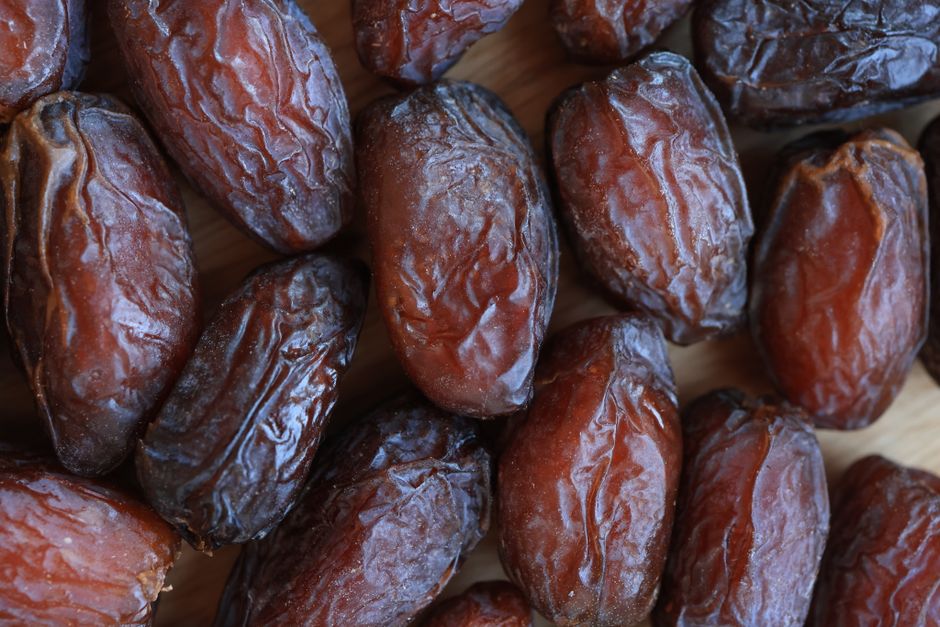
A date fruit is the edible fruit of the date palm tree, Phoenix dactylifera, a plant grown in hot, dry regions of the Middle East and North Africa for thousands of years. The fruit is a berry with a single hard seed, a thin skin, and sweet flesh that changes texture as it ripens. Dates are one of the oldest cultivated fruits in the world, and they remain a staple food in many cultures today.
Most dates sold in the United States are sold dried or semi-dried. That matters because drying concentrates the natural sugars and changes the texture from soft and crunchy to sticky and dense. A fresh date eaten near the palm is a different experience from the wrinkled Medjool in a grocery store bin, even though both come from the same species.
Whats A Date Fruit and Where Does It Come From?
Date palms grow in arid climates with long, hot summers and low humidity. The trees are tall, often reaching well over 15 meters, and they produce clusters of fruit that hang below the fronds. Each cluster can hold dozens of dates.
The fruit develops through several stages. Early on it is green, firm, and astringent. As it matures it softens, changes color to yellow, orange, red, or brown depending on the variety, and builds up sugar. Growers classify dates by how moist they are at harvest:
- Khalal — firm and crunchy, eaten fresh, mildly sweet
- Rutab — soft and ripe, moist, often eaten fresh
- Tamar — fully ripe and dried, the type most commonly exported and sold worldwide
Countries including Egypt, Saudi Arabia, Iran, Algeria, Iraq, and the United Arab Emirates are among the largest producers. In the US, California’s Coachella Valley grows most domestic dates, with the Medjool and Deglet Noor varieties being especially common.
What Are the Main Types of Dates?
There are hundreds of date varieties, but a handful dominate grocery shelves. They differ in size, sweetness, moisture, and how they hold up in storage.
| Variety | Typical Characteristics |
|---|---|
| Medjool | Large, soft, very sweet, moist flesh; often eaten as a snack |
| Deglet Noor | Smaller, firmer, semi-dry, honey-like sweetness; common in baking and mixed dried fruit |
| Barhi | Often sold fresh and crunchy at the khalal stage, or soft when ripe |
| Ajwa | Dark, soft, grown mainly in Saudi Arabia; prized in some regions |
| Zahidi | Golden, semi-dry, less sweet than Medjool |
Sweetness varies a lot between types. Medjool is among the sweetest commonly sold. Deglet Noor is firmer and less syrupy. If you are watching sugar intake, the variety you choose matters more than the general category of “date.”
What Is the Nutritional Profile of Dates?
Dates are mostly carbohydrate, with very little fat and a modest amount of protein. Their main nutritional value comes from fiber, potassium, and several micronutrients, along with a high natural sugar content.
According to USDA nutritional data, a 100-gram portion of Medjool dates provides roughly 277 calories, about 75 grams of carbohydrate, around 6.7 grams of fiber, and about 696 milligrams of potassium. The exact figures shift by variety and moisture level, so treat these as approximate.
That potassium figure is notable. Per gram, dates are a concentrated source of potassium, a mineral involved in nerve signaling, muscle contraction, and blood pressure regulation. Whether eating dates meaningfully changes your potassium status depends on your overall diet and health, and people with kidney disease who are told to limit potassium should discuss dates with their clinician.
Dates also contain small amounts of magnesium, copper, manganese, vitamin B6, and various plant compounds including polyphenols. The amounts are real but modest. Dates are not a multivitamin. They are a whole food with a specific nutritional shape: high sugar, decent fiber, meaningful potassium.
Are Dates Healthy or Just High in Sugar?
Both things are true. Dates are a whole fruit with fiber and minerals, and they are also one of the sweetest fruits you can eat. The question is not whether dates are “good” or “bad” but how they fit into your diet.
The sugar in dates is mostly glucose and fructose, similar to other fruit. What separates dates from candy is the fiber and the package of micronutrients that come with them. Fiber slows digestion somewhat and adds bulk, which is part of why a few dates feel more filling than the same calories from a soft drink.
There is a persistent idea that dates are a “low glycemic” food that people with diabetes can eat freely. The evidence does not support that framing. Dates have a moderate to high glycemic impact depending on variety and ripeness, and portion size matters. Some small studies have looked at dates in the context of diabetes, but the research is limited and does not establish that dates are a preferred fruit for people managing blood sugar. If you have diabetes, treat dates as a carbohydrate food and account for them accordingly.
For most healthy adults, a small handful of dates as a snack or a sweetener in cooking is a reasonable part of a balanced diet. The word to watch is “handful.” It is easy to eat several hundred calories of dates without noticing.
Do Dates Have Any Proven Health Benefits?
Dates contain fiber, potassium, and polyphenols, and these nutrients have established roles in the body. What is much less established is whether eating dates specifically produces measurable health outcomes in people.
Some research suggests dates may support digestive regularity because of their fiber content, and some studies have examined effects on blood lipids and antioxidant markers. Much of this work is small, short-term, or done in animals. No large, long-term human trials have confirmed that eating dates prevents disease or meaningfully changes health outcomes on their own.
There is also a popular claim that eating dates late in pregnancy can shorten labor or improve birth outcomes. A small number of studies have looked at this, and the results are not strong enough to support a general recommendation. Pregnant women should not treat dates as a proven intervention and should follow their clinician’s guidance on nutrition in pregnancy.
One clarification worth making: the traditional association of dates with the Ramadan fast is about practical energy and cultural practice, not a clinical claim. Dates are eaten to break the fast because they are convenient, calorie-dense, and familiar. That is a sensible choice for the situation. It is not evidence that dates do something special for metabolism.
How Should You Store and Eat Dates?
Storage depends on moisture. Semi-dry varieties like Deglet Noor keep well at room temperature in a sealed container for weeks. Soft, moist varieties like Medjool last longer refrigerated and can be frozen for extended storage.
If dates develop a white, powdery coating on the surface, that is usually crystallized sugar, not mold. It is harmless and can be rinsed or wiped off. Mold looks fuzzy and is usually accompanied by an off smell or a change in texture. Discard dates that show fuzzy growth or smell fermented.
Dates work as a snack, chopped into oatmeal or yogurt, blended into smoothies, or used to sweeten baked goods. They pair well with nuts and cheese. When substituting dates for sugar in recipes, keep in mind that they add moisture and flavor, not just sweetness, so the swap is rarely one-to-one.
Are There Any Risks or People Who Should Limit Dates?
For most people, dates are safe in normal amounts. The main concerns are sugar, calories, and potassium.
People with diabetes need to account for dates as a carbohydrate food and monitor blood sugar as they would with any sweet fruit. People with kidney disease who have been advised to limit potassium should be cautious, because dates are potassium-dense. Anyone with a known allergy to date palm fruit, which is uncommon but documented, should avoid them.
Because dates are sticky and high in sugar, eating them frequently without cleaning your teeth afterward can contribute to dental problems. That is true of many dried fruits, not dates specifically. Rinsing with water or brushing after eating is a reasonable habit.
Frequently Asked Questions
Are dates a fruit or a dried fruit?
Dates are a fruit, and most sold in stores are the dried or semi-dried ripe stage called tamar. Fresh dates exist but are less common outside growing regions.
How many dates should I eat in a day?
There is no official recommended serving, but a small handful of two to three dates is a common portion. Because dates are calorie-dense, portion size matters more than the number itself.
Can people with diabetes eat dates?
People with diabetes can generally include dates in a carbohydrate-counted diet, but dates are high in sugar and should be portioned carefully. Check with your clinician or dietitian about how they fit your plan.
Are dates high in potassium?
Yes, dates are a concentrated source of potassium, with roughly 696 milligrams per 100 grams of Medjool. People advised to limit potassium, such as some with kidney disease, should discuss dates with their clinician.
