
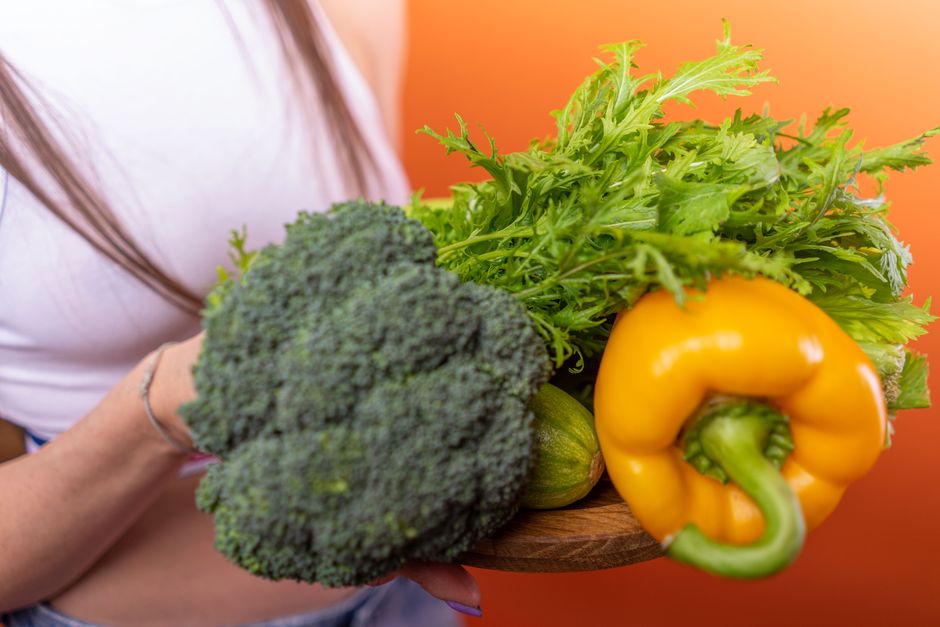
Vegetables help you poop because they contain fiber and water — two things stool needs to stay soft and move. The strongest choices are leafy greens like spinach and kale, cruciferous vegetables like broccoli and cauliflower, and high-fiber picks like artichokes, peas, and sweet potatoes with the skin on. These add bulk, hold moisture in the stool, and feed the gut bacteria that help keep bowel movements regular.
Fiber is not a magic switch. It works gradually, it needs fluid to do its job, and some vegetables are better tolerated than others. Here is what the evidence actually supports, and where common advice goes wrong.
What Veggies Help You Poop And Relieve Constipation?
The most reliable constipation-fighting vegetables are those high in both insoluble fiber (which adds bulk) and soluble fiber (which holds water and forms a gel). Most vegetables contain a mix of both.
These are among the best-supported choices:
- Leafy greens — spinach, kale, collards, and Swiss chard. High in fiber and rich in magnesium, which plays a role in muscle function including the bowel.
- Broccoli and cauliflower — solid fiber content and a good source of water.
- Artichokes — one of the highest-fiber vegetables commonly eaten. A medium artichoke supplies a substantial share of daily fiber needs.
- Green peas — high fiber for their size, and easy to add to many meals.
- Sweet potatoes — especially with the skin, which carries much of the fiber.
- Carrots — soluble fiber, particularly when cooked.
- Pumpkin and winter squash — soft, water-rich, and fibrous.
- Corn — the outer kernel is largely insoluble fiber, which adds bulk.
- Beets — fiber plus a high water content.
There is no single “best” vegetable. The pattern matters more than any one food: a variety of vegetables across the week, eaten consistently, does more than loading up on one type.
How Does Vegetable Fiber Actually Make You Poop?
Fiber works through a few distinct mechanisms, and understanding them explains why some vegetables help more than others.
Insoluble fiber does not dissolve in water. It passes through largely intact, adding bulk to stool. That bulk stretches the colon wall, which triggers the muscular contractions (peristalsis) that move contents along. Bulkier stool is also easier for the colon to propel.
Soluble fiber dissolves and forms a gel. It absorbs water, which keeps stool softer and easier to pass. This is the same principle behind fiber supplements like psyllium.
Vegetables also carry water. Stool that is well hydrated moves more comfortably. And the fiber in vegetables feeds gut bacteria, which ferment it and produce short-chain fatty acids. Some evidence indicates these compounds support healthy colonic function, though the direct line from this to constipation relief in every person is not fully mapped.
One clarification worth making: fiber helps constipation, but it can also worsen it if you add too much too fast or drink too little fluid. More on that below.
How Much Fiber Do You Need From Vegetables?
General dietary guidance for adults is roughly 25 to 30 grams of fiber per day, though needs vary by age and sex. Most Americans eat well under that.
Vegetables contribute part of that total — fruits, whole grains, legumes, nuts, and seeds make up the rest. Trying to hit the whole target from vegetables alone is impractical and unnecessary.
Rough fiber content of common vegetables (cooked, per typical serving) gives a sense of scale:
| Vegetable | Approx. fiber per serving |
|---|---|
| Artichoke (1 medium) | High — among the highest of common vegetables |
| Green peas (1/2 cup) | Around 4 grams |
| Broccoli (1/2 cup) | Around 2–3 grams |
| Sweet potato (1 medium, with skin) | Around 4 grams |
| Spinach (1/2 cup cooked) | Around 2 grams |
| Carrot (1 medium) | Around 2 grams |
These are approximate figures. Exact values vary by variety, preparation, and portion. The point is not precision — it is that vegetables add up when eaten across the day.
Why More Fiber Can Sometimes Make Constipation Worse
Adding fiber without enough fluid can backfire. Fiber needs water to soften stool. If you increase fiber but not fluids, the fiber can become dry bulk that is harder to pass.
This is a common and underappreciated problem. People hear “eat more fiber,” pile on vegetables and bran, drink the same amount of water, and feel worse.
The fix is straightforward: increase fiber gradually and drink enough fluid alongside it. Thirst is a reasonable guide for most healthy adults, though individual needs vary with activity, climate, and health conditions.
Some people also find that certain vegetables — particularly large amounts of raw cruciferous vegetables — cause gas and bloating. That is normal fermentation by gut bacteria. Cooking these vegetables and increasing portions slowly usually helps. For people with irritable bowel syndrome or other sensitive guts, some vegetables may need to be limited under medical guidance.
Do Cooked or Raw Vegetables Work Better for Constipation?
Both work. Cooking softens fiber and can make some vegetables easier to tolerate, especially for sensitive stomachs. Raw vegetables retain more water and volume, which some people find helpful for bulk.
There is no strong evidence that one form is clearly superior for constipation relief. What matters more is total fiber intake, fluid, and consistency. A mix of cooked and raw vegetables is a reasonable approach.
One practical note: cooking methods matter for other reasons. Boiling vegetables leaches some water-soluble nutrients into the cooking water. Steaming or roasting preserves more. That is a nutrition point, not a constipation one — but worth knowing if vegetables are a mainstay of your diet.
What Else Helps Besides Vegetables?
Vegetables are one lever among several. Constipation responds to a combination of factors, and fiber alone does not solve every case.
Fluid intake is essential — fiber without water can harden stool. Physical activity supports normal bowel motility. Regular meal timing helps, since eating triggers the gastrocolic reflex, a wave of contractions that moves contents through the colon.
Other fiber sources matter too: fruits (especially those with skin), whole grains, legumes, and nuts. Legumes in particular are high in fiber and well studied for their effect on regularity.
When constipation is persistent, does not respond to diet and lifestyle changes, or comes with warning signs — blood in the stool, unexplained weight loss, severe pain, or a major change in bowel habits — medical evaluation is appropriate. Those signs can point to conditions that diet changes will not fix, and they should not be self-managed.
Occasional constipation is common and usually manageable with diet, fluid, and activity. Ongoing constipation deserves a conversation with a clinician rather than more vegetables alone.
Frequently Asked Questions
Which vegetable is best for constipation?
Artichokes are among the highest-fiber common vegetables, making them a strong choice. Leafy greens, peas, and sweet potatoes with skin are also excellent. No single vegetable is best — variety and consistency matter more.
How fast do vegetables relieve constipation?
Fiber changes usually take a few days to a couple of weeks to show an effect, since the gut adjusts gradually. Increasing fiber slowly and drinking enough fluid helps the process along.
Can vegetables make constipation worse?
Yes, if you add a lot of fiber quickly without enough fluid. Dry bulk can be harder to pass. Increase portions gradually and drink enough water alongside.
Are raw or cooked vegetables better for pooping?
Both help, and there is no strong evidence that one form is clearly better for constipation. Cooked vegetables are often easier on sensitive stomachs, while raw vegetables add more water and volume.
