
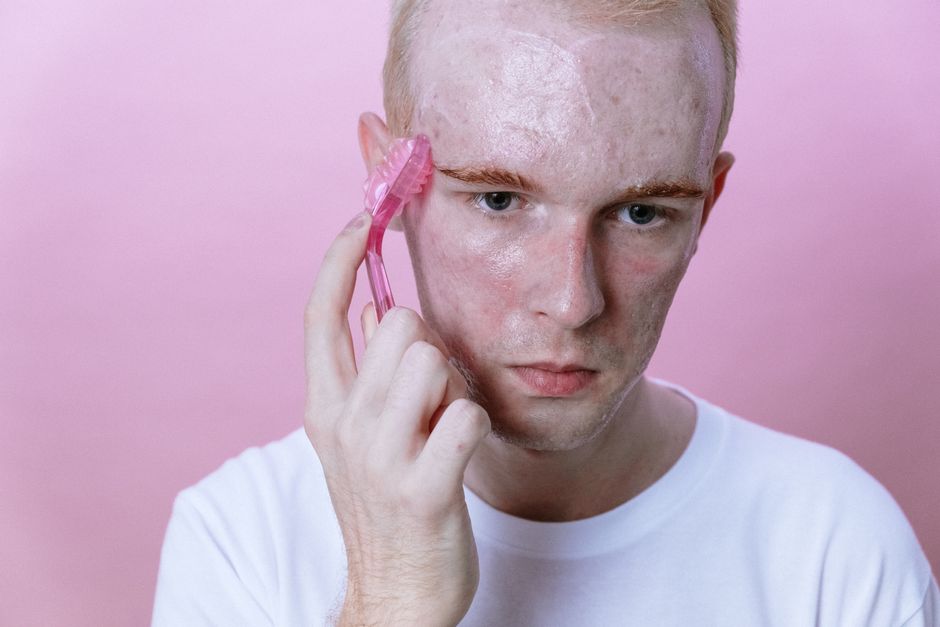
Most people with acne assume they have “regular” acne and treat it with whatever product is on sale. That guesswork is why so many people spend years cycling through cleansers and creams that never had a chance of working. Acne is not one condition. It is several distinct conditions that look similar but behave differently. Identifying which type you have is the difference between a treatment that helps and one that quietly makes things worse.
What Type Of Acne Do I Have Identify And Treat It
Acne is classified by what is happening inside the pore. The main types are comedonal acne (blackheads and whiteheads), inflammatory acne (papules and pustules), nodulocystic acne (deep, painful lumps), and hormonal acne (a pattern linked to the menstrual cycle or androgen levels). Some people have more than one type at once, which is why a single product often fails.
The distinction matters because treatments target different steps in the same process. Comedonal acne responds to ingredients that keep pores from clogging. Inflammatory acne needs agents that reduce bacteria and inflammation. Deep nodules need prescription treatment, often from a dermatologist. Using the wrong category of product can irritate skin without touching the underlying problem.
What Actually Causes Acne In The First Place
Acne starts in the pilosebaceous unit — the hair follicle and its attached oil gland. Four things happen in sequence, and all four have to line up for a pimple to form.
First, the skin cells lining the follicle shed faster than usual and stick together instead of falling away. This creates a plug. Second, the sebaceous gland produces more oil, which mixes with the trapped cells. Third, a bacterium called Cutibacterium acnes that normally lives on the skin multiplies inside the blocked follicle. Fourth, the immune system responds to all of this with inflammation — the redness, swelling, and tenderness you see and feel.
Androgens, including testosterone, drive oil production. This is why acne often appears at puberty and why it can flare around the menstrual cycle. It is also why acne is not caused by dirty skin, chocolate, or drinking too little water. Those ideas have been tested and do not hold up.
One clarification worth knowing: diet is not the main driver of acne, but it is not irrelevant either. Some research suggests that high-glycemic diets — those heavy in refined sugar and white starches — may influence acne in some people. The evidence is not strong enough to call diet a primary cause, and no diet has been shown to cure acne.
How Do I Tell Comedonal Acne From Inflammatory Acne?
Look at what is on your skin. Comedonal acne is non-inflammatory. You see blackheads (open pores with a dark plug) and whiteheads (closed bumps under the skin). These are usually small, flat to slightly raised, and not painful. The dark color in a blackhead is not dirt — it is the plug reacting with air.
Inflammatory acne shows up as red bumps (papules) and pus-filled bumps (pustules). These are tender, sometimes itchy, and often leave dark marks after they heal. If you press on one and it hurts, it is inflammatory.
Nodulocystic acne is the most severe form. You feel deep, hard, painful lumps under the skin that may not have a visible head. These can last for weeks and are the type most likely to scar. This form almost always needs prescription treatment and should not be managed with over-the-counter products alone.



What Does Hormonal Acne Look Like And Where Does It Appear?
Hormonal acne has a pattern, not just a type. It tends to appear along the jawline, chin, and lower cheeks. It often flares in the week before a menstrual period and calms afterward. In adults, it is more common in women than men.
The underlying driver is androgen activity. When androgens rise or when the skin is more sensitive to them, oil production increases and pores clog more easily. This is why hormonal acne can persist well past the teenage years and why it often does not respond to standard acne washes.
If your acne follows a monthly pattern, sits mostly on the lower face, and has not improved with typical over-the-counter products, that cluster of features points toward a hormonal component. A dermatologist or gynecologist can evaluate this further. Some hormonal treatments require a prescription and are not appropriate for everyone, including people who are pregnant or trying to conceive.
How Do Treatments Differ By Acne Type?
Treatment follows the type. What works for blackheads will not clear deep nodules, and what clears nodules can be too harsh for mild comedonal acne.
- Comedonal acne: Topical retinoids are the mainstay because they normalize how follicle cells shed. Over-the-counter options include adapalene gel. Salicylic acid can help with milder cases. Benzoyl peroxide is less useful here because the problem is a plug, not bacteria.
- Inflammatory acne: Benzoyl peroxide reduces C. acnes and calms inflammation. Topical retinoids and topical antibiotics are often combined. Combining benzoyl peroxide with a topical antibiotic is a common approach because it reduces the chance of antibiotic resistance.
- Nodulocystic acne: This usually requires prescription treatment. Oral antibiotics, hormonal therapies, and isotretinoin are among the options a dermatologist may consider. Isotretinoin is effective but carries significant risks and requires monitoring — it is not a casual choice.
- Hormonal acne: Certain oral contraceptives and anti-androgen medications can help. These are prescription-only and require a clinician’s assessment.
A word on timelines: topical treatments generally take several weeks to show meaningful improvement, and full results often take a few months. This is well established. Stopping a treatment after two weeks because “nothing is happening” is one of the most common reasons people conclude a product failed.
Do not stack multiple active ingredients at once when starting out. Irritation from overuse can mimic a worsening breakout, and it makes it impossible to tell what is actually working.
When Should I See A Dermatologist Instead Of Self-Treating?
See a dermatologist if you have deep, painful lumps, if acne is leaving scars or dark marks that bother you, if it is affecting your mental health, or if you have used appropriate over-the-counter treatments consistently for a few months without improvement. Those are the situations where prescription treatment tends to make the biggest difference.
You should also seek care if acne appears suddenly and severely, or if you have signs of a hormonal disorder such as irregular periods, excess facial hair, or deepening of the voice. These can point to an underlying condition that needs its own evaluation.
Scarring is the main reason not to wait. Once a scar forms, treating it is harder than preventing it. Early, appropriate treatment for severe acne reduces scarring risk. That is one of the more useful things dermatology can offer.
What Makes Acne Worse That People Do Without Realizing
Picking and squeezing is the biggest self-inflicted problem. It pushes bacteria and inflammation deeper, increases the chance of scarring, and can turn a small pimple into a large one. This is not a minor point — it is one of the most consistent findings in acne care.
Over-washing and scrubbing are the next. Acne is not caused by dirt, and aggressive cleansing strips the skin barrier, which triggers more irritation and sometimes more oil production. Gentle cleansing twice a day is enough.
Finally, some products marketed for acne contain high concentrations of drying alcohols and fragrances that irritate without treating the cause. If a product burns or leaves your skin raw, it is not helping. Irritation is not a sign that a treatment is working.
Frequently Asked Questions
How can I tell what type of acne I have?
Look at what is on your skin: blackheads and whiteheads mean comedonal acne, red or pus-filled bumps mean inflammatory acne, and deep painful lumps mean nodulocystic acne. A monthly pattern on the jaw and chin suggests a hormonal component.
Does chocolate or greasy food cause acne?
No, those are myths. Acne is driven by follicle plugging, oil production, the C. acnes bacterium, and inflammation — not by specific foods in most people. Some research suggests high-glycemic diets may play a role, but diet is not the primary cause.
How long does acne treatment take to work?
Topical treatments usually take several weeks to show improvement, and full results often take a few months. This is well established, so stopping early usually means giving up before a treatment had a chance to work.
Is it bad to pop a pimple?
Yes. Squeezing pushes bacteria and inflammation deeper, raises the risk of scarring, and can make a small pimple larger. It is one of the most consistent findings in acne care.
