
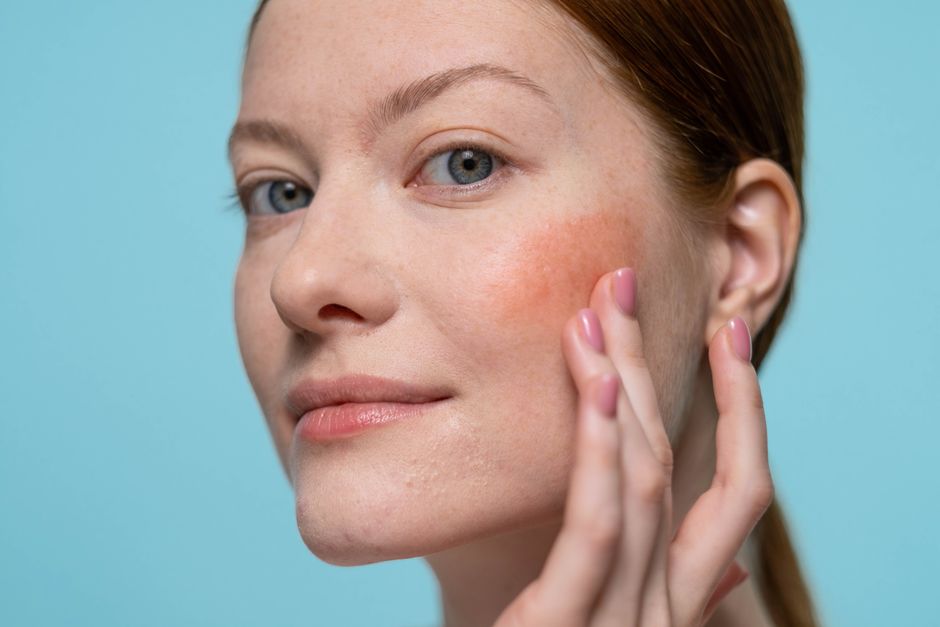
Rosacea flare-ups are most often triggered by heat, sun exposure, alcohol, spicy foods, and emotional stress. These triggers widen blood vessels in the face and set off the redness, flushing, and bumps that define the condition. Avoiding them is a matter of pattern-finding, not perfection.
Rosacea is a chronic inflammatory skin condition. It does not go away, but it can be managed. Most people with rosacea can reduce how often they flare by learning their own triggers and protecting their skin barrier. That is the honest core of it.
What Actually Happens During a Rosacea Flare?
A rosacea flare is a visible response to something that irritates the skin or dilates its blood vessels. The face has a dense network of small blood vessels close to the surface. When those vessels widen, blood flow increases and the skin turns red. That is flushing.
In rosacea, this normal response becomes exaggerated and easier to set off. The blood vessels stay dilated longer. Over time, repeated flushing can contribute to persistent redness and, in some people, visible broken vessels called telangiectasia.
There is also an inflammatory component. In papulopustular rosacea, the type with bumps and pus-filled spots, the skin mounts an inflammatory response that looks like acne but is not acne. The two conditions are treated differently, which is one reason a proper diagnosis matters.
Researchers do not fully understand why rosacea develops. The immune system, the skin’s microbiome, genetics, and environmental triggers all appear to play a role. What is clear is that triggers act on skin that is already primed to overreact.
What Triggers Rosacea Flare Ups And How To Avoid Them?
Triggers fall into a few broad groups. Most people react to some but not all of them. The goal is not to eliminate every possible trigger. It is to identify the ones that matter for you.
Heat and temperature swings
Heat is one of the most common triggers. Hot drinks, hot showers, saunas, and warm rooms can all bring on flushing. So can sudden temperature changes, like walking from cold outdoor air into a heated building.
Practical steps include letting hot drinks cool a little, using lukewarm rather than hot water on your face, and keeping a cool environment when possible. Some people find a cool compress helpful during flushing, though it does not treat the underlying condition.
Sun exposure
Ultraviolet light is a well-recognized trigger for rosacea, and sun protection is widely recommended by dermatologists. Sun exposure can both provoke immediate flushing and worsen the condition over time.
Daily sunscreen use is one of the few measures most clinicians agree on for rosacea. Physical sunscreens containing zinc oxide or titanium dioxide are often better tolerated by sensitive skin, though individual tolerance varies. A wide-brimmed hat and shade add protection.
Alcohol
Alcohol causes blood vessels to widen, and many people with rosacea notice flushing after drinking, particularly with red wine. This is a well-documented response, not a myth. Avoiding or limiting alcohol is a reasonable step for people who notice the connection.
Spicy foods
Spicy foods trigger flushing in some people with rosacea. The evidence for how common this is varies, and not everyone reacts. If you notice a pattern, it is worth adjusting. If you do not, there is no reason to avoid spicy food on principle.
Emotional stress
Stress and strong emotions can trigger flushing through the nervous system. This is real and well described. Stress management does not cure rosacea, but some people find that relaxation techniques, adequate sleep, and regular exercise reduce how often they flare.
Skincare and cosmetic products
Harsh cleansers, exfoliants, fragrances, and alcohol-based toners can irritate rosacea-prone skin and set off a flare. So can scrubbing or rubbing the face. Gentle, fragrance-free products and a light touch are generally recommended.
Some skincare ingredients marketed for redness have limited evidence behind them. The honest position is that a gentle routine and sun protection do more than most specialized products.
Other possible triggers
Some people report reactions to certain medications, hot beverages of any kind, strenuous exercise, or particular foods. Exercise is worth a note: it is generally good for health, and avoiding it entirely is not advisable. Some people find that cooling down during and after exercise reduces flushing.
Trigger lists circulating online sometimes include items with little supporting evidence. Treat them as possibilities to test, not rules to follow.
How Do You Figure Out Your Own Triggers?
A trigger diary is the most reliable way to identify what affects you. Log what you ate, drank, and did, along with your stress level and the weather, then note any flushing or bumps that follow.
Patterns usually emerge over a few weeks. Keep in mind that a reaction may not happen immediately. Some triggers cause a flare hours later or the next day, which makes the diary more useful than memory alone.
There is a limit to this approach. Rosacea can flare without an obvious trigger, and not every flare has a cause you can identify. That is normal for a chronic condition and does not mean you are doing something wrong.
What Does Not Cause Rosacea?
Rosacea is not caused by poor hygiene. This is a common misconception and one worth correcting directly. Washing more or harder does not help and can make things worse by irritating the skin.
Rosacea is also not contagious. It is not a sign of an infection you can pass to someone else. And it is not simply a cosmetic issue. For many people it affects self-confidence and quality of life, which is a legitimate reason to seek treatment.
When Should You See a Doctor About Rosacea?
See a doctor if you have persistent redness, bumps that look like acne, or a burning or stinging sensation on your face. A dermatologist can confirm the diagnosis and rule out conditions that look similar.
This matters because several skin conditions cause facial redness, and they are treated differently. Acne, seborrheic dermatitis, and lupus can all produce redness on the face. A diagnosis based on appearance alone is not always reliable, so a clinical evaluation is worthwhile.
Prescription treatments exist for rosacea, including topical and oral options. Some people also benefit from procedures such as laser therapy for visible vessels, though availability and results vary. The evidence for any specific treatment is best discussed with a clinician who can assess your type of rosacea.
There is no cure for rosacea. Management is about reducing flares, protecting the skin, and treating symptoms. That is a realistic goal, and for many people it is achievable.
What Is the Most Effective Way to Reduce Flares?
The most effective approach combines trigger avoidance with daily skin protection. Sun protection and a gentle skincare routine are the foundation. Beyond that, identifying your personal triggers and working with a clinician on treatment for your specific type of rosacea does more than any single measure.
Consistency matters more than intensity. A simple routine followed every day tends to work better than an elaborate one followed occasionally. And patience matters, because improvement with any approach usually takes time.
Frequently Asked Questions
What is the most common rosacea trigger?
Sun exposure and heat are among the most commonly reported triggers. Alcohol and spicy foods are also frequent culprits, but individual triggers vary widely.
Does stress cause rosacea?
Stress does not cause rosacea, but it is a well-recognized trigger for flushing and flares. Managing stress may help reduce how often you flare.
Can avoiding triggers cure rosacea?
No. Avoiding triggers can reduce flares, but rosacea is a chronic condition with no known cure. Trigger management works alongside, not instead of, medical treatment.
Is rosacea caused by poor hygiene?
No. Rosacea is not caused by poor hygiene, and washing more aggressively can irritate the skin and worsen symptoms.
