
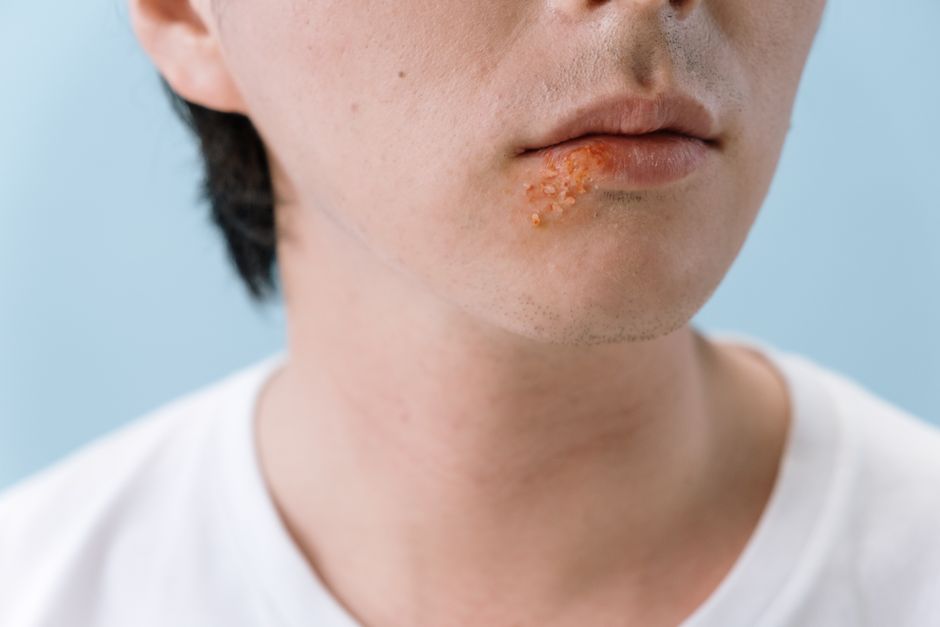
A cold sore is a small, fluid-filled blister that usually forms on or around the lips. It is caused by the herpes simplex virus, most often type 1, and there is no product that removes the virus from your body. What you can do is treat the symptoms and, in some cases, shorten how long an outbreak lasts. The most effective options are prescription antiviral medicines, and they work best when started within the first day of tingling or itching, before the blister fully appears.
What To Use On A Cold Sore?
Prescription antivirals are the only treatments proven to shorten a cold sore outbreak and reduce how often they return. These medicines come in three forms: topical creams, oral pills, and, in severe cases, intravenous drugs given in a hospital. For most healthy adults with occasional cold sores, a topical antiviral or an oral antiviral is the standard approach.
The main antiviral medicines used for cold sores are acyclovir, valacyclovir, and famciclovir. Acyclovir is available both as a prescription cream and as an oral pill. Valacyclovir and famciclovir are oral medicines only. Acyclovir cream is also sold over the counter in some countries, but in the United States it requires a prescription.
These drugs work by interfering with the virus’s ability to copy itself. They do not kill the virus, and they do not remove it from your nerve cells, where it stays dormant between outbreaks. What they can do is slow the virus down during an active outbreak, which may mean faster healing and less pain.
Topical vs. oral antivirals
Topical acyclovir cream is applied directly to the cold sore several times a day. It can help, but the effect is modest. Oral antivirals tend to work better because they reach the virus through your bloodstream rather than just at the skin surface.
Oral antivirals are usually taken for a short course, often one to five days depending on the medicine and how it is prescribed. Some clinicians prescribe a single day of high-dose valacyclovir for an outbreak. The exact dose and duration should come from your doctor, not from a general article, because it depends on your health, kidney function, and other factors.
For people who get frequent outbreaks, a doctor may recommend taking an antiviral daily for months at a time. This is called suppressive therapy. It does not cure the virus, but it can reduce how often outbreaks happen.
Do Over-The-Counter Cold Sore Treatments Work?
Most over-the-counter cold sore products ease symptoms but do not shorten the outbreak. They are not useless, but it helps to know what they can and cannot do.
Products containing docosanol are sold as cold sore creams. Some evidence suggests docosanol may slightly shorten healing time when applied at the first sign of an outbreak, but the effect is small and results across studies are not consistent. It is not a substitute for a prescription antiviral.
Other common options include:
- Pain relievers: Over-the-counter pain medicines can ease discomfort. This is symptom relief, not treatment of the virus.
- Lip balms and moisturizers: These can keep the area from cracking and may reduce irritation. They do not affect the virus.
- Cold compresses: A cool, damp cloth may soothe pain and reduce swelling. This is comfort care only.
- Numbing gels: Products with a mild anesthetic can reduce pain for a short time.
None of these shorten how long the cold sore lasts in a meaningful, well-documented way. They help you feel better while your body’s immune system does the real work of clearing the outbreak.
What About Home Remedies Like Ice, Tea Bags, or Honey?
Home remedies for cold sores are widely shared online, but the evidence for most of them is thin or absent. That does not mean they are dangerous. It means no one has shown in good studies that they shorten outbreaks or speed healing.
Ice wrapped in a cloth can numb the area and reduce swelling. That is a reasonable comfort measure. Tea bags, garlic, apple cider vinegar, and essential oils are often suggested, but there is no reliable clinical evidence that they treat the virus. Some of these, especially undiluted essential oils and vinegar, can irritate already broken skin and make things worse.
Honey has some antibacterial properties, but a cold sore is caused by a virus, not bacteria. So the reasoning behind using honey does not match what is actually happening. A small study or two has looked at honey for cold sores, but the evidence is not strong enough to call it a treatment.
Lysine is one of the most popular supplements for cold sores. The idea is that lysine blocks arginine, an amino acid the virus needs to replicate. This sounds logical, but clinical trials have produced mixed results. Some studies suggest lysine might slightly reduce how often outbreaks happen in people who get them frequently. Other studies found no clear benefit. The evidence is mixed, and lysine is not a proven treatment for an active cold sore.
If you want to try a home remedy, it is reasonable to use one that only soothes and does not damage the skin. Be cautious with anything that burns, stings, or causes more redness.





When Should You See a Doctor for a Cold Sore?
Most cold sores heal on their own within one to two weeks without any treatment. You should see a doctor if the outbreak is severe, lasts longer than two weeks, or keeps coming back frequently.
Certain situations need medical attention sooner:
- Cold sores in a newborn or infant
- Cold sores in someone with a weakened immune system, such as from chemotherapy or an organ transplant
- Sores that spread to the eyes, which can be serious and need urgent care
- Sores that are unusually large, very painful, or accompanied by fever
- Cold sores in someone who has eczema, since the virus can spread over broken skin
For these groups, antiviral treatment is more important and should be started promptly. In newborns and people with weakened immune systems, herpes infections can become serious, so medical care is not optional.
If you get cold sores often, a doctor can discuss whether daily antiviral therapy is right for you. This is a decision based on how often you get them, how much they affect your life, and your overall health.
How Do You Keep From Spreading a Cold Sore?
A cold sore is contagious from the moment you feel the first tingle until the sore has completely crusted over and healed. The virus spreads through direct skin contact, so the main goal is to keep the sore away from other people and from other parts of your own body.
Practical steps during an outbreak:
- Do not kiss anyone, especially babies and young children
- Do not share cups, utensils, towels, or lip balm
- Wash your hands often, especially after touching the sore
- Avoid touching your eyes after touching the sore
- Do not pick at the blister or scab
Most adults already carry the virus that causes cold sores, often from childhood. That means many people are not at high risk of catching it again. But the virus can still be passed to someone who has never had it, and it can cause a more uncomfortable first infection in children.
One detail worth knowing: the virus can sometimes spread even when you have no visible sore. This is called asymptomatic shedding. It is one reason cold sores can appear in people who cannot recall being near someone with an active outbreak.
Does Anything Prevent Cold Sores From Coming Back?
There is no way to permanently stop cold sores from returning, because the virus stays in your body for life. But some strategies can reduce how often outbreaks happen.
Common triggers include sun exposure, stress, fatigue, illness, and hormonal changes. Avoiding these triggers when you can may help. Using lip balm with sun protection can reduce sun-triggered outbreaks, since ultraviolet light is a well-known trigger.
For people with frequent outbreaks, daily antiviral therapy is the most reliable way to reduce how often they happen. This is a prescription decision made with a doctor. It is not something to start on your own.
Supplements like lysine and zinc are sometimes suggested for prevention. The evidence for lysine is mixed. The evidence for zinc is limited, and zinc supplements can cause stomach upset and interact with other medicines. Talk to a doctor before starting any supplement for cold sore prevention.
Frequently Asked Questions
What is the fastest way to get rid of a cold sore?
Prescription antiviral medicine started at the first tingle is the fastest option, and it works best when begun within the first day. No treatment removes the sore instantly, and most cold sores take one to two weeks to heal.
Can you use Vaseline on a cold sore?
Vaseline can keep the area moist and may reduce cracking, but it does not treat the virus or shorten the outbreak. It is a comfort measure, not a treatment.
Is it better to keep a cold sore dry or moist?
Keeping the area clean and lightly moisturized is generally more comfortable than letting it dry out and crack. Either way, the sore will heal on its own, and the main goal is to avoid irritating the skin.
How long is a cold sore contagious?
A cold sore is contagious from the first tingle until the sore has fully crusted over and healed, which usually takes one to two weeks. The virus can also spread at times when no sore is visible.
