
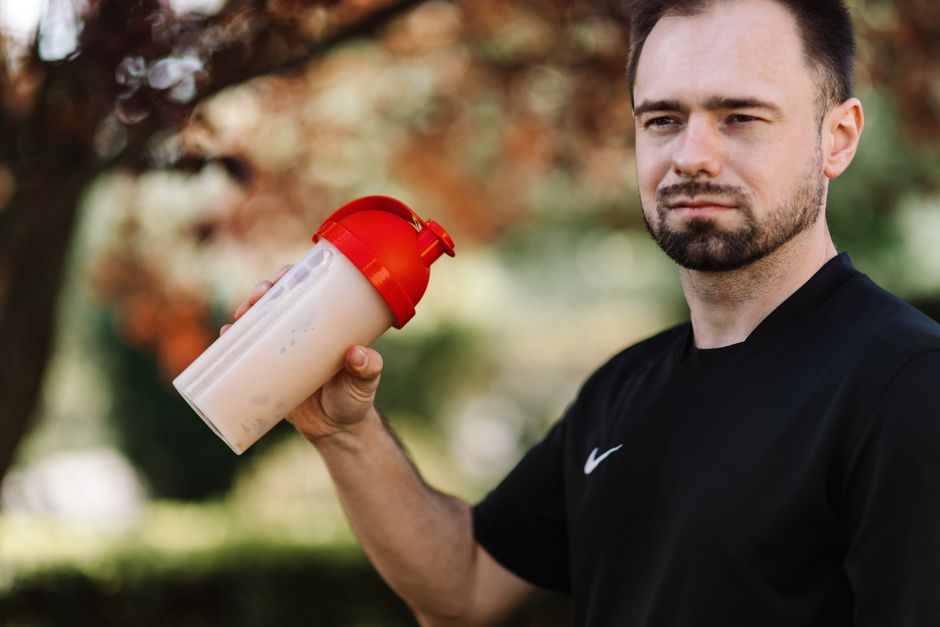
Protein powder is a supplement, not a meal. What you take alongside it often matters more than the powder itself. The most useful additions are carbohydrate for energy and recovery, fluid for hydration, and a food source of nutrients that powder alone does not provide. For most healthy adults, water and a balanced meal do more for results than any add-on sold next to the protein tub.
What To Take With Protein Powder For Better Results?
The short answer is carbohydrate and water. Protein synthesis — the process your body uses to build and repair muscle — needs amino acids from protein. But the energy to fuel that process, and the fluid to move nutrients through your body, come from what you eat and drink alongside it.
For most people, a protein shake blended with a banana, oats, or milk covers both bases. Athletes doing long or intense training often benefit from a deliberate mix of protein and carbohydrate. Someone drinking a shake after a light workout mostly needs water and their next regular meal.
What you do not need is a shelf of add-ons. Most “stack with protein” products have weak or absent evidence for the claims on the label. A few have real support. Knowing the difference saves money and avoids unnecessary risk.
Carbohydrate
Carbohydrate is the body’s preferred fuel for hard exercise. Research on recovery nutrition consistently shows that combining carbohydrate with protein after training supports glycogen refueling — the replenishment of stored carbohydrate in muscle — better than protein alone in people doing repeated or prolonged training.
For a casual gym session, this matters less. For someone training hard most days, pairing protein with a carbohydrate source is one of the few add-ons with solid evidence behind it. A banana, a scoop of oats, or milk in the shake all work.
Water and electrolytes
Protein powder does not hydrate you. Water does. If you sweat heavily, you lose sodium and other electrolytes, and plain water alone may not replace them. For most workouts under an hour, water is enough. For long or very sweaty sessions, an electrolyte drink alongside your shake makes sense.
Food, not just powder
Whole foods bring vitamins, minerals, fiber, and other compounds that a powder does not. A shake is a convenience, not a replacement for meals. Taking protein with real food — a meal, a snack, a piece of fruit — is usually the better choice when you have the option.
Does It Matter What You Mix Protein Powder With?
The liquid you choose changes the nutrition, not the protein’s basic function. Water adds nothing but fluid. Milk adds protein, carbohydrate, and fat. Plant milks vary widely — some are mostly water with additives.
Here is a rough comparison of common mixers. Values are approximate and vary by brand and type.
| Mixer (1 cup) | Protein | Carbohydrate | Notes |
|---|---|---|---|
| Water | 0 g | 0 g | No added nutrition |
| Dairy milk | ~8 g | ~12 g | Adds protein and carbs |
| Soy milk | ~7 g | ~4 g | Complete plant protein |
| Almond milk (unsweetened) | ~1 g | ~1 g | Mostly water |
| Oat milk | ~3 g | ~16 g | Higher in carbs |
These figures come from standard USDA nutrient data and reflect typical products. Check your own carton, because fortification and added sugar vary a lot between brands.
One clarification worth making: the “anabolic window” — the idea that you must drink your shake within minutes of training or lose your gains — is overstated. Total daily protein intake matters far more than timing for most people. Research indicates the window is wider than once believed, especially for people eating regular meals.
Should You Add Creatine to Your Protein Shake?
Creatine is one of the few sports supplements with strong, consistent evidence behind it. Studies have found it can support gains in strength and muscle mass when combined with resistance training. It is well studied in healthy adults.
You can mix creatine into a protein shake without issue. The two do not interfere with each other. Many people take creatine daily, and the timing relative to protein does not appear to matter much — consistency matters more than the exact moment.
Important limits: creatine’s evidence base is strongest in healthy adults doing resistance training. It is not a fat burner, and it does not work without training. People with kidney disease should talk to a clinician before using it. The evidence in children and pregnant women is limited, and no established guidelines support routine use in those groups.




What About Adding Other Supplements?
Most add-ins marketed alongside protein have thin evidence. Here is an honest breakdown of a few common ones.
- Branched-chain amino acids (BCAAs): If you already eat enough protein, BCAAs add little. Complete protein already contains them.
- Glutamine: Popular for recovery and gut health. Evidence for muscle recovery in healthy people is weak.
- Collagen: A protein, but not a complete one. It lacks tryptophan and is low in some other essential amino acids, so it is a poor substitute for whey or other complete proteins for muscle building.
- Beta-alanine: Some evidence for short bursts of high-intensity exercise. Not related to protein’s main job.
- Multivitamins: Not needed with every shake. A shake is not a reason to add one.
None of these are harmful for most healthy adults at typical doses, but “harmless” is not the same as “helpful.” If a product claims to boost results beyond protein and carbohydrate, ask what trial supports that. Often there is none.
When Should You Take Protein Powder?
Timing is less important than total daily intake. For most active adults, the goal is to spread protein across the day rather than cram it into one shake.
General guidance from nutrition research suggests aiming for a source of protein at each meal, with total daily intake depending on body weight and activity level. Athletes and people doing serious resistance training generally need more than sedentary adults. A registered dietitian can give you a specific target based on your situation.
Taking protein with food — rather than on an empty stomach as a lone shake — tends to be more satisfying and provides a broader mix of nutrients. There is no strong evidence that a shake on an empty stomach is better for muscle building than the same protein eaten with a meal.
Who Should Be Careful With Protein Powder Add-Ons?
Protein powder itself is generally safe for healthy adults, but some add-ins carry real cautions.
People with kidney disease may need to limit protein and should not add supplements without medical guidance. People with diabetes should watch the carbohydrate from mixers and flavored powders. Anyone taking prescription medication should check for interactions before adding new supplements — some, like certain herbal extracts, can interfere with drugs.
Pregnant and breastfeeding women, and children, are groups where supplement evidence is limited. No clinical guidelines currently support routine use of most sports supplements in these populations. Protein needs during pregnancy are real, but they are usually met through food, and any supplement decision should go through a clinician.
One more caution: supplements are not held to the same pre-market safety standards as medications in the United States. Third-party testing labels can help, but they are not a guarantee. Buying from established brands reduces, but does not eliminate, the risk of contamination or mislabeling.
The Bottom Line
Take your protein powder with carbohydrate and water for most goals. Add electrolytes if you sweat heavily. Mix it with milk if you want extra protein and carbs. Skip the long list of add-ons unless you have a specific, evidence-backed reason for one.
Creatine is the exception worth considering for healthy adults doing resistance training. Most other add-ins do not earn their place in the shaker. Real food, enough total protein, and consistent training do more than any stack.
Frequently Asked Questions
What is the best thing to mix with protein powder?
Water is fine for hydration, and milk or a banana adds carbohydrate and nutrients. The best choice depends on whether you need extra energy and nutrients or just fluid.
Should I add creatine to my protein shake?
You can mix them safely, and creatine has strong evidence for supporting strength and muscle when paired with resistance training. Consistency of daily use matters more than timing.
Do BCAAs add anything to a protein shake?
For most people who already eat enough protein, BCAAs add little because complete protein already contains them. Evidence for extra benefit in well-fed adults is weak.
Is it bad to take protein powder on an empty stomach?
No, it is not harmful for most healthy adults. A shake with food tends to be more satisfying and provides a broader mix of nutrients, but the difference for muscle building is small.
