

If you want to improve your gut health, the most useful things to focus on are fiber from a variety of plant foods, fermented foods, and — when there is a specific reason — targeted probiotic or prebiotic supplements. Fiber feeds the bacteria already living in your gut. Fermented foods can add live microbes and their byproducts. Probiotics are specific strains with specific effects, and they are not all the same thing. No single pill or powder fixes a gut on its own, and the strongest evidence points to food patterns rather than isolated products.
What To Take To Improve Gut Health Fiber Probiotics More?
Fiber and fermented foods come first, because the evidence for them is broader and more consistent than for any single supplement. Probiotics have real uses, but they work best when matched to a specific problem rather than taken as a general tonic.
Your gut holds trillions of bacteria, along with fungi, viruses, and other microbes. Together they help break down food your body cannot digest, produce certain vitamins, and interact with your immune system. The mix of species differs from person to person. That is why two people can eat the same diet and end up with different gut communities.
Fiber is the main fuel for these microbes. When bacteria ferment fiber, they produce short-chain fatty acids, including butyrate, acetate, and propionate. These compounds feed the cells lining your colon and are thought to play a role in gut barrier function and immune signaling. This part of the physiology is well established.
What is less established is how much any specific supplement changes your long-term health. Many probiotic products are marketed far beyond what the evidence supports. That gap between marketing and data is worth understanding before you spend money.
How Much Fiber Do You Actually Need?
Most adults in the United States fall short of recommended fiber intake. The general dietary guidance is roughly 25 grams per day for women and 38 grams per day for men, though needs vary with age and calorie intake. Average intake is closer to 15 grams, so the gap is large.
Closing that gap matters more than any single food choice. Fiber comes in different forms, and they do not all behave the same way in your gut.
- Soluble fiber dissolves in water and is fermented by gut bacteria. Oats, barley, beans, lentils, apples, and citrus are common sources.
- Insoluble fiber does not dissolve and adds bulk to stool. Whole grains, nuts, and many vegetables provide it.
- Fermentable fiber is the type bacteria actively break down. It overlaps with soluble fiber and includes inulin and resistant starch.
Variety matters more than hitting one number with one food. Different fibers feed different bacteria. A diet built on many plant foods tends to support a more diverse gut community than a diet built on a single high-fiber product.
Increase fiber gradually. Going from 15 grams to 40 grams overnight often causes bloating, gas, and cramping. Add a few grams every few days and drink enough water, since fiber needs fluid to move through your system.
Which Foods Feed Gut Bacteria Best?
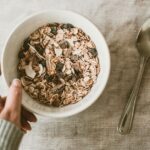
Plant foods are the foundation. Fruits, vegetables, whole grains, beans, lentils, nuts, and seeds all deliver fiber and plant compounds that gut bacteria use. Research on diet and the microbiome consistently shows that people who eat more varied plant foods tend to have more diverse gut bacteria.
Fermented foods are a separate category. Yogurt with live cultures, kefir, sauerkraut, kimchi, miso, and tempeh contain live microorganisms or the compounds they produce during fermentation. A study published in the journal Cell found that a diet high in fermented foods increased gut microbial diversity and changed immune markers in healthy adults over a 10-week period. That is a meaningful finding, though it does not prove fermented foods prevent disease.
Not all fermented foods contain live cultures. Many shelf-stable pickles, for example, are preserved in vinegar and pasteurized, so the microbes are gone. Check labels for “live and active cultures” if that is what you are after.
One point that often gets lost: fiber supplements are not a full substitute for fiber-rich foods. Supplements can help you reach a target, but they do not carry the same range of plant compounds that whole foods do. Food first, supplement second, is the more defensible order.


Do Probiotic Supplements Really Help?
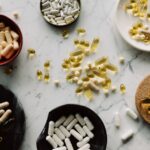
Probiotics can help in specific situations, and the evidence is strongest when the strain and the condition are matched. The word “probiotic” covers hundreds of different organisms. A product that helps with one problem may do nothing for another.
Some of the better-supported uses include certain strains of Saccharomyces boulardii and Lactobacillus rhamnosus GG for reducing antibiotic-associated diarrhea, and specific blends studied for infectious diarrhea in children. These are narrow uses with defined strains and doses, not general health claims.
For general gut wellness in healthy adults, the picture is murkier. Some studies show modest changes in gut bacteria from probiotic supplements, but those changes often fade once you stop taking them. The bacteria in most supplements do not permanently colonize your gut. They pass through.
There is also a real question of what you are buying. Independent testing has found that some probiotic products do not contain the strains or amounts listed on the label. If you decide to try one, look for a product that names the specific strain and the CFU count, and consider a brand that publishes third-party testing.
Probiotics are not risk-free for everyone. People who are severely immunocompromised, have a central venous line, or are critically ill have developed infections from probiotic organisms. If you fall into any of these groups, talk to your doctor before taking one.
What About Prebiotics and Synbiotics?
Prebiotics are compounds — mostly specific types of fiber — that feed beneficial gut bacteria. They are not the same as probiotics. Probiotics are live organisms. Prebiotics are the food for them.
Common prebiotics include inulin, fructooligosaccharides, and galactooligosaccharides. You find them naturally in foods like garlic, onions, leeks, asparagus, bananas, oats, and legumes.
Prebiotic supplements are widely sold, but the evidence for specific health outcomes is limited. Some studies suggest they can increase certain beneficial bacteria, but whether that translates into meaningful health benefits is not firmly established. They also commonly cause gas and bloating, especially at higher doses.
Synbiotics are products that combine probiotics and prebiotics. The idea is that the prebiotic feeds the probiotic. In practice, the two components are not always matched in a way that makes this work, and research on synbiotics is still developing. The evidence here is limited.
What Else Shapes Gut Health?
Diet is not the only factor. Sleep, stress, physical activity, and medications all influence your gut bacteria.
Antibiotics are the most disruptive common medication. They kill harmful bacteria, but they also wipe out many beneficial ones. Recovery can take weeks to months, and some species may not fully return. This is one reason antibiotics are prescribed only when needed.
Other medications matter too. Proton pump inhibitors, used for acid reflux, change the gut environment and have been linked to shifts in gut bacteria. That does not mean they are unsafe — it means the relationship is real and worth discussing with your doctor if you take one long term.
Stress affects the gut through the gut-brain axis, a two-way communication system between your digestive tract and your nervous system. Chronic stress is associated with changes in gut bacteria and with digestive symptoms. Sleep loss shows similar patterns in some studies.
Physical activity is associated with more diverse gut bacteria in observational research. The direction of cause and effect is not fully clear, but movement appears to be part of the picture.
Should You Take a Fiber Supplement?
A fiber supplement can help if you struggle to get enough from food. Common options include psyllium, inulin, and partially hydrolyzed guar gum. They differ in how well they ferment and how well they tolerate being mixed into liquid.
Psyllium is one of the most studied fiber supplements. It forms a gel in water and is often used for constipation. Inulin ferments more readily, which means it feeds bacteria but also tends to cause more gas.
Start with a low dose and increase slowly. Drink plenty of water. If you have a history of bowel obstruction, swallowing problems, or a condition that requires a low-fiber diet, talk to your doctor before starting any fiber supplement.
No single supplement replaces a varied diet. The most reliable approach is to build fiber from many plant sources, add fermented foods if you tolerate them, and use supplements to fill gaps rather than as the main strategy.
Frequently Asked Questions
What is the single best thing to take for gut health?
There is no single best product. A varied, fiber-rich diet with fermented foods has the broadest evidence base, while probiotics help mainly for specific conditions.
How long does it take for probiotics to work?
Some effects, such as reduced antibiotic-associated diarrhea, can appear within days to a few weeks. Changes to your gut bacteria generally fade after you stop taking them.
Can I take probiotics and fiber together?
Yes, and the combination is often reasonable since fiber feeds gut bacteria. If you are new to either, add one at a time so you can tell what causes any bloating or gas.
Do I need a probiotic if I eat yogurt and vegetables?
Not necessarily. A diet rich in plant foods and fermented foods supports gut bacteria without a supplement for most healthy adults.
