
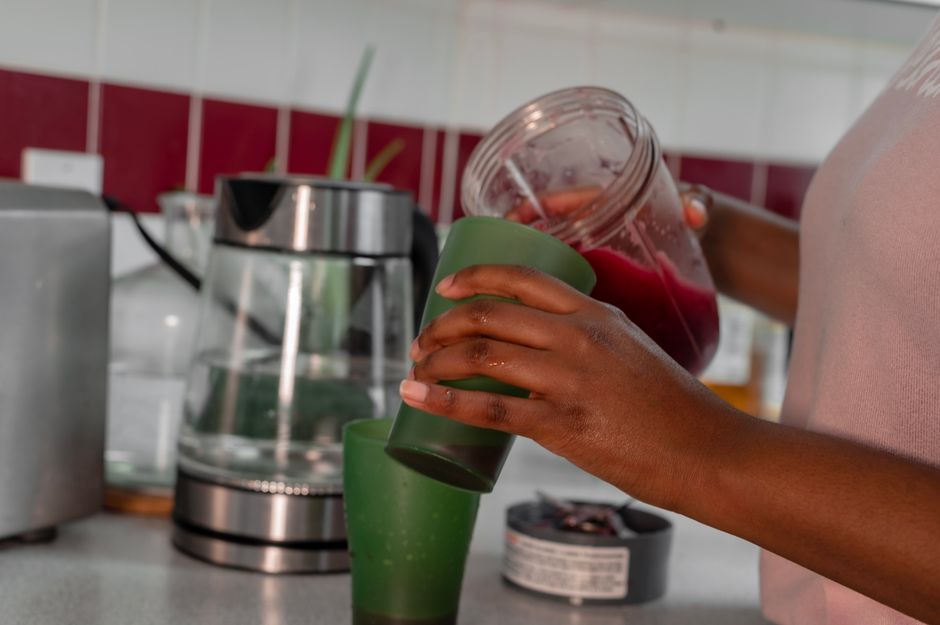
A smoothie can be a genuinely balanced meal or a glass of fruit sugar with a health halo. The difference comes down to what you put in the blender. A good smoothie combines a protein source, a fiber source, some healthy fat, and liquid in proportions that keep you full and keep your blood sugar from spiking.
Most people build smoothies backward. They start with fruit and juice, then look for something healthy to add. Flip that. Start with protein and fiber, then add fruit for flavor and sweetness. The result tastes good and actually holds you until your next meal.
What To Put In Smoothies?
Every smoothie worth drinking has four components working together: a protein source, a fiber source, a fat source, and a liquid base. Skip any one of them and you usually end up hungry within an hour or drinking something closer to dessert than a meal.
Here is what each component does and where to get it.
Protein is the anchor. It slows digestion, supports muscle maintenance, and is the main reason a smoothie keeps you full. Good sources include plain Greek yogurt, cottage cheese, milk, unsweetened soy milk, a scoop of protein powder, silken tofu, or a spoonful of nut butter. Greek yogurt is a strong default because it brings protein and thickness at the same time.
Fiber comes from whole fruit, vegetables, oats, chia seeds, flaxseed, or hemp hearts. Fiber slows how fast the sugar from fruit reaches your bloodstream and feeds the bacteria in your gut. Blending does break down some cell walls, but it does not remove fiber. A blended apple still contains its fiber. What changes is that you drink it faster than you would chew it, which matters for how full you feel.
Fat adds creaminess and helps you absorb fat-soluble vitamins like A, D, E, and K. A tablespoon of nut butter, some avocado, chia seeds, or full-fat yogurt all work. Fat also slows gastric emptying, which extends how long you feel satisfied.
Liquid is the base. Water, milk, unsweetened plant milk, or plain yogurt thinned out all work. Juice is the one base worth limiting. It adds sugar and calories without the fiber that whole fruit provides.
Which Fruits and Vegetables Work Best in a Smoothie?
Frozen fruit is the practical choice for most smoothies. It is picked and frozen at peak ripeness, it costs less than fresh out of season, and it makes the texture thick without ice. Bananas, berries, mango, pineapple, and peaches all freeze well and blend smoothly.
Berries deserve a specific mention. They are lower in sugar than most fruits and high in anthocyanins, the pigments that give them their color. Research on berries and cardiovascular markers has shown modest benefits in some studies, though the effect sizes are not large and results vary between trials. They are a good choice, not a magic ingredient.
Vegetables are where most smoothies fall short. Spinach blends into almost anything without changing the taste, and it adds fiber, folate, and vitamin K. Kale works but has a stronger flavor. Frozen cauliflower adds creaminess with very little taste. Cucumber adds water and a clean flavor. Carrot blends well with orange and ginger.
One practical note: a smoothie does not need to be mostly fruit. A ratio of roughly half vegetables to half fruit keeps the sugar load reasonable while still tasting good. If you are new to vegetables in smoothies, start with spinach and build from there.
Are Smoothies Actually Healthy or Just Sugar?
Both are possible. The healthfulness of a smoothie depends almost entirely on what goes into it, not on the fact that it is blended.
A smoothie made from fruit juice, banana, and honey is high in free sugars with little protein or fat to slow absorption. A smoothie made from Greek yogurt, spinach, frozen berries, and chia seeds is a balanced meal with protein, fiber, and fat. The two drinks look similar and behave very differently in your body.
The sugar question deserves an honest answer. Whole fruit contains fructose along with fiber, water, and micronutrients. When fruit is blended, the fiber stays in the drink, so a homemade fruit smoothie is not the same as fruit juice. But blending does make the sugars more available and easier to consume quickly. Drinking three pieces of fruit in two minutes is not the same as eating them over the course of a day.
For most healthy adults, a fruit-containing smoothie is not a concern. For people managing blood sugar, the protein and fat components matter more, not less. Building the smoothie around protein first and treating fruit as a flavoring rather than the base keeps the sugar load in check.





What Should You Avoid Putting in a Smoothie?
Juice is the most common mistake. It adds sugar and calories while contributing nothing that whole fruit does not already provide. If you want a thinner smoothie, use water or unsweetened plant milk instead.
Sweetened yogurt is another frequent trap. Flavored yogurts often contain as much added sugar as a dessert. Plain yogurt lets you control sweetness with fruit. If plain tastes too tart, a ripe banana or a few dates will fix it.
Watch the add-ins too. Honey, agave, maple syrup, and sweetened protein powders all add sugar. Some commercial smoothie powders contain added sugars and fillers that are not listed prominently on the front of the package. Read the ingredient list, not the marketing claims.
Ice cream, frozen yogurt, and sherbet turn a smoothie into a milkshake. That is fine as an occasional treat, but it is not the same drink as a balanced smoothie.
One more: be cautious with raw supplements and powders marketed for smoothies. No clinical guidelines currently exist for many of these products, and quality control varies. Whole food ingredients are the safer default.
How Do You Make a Smoothie That Keeps You Full?
Fullness comes from protein, fiber, fat, and volume together. A smoothie that is mostly fruit and liquid will not hold you, no matter how healthy the fruit is.
A practical template looks like this: one cup of liquid, half a cup to one cup of protein source, one to two cups of vegetables and fruit combined, and one tablespoon of fat. That combination delivers enough protein and fiber to blunt hunger for a few hours in most people.
Texture matters more than people expect. A thin, watery smoothie feels like a drink and disappears quickly. A thick smoothie feels like food and takes longer to consume. Frozen fruit, Greek yogurt, chia seeds, and oats all add thickness. If you need to thin it, add liquid a splash at a time.
Chia seeds and oats are worth keeping on hand. Chia absorbs liquid and forms a gel that adds thickness and fiber. Oats add soluble fiber and a mild flavor that blends into almost anything. Both help a smoothie feel more like a meal.
Can You Drink a Smoothie Every Day?
Yes, for most people. A daily smoothie built around protein, fiber, and whole foods fits within a normal diet. The caveat is portion size and what it replaces.
A large smoothie can easily exceed the calorie content of a meal without feeling like one. Drinking calories is less satiating than eating them for many people, which means a smoothie can add to your daily intake rather than substitute for part of it. If you are watching your weight, treat a smoothie as a meal replacement rather than a snack on top of everything else.
People with diabetes should build smoothies around protein and fat and keep fruit portions modest, since blended fruit can affect blood sugar faster than whole fruit. People with kidney disease may need to limit certain ingredients like spinach and bananas, which are high in potassium. Anyone with a diagnosed condition should get individual guidance rather than following general templates.
For most healthy adults aged 35 to 65, a well-built smoothie is a convenient way to get protein, fiber, and produce into a busy morning. The formula is simple: start with protein, add fiber, include some fat, and let fruit be the flavor rather than the foundation.
Frequently Asked Questions
What is the healthiest thing to put in a smoothie?
Plain Greek yogurt is one of the strongest choices because it provides protein and thickness at the same time. Pair it with spinach, frozen berries, and a source of fat like chia seeds for a balanced drink.
Is it better to use milk or water in a smoothie?
Milk or unsweetened plant milk adds protein and creaminess, while water keeps calories lower. Both work, but avoid juice as a base since it adds sugar without fiber.
Are smoothies good for weight loss?
They can support weight management when built around protein and fiber and used as a meal replacement. A fruit-heavy smoothie with little protein can add calories without keeping you full.
Can you put raw spinach in a smoothie?
Yes, raw spinach blends safely into smoothies and adds fiber, folate, and vitamin K. People taking blood thinners or with kidney disease should check with their doctor about how much they consume.
