
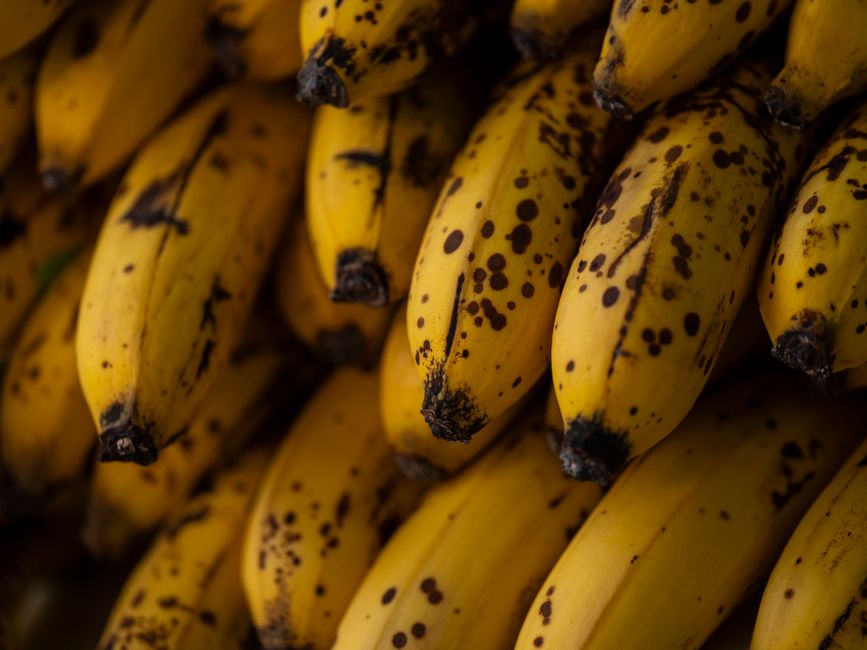
Ripe bananas are best used in recipes where their soft texture and sweetness do the work: banana bread, muffins, pancakes, smoothies, oatmeal, and frozen banana “nice cream.” The browner and softer the peel, the more sugar the fruit has developed, which makes overripe bananas better for baking than eating raw.
A banana that has turned spotty and soft is not spoiled. It is at a different stage of ripeness, and that stage is useful. This guide covers what to make with ripe bananas, why they behave differently in recipes, and how to store or freeze them without waste.
What To Make With Ripe Bananas?
Quick breads and muffins top the list because ripe bananas add moisture, natural sweetness, and structure at the same time. Banana bread is the most common use, but the same logic applies to banana muffins, banana pancakes, and banana waffles.
Beyond baking, ripe bananas work well in no-cook applications. Blend them into smoothies for body and sweetness. Mash them into oatmeal or overnight oats. Freeze and blend them alone for a one-ingredient frozen dessert often called nice cream.
Here is a quick reference for which recipes suit which ripeness stage:
| Ripeness Stage | Peel Appearance | Best Uses |
|---|---|---|
| Ripe | Mostly yellow, few spots | Eating raw, slicing into cereal, smoothies |
| Very ripe | Yellow with many brown spots | Banana bread, muffins, pancakes |
| Overripe | Mostly brown or black | Baking, freezing, smoothies |
The key distinction is between very ripe and truly spoiled. A banana with brown skin but clean-smelling, creamy flesh is ideal for baking. A banana with mold, a fermented smell, or leaking fluid should be discarded.
Why Do Ripe Bananas Work Better in Baking?
As a banana ripens, its starch converts to sugar. This is why a green banana tastes starchy and a spotted one tastes sweet. The same conversion affects how the fruit behaves in a recipe.
Ripe banana flesh is high in moisture and low in structural integrity. When mashed and mixed into batter, it contributes liquid, sweetness, and a soft crumb. It also acts as a mild binder, which is why some recipes use it as an egg substitute. That substitution works in some recipes and fails in others, and the results are not identical to using eggs.
Underripe bananas contain more resistant starch and less sugar. They will make a drier, less sweet baked good. If a recipe calls for ripe bananas and you only have green ones, the final texture and flavor will differ noticeably.
One detail worth knowing: the brown spots on a ripe banana are caused by the breakdown of chlorophyll and the accumulation of sugars and pigments. They are a normal part of ripening, not a sign of spoilage.
What Can You Make Without an Oven?
Plenty of ripe banana recipes need no baking at all. These are useful when you have ripe bananas but no time or desire to heat up the kitchen.
- Smoothies: Blend one ripe banana with milk or a milk alternative, yogurt, and ice. The banana adds natural sweetness and a creamy texture.
- Nice cream: Freeze sliced ripe bananas, then blend them alone or with a spoonful of cocoa powder or peanut butter. The result is soft-serve consistency.
- Overnight oats: Mash half a banana into oats and milk, refrigerate overnight, and the banana sweetens the mixture as it sits.
- Banana yogurt bowls: Mash ripe banana into plain yogurt for sweetness without added sugar.
- Peanut butter banana toast: Mash ripe banana onto whole grain toast and top with a thin layer of peanut butter.
These options work because ripe banana is already soft and sweet. No cooking is needed to make it palatable or to develop its flavor.





Can You Use Ripe Bananas as a Substitute for Eggs or Sugar?
Ripe bananas can replace some eggs and some added sugar in certain recipes, but the results are not equivalent. This is one of the most overstated claims in home baking.
As an egg substitute, mashed banana adds moisture and some binding, but it does not provide the same structure or leavening that eggs do. In dense recipes like pancakes or muffins, the swap often works reasonably well. In recipes that depend on eggs for lift, like sponge cakes or soufflés, it typically does not.
As a sugar substitute, ripe banana adds sweetness, but it also adds moisture and flavor. Reducing added sugar by replacing it with banana will change the texture and taste of the final product. The two are not interchangeable at a 1-to-1 ratio in most recipes.
The evidence here is practical rather than clinical: home baking results vary, and no formal trials compare banana substitutions to standard ingredients. If you are baking for someone with an egg allergy, follow a tested allergen-free recipe rather than improvising a substitution.
How Should You Store or Freeze Ripe Bananas?
Freezing is the simplest way to keep ripe bananas from going to waste. The key step is to peel and slice them first. A whole frozen banana is very difficult to peel later.
Slice ripe bananas into rounds, spread them on a tray so they do not clump, and freeze until solid. Then transfer the frozen slices to a freezer bag or container. They keep for several months in a standard freezer.
If you plan to bake soon, you can also mash ripe bananas and freeze the mash in measured portions. This makes it easy to thaw exactly what a recipe calls for.
For short-term storage, ripe bananas can sit at room temperature for a day or two. Refrigeration slows further ripening but darkens the peel. The flesh inside stays usable for baking even when the peel turns black.
To slow ripening at room temperature, keep bananas away from other fruits that release ethylene gas, such as apples and avocados. Ethylene speeds ripening in nearby produce.
Are Ripe Bananas Less Nutritious Than Fresh Ones?
Ripe bananas are not less nutritious in any meaningful way, but their carbohydrate profile does change as they ripen. The shift is from starch to sugar, not a loss of vitamins or minerals.
According to USDA nutritional data, a medium banana provides about 105 calories, 27 grams of carbohydrate, 3 grams of fiber, and 422 milligrams of potassium. These values stay fairly consistent across ripeness stages, though the ratio of starch to sugar shifts toward sugar as the fruit ripens.
One practical implication: riper bananas have a higher glycemic index than less ripe ones because their starch has converted to sugar. For most people this is not a concern. For people managing blood sugar, it is worth knowing that a very ripe banana will raise blood glucose somewhat faster than a less ripe one.
The fiber content does not disappear as bananas ripen, but the type of fiber changes. Resistant starch, which is higher in less ripe bananas, decreases as the fruit ripens. Resistant starch behaves more like fiber in the gut. This is a real difference, though its practical health impact for most people is modest.
Frequently Asked Questions
Can you eat ripe bananas raw?
Yes, ripe bananas are perfectly safe and pleasant to eat raw. Very ripe or overripe bananas become mushy and intensely sweet, which is why many people prefer to bake with them instead.
How do you know when a banana is too ripe to use?
A banana is still usable if the flesh is creamy and smells clean, even when the peel is dark.
Can you freeze ripe bananas whole?
You can, but peeling a whole frozen banana is difficult and messy. Slicing or mashing before freezing is easier and more practical.
Do ripe bananas have more sugar than green ones?
Yes, ripe bananas contain more sugar because their starch converts to sugar during ripening. The total carbohydrate content stays roughly the same.
