
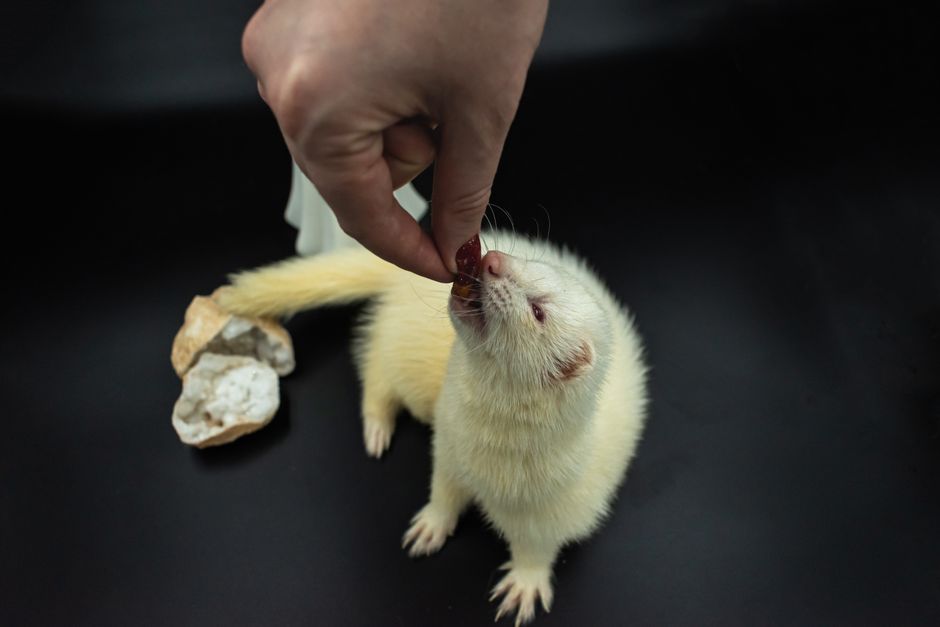
Ferrets are obligate carnivores. That means they evolved to eat animal tissue and have a limited ability to digest plant matter. A ferret’s diet should be built on meat-based protein and animal fat, with very little carbohydrate. Most experts recommend feeding a commercial ferret kibble that lists meat as the first ingredient, or a balanced raw or whole-prey diet designed for ferrets. Treats should be meat-based and given sparingly, and many common human foods — including fruit, vegetables, dairy, and sweets — are not appropriate.
Why Is A Ferret An Obligate Carnivore?
Ferrets are domesticated descendants of the European polecat, a small predator that hunts rodents, birds, and other small animals. Their bodies reflect that history in ways that matter for feeding.
Ferrets have a short digestive tract and a simple stomach. Food moves through them relatively quickly compared with animals that ferment plant material. They also have a limited cecum, the pouch where plant fiber is typically broken down. This means they extract little nutrition from carbohydrates, fruits, and vegetables.
Their natural diet is high in protein and fat and very low in carbohydrate. The closest domestic equivalent is a diet built almost entirely from animal sources. Ferrets can technically eat some plant material, but it does not meet their nutritional needs and can cause digestive upset in larger amounts.
One point often missed: ferrets are also prone to certain health problems, including insulinoma, a tumor of the pancreas that causes low blood sugar. Diets high in sugar or simple carbohydrates are thought to stress the pancreas over time, though the exact role of diet in causing insulinoma is not fully established. Even so, most veterinarians recommend keeping sugar and refined carbohydrates out of a ferret’s diet as a precaution.
What Should A Ferret’s Main Diet Be?
The foundation of a healthy ferret diet is a high-quality commercial ferret food or a properly balanced raw diet. Ferret kibble is formulated to meet their specific nutritional needs, which differ from those of cats and dogs.
When choosing a commercial ferret food, look for these qualities:
- Animal-based protein listed as the first ingredient, ideally several meat sources
- High protein content and high fat content, since ferrets need both
- Low carbohydrate content, with minimal grain, corn, or plant fillers
- A formula made specifically for ferrets, not cats or dogs
Cat food is sometimes used as a substitute, but it is not ideal. Cat food is formulated for a different set of nutritional needs, and kitten food or a high-protein cat food is closer to what a ferret needs than adult maintenance cat food, though it is still not a perfect match.
Some owners feed a raw or whole-prey diet. This can work well when it is carefully balanced to include the right proportions of muscle meat, organ meat, and bone. A poorly balanced raw diet can cause serious nutritional deficiencies, so this approach requires research and ideally guidance from a veterinarian familiar with ferrets.
Ferrets eat frequent small meals rather than one or two large ones. Many owners leave food available throughout the day, since ferrets can develop low blood sugar if they go too long without eating. Fresh water should always be available, and many ferrets drink more readily from a bowl than a bottle.
What Foods Are Safe For Ferrets?
Safe foods for ferrets are animal-based and given in appropriate amounts. Cooked or raw meat without seasoning is generally acceptable as an occasional addition to a balanced diet.
Examples of foods that are commonly considered safe in small amounts include:
- Plain cooked chicken, turkey, or other poultry without bones, skin seasoning, or salt
- Plain cooked or raw egg, which most ferrets tolerate well
- Small pieces of cooked meat from animals like beef or lamb
- Commercial meat-based ferret treats
Even these should be treated as additions, not replacements, for a complete diet. A ferret fed only chicken breast, for example, would miss key nutrients like taurine, calcium, and certain vitamins. Variety and balance matter.
Some owners offer small amounts of cooked organ meat, such as liver, because it is nutrient-dense. Organ meat is very rich, so only small amounts are appropriate. Too much liver can cause problems related to excess vitamin A.




What Foods Should Ferrets Never Eat?
Several common foods are unsafe for ferrets, either because they cannot be digested well or because they are directly harmful.
Foods to avoid entirely include:
- Chocolate, which contains compounds toxic to many animals including ferrets
- Caffeine, found in coffee, tea, and some sodas
- Alcohol
- Onions, garlic, and related plants, which can damage red blood cells
- Grapes and raisins, which have been linked to kidney problems in some animals
- Xylitol and other artificial sweeteners
- Dairy products like milk and cheese, since many ferrets are lactose intolerant and these can cause diarrhea
- High-sugar foods, including most fruit, candy, and sweetened treats
- Bones that can splinter, such as cooked poultry bones
Fruit deserves a specific mention because it is often assumed to be a healthy treat. Ferrets cannot use fruit efficiently, and its sugar content is a concern. A small piece of fruit is unlikely to cause immediate harm, but it offers no nutritional benefit and adds sugar that their bodies are not designed to handle.
Dairy is another common mistake. Many people offer milk or cheese as a treat. Most adult ferrets cannot digest lactose well, and dairy often leads to loose stools and stomach upset.
What Are Good Treats For Ferrets?
Treats for ferrets should be meat-based and small. They are best used for training, bonding, or occasional rewards rather than as a regular part of the diet.
Good options include small pieces of plain cooked meat, freeze-dried meat treats made for ferrets or cats, and commercial ferret treats that list meat as the main ingredient. Some ferrets enjoy a tiny amount of plain egg or a small piece of cooked liver.
The general rule is that treats should make up only a small fraction of daily calories. A ferret filling up on treats may eat less of its balanced food, which can lead to nutritional gaps over time.
Some owners use a small amount of a meat-based paste or oil as a treat. Salmon oil and similar animal-based oils are sometimes offered, but they are calorie-dense and should be limited. There is no established clinical guideline for how much oil a ferret should receive, so keep amounts very small and treat it as an occasional addition.
Watch for treats marketed as “natural” or “healthy” that are actually high in sugar, grain, or fruit. These do not suit a ferret’s biology regardless of the packaging.
How Do You Switch A Ferret’s Diet Safely?
Ferrets can be picky and often resist new foods. A sudden switch can lead to a ferret refusing to eat, which is a genuine health risk because they can develop low blood sugar quickly when they do not eat.
If you need to change your ferret’s food, do it gradually. Mix a small amount of the new food into the old food and slowly increase the proportion over days or weeks. Watch to make sure your ferret is actually eating, not just picking around the new food.
Some ferrets imprint on a single food and refuse anything else. Offering a variety from a young age can help prevent this. If your ferret stops eating during a transition, contact a veterinarian, since a ferret that goes without food can become seriously ill.
Any major diet change, especially a switch to raw feeding or a diet for a ferret with a health condition, is worth discussing with a veterinarian who treats ferrets. Their nutritional needs are specific enough that general pet food advice does not always apply.
Frequently Asked Questions
Can ferrets eat cat food?
Cat food is not ideal for ferrets because it is formulated for different nutritional needs, but a high-protein kitten or cat food is sometimes used as a short-term substitute. A ferret-specific food is the better choice when available.
Can ferrets eat fruit or vegetables?
Ferrets can technically eat small amounts of fruit or vegetables, but they get little nutrition from them and the sugar in fruit is a concern. These foods are not recommended as part of a regular diet.
What treats can I give my ferret?
Small pieces of plain cooked meat, freeze-dried meat treats, and meat-based commercial ferret treats are appropriate. Treats should make up only a small portion of daily calories.
Can ferrets drink milk?
Most adult ferrets are lactose intolerant, so milk and other dairy products often cause diarrhea and stomach upset. Water is the best drink for a ferret.
