
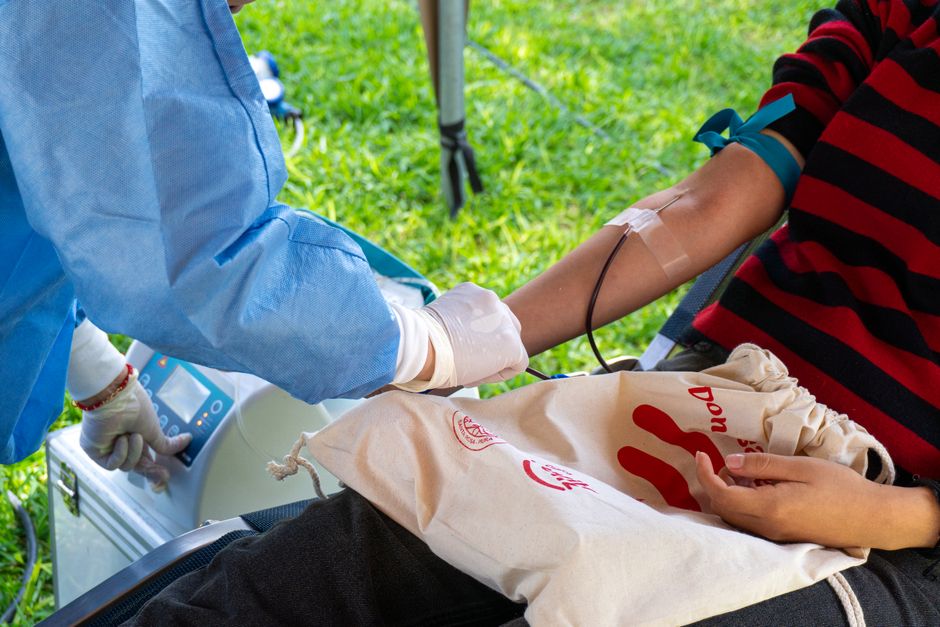
Giving blood for the first time takes about 10 minutes from the moment the needle goes in, but the whole appointment usually runs 45 to 60 minutes from arrival to the juice and cookies at the end. You will answer a health questionnaire, get a quick finger-prick test to check your hemoglobin, and then sit or lie back while a phlebotomist draws roughly one pint of blood. Most people feel fine. Some feel a brief pinch, and a smaller number feel lightheaded afterward.
What Happens Step by Step at a First Blood Donation?
The process follows a predictable sequence, and knowing it in advance removes most of the uncertainty.
Registration. You show a photo ID and confirm your name, address, and date of birth. The donation center creates or updates your record.
Health questionnaire. You answer questions about your medical history, recent travel, medications, and past illnesses. This screening exists to protect both you and the person who will receive your blood. Answer honestly. A “yes” to a question does not automatically disqualify you.
Mini physical. Staff check your temperature, pulse, blood pressure, and hemoglobin level. The hemoglobin check uses a small finger prick and a drop of blood. For most adults, the acceptable hemoglobin threshold is 12.5 g/dL or higher, though exact cutoffs vary slightly by donation center and by sex.
The donation itself. You sit in a reclining chair. The phlebotomist cleans the inside of your elbow, inserts a sterile needle into a vein, and collects about 450 to 500 milliliters of whole blood. That is roughly one pint. The draw takes about 8 to 10 minutes.
Recovery and refreshments. After the needle comes out, you rest for 10 to 15 minutes with your arm elevated. Staff watch for signs of dizziness. You get water or juice and a snack. This rest period matters more than most first-timers expect.
Does Giving Blood Hurt?
Most donors describe a quick pinch or sting when the needle goes in. After that, many feel nothing at all during the draw.
The needle is larger than the one used for a routine blood test. That is because whole blood is thicker than the small samples drawn for lab work, and a larger gauge keeps the blood flowing without damaging red blood cells. A larger needle does not necessarily mean more pain, but it is a different sensation than a standard blood draw.
Some people feel a cool sensation in the arm as blood leaves. Others notice nothing beyond the initial stick. If you feel any discomfort during the draw, tell the phlebotomist immediately. They can adjust your position or stop the donation if needed.
How Long Does the Whole Process Take?
Plan for about an hour. The donation itself is short, but the screening, questionnaire, and recovery time add up.
Here is a rough breakdown:
- Registration: 5 to 10 minutes
- Health questionnaire: 10 to 15 minutes
- Mini physical and hemoglobin check: 5 to 10 minutes
- Actual blood draw: 8 to 10 minutes
- Rest and refreshments: 10 to 15 minutes
First-time donors often take a bit longer because everything is new. Staff may spend extra time explaining each step. That is normal and not a sign anything is wrong.
How Will You Feel After Donating Blood?
Most people feel completely normal. Some feel slightly tired for the rest of the day. A smaller number feel lightheaded, dizzy, or nauseated.
Lightheadedness is the most common reaction. It usually passes within a few minutes of lying down with your legs elevated. Research on blood donation reactions shows that first-time donors and younger donors tend to have a higher rate of these reactions than repeat donors. Being well hydrated and eating before your appointment lowers the risk.
Less common reactions include a small bruise where the needle went in, a tingling feeling around the mouth, or brief muscle twitching. These are usually mild and resolve on their own. If you feel faint, tell staff right away. Do not try to walk it off.
Serious complications are rare. The screening process and sterile equipment make infection risk extremely low.
What Should You Do Before and After Giving Blood?
Preparation makes a real difference in how you feel.
Before your appointment:
- Drink plenty of water in the 24 hours before donating. Dehydration increases the chance of dizziness.
- Eat a normal meal within a few hours of your appointment. Do not donate on an empty stomach.
- Avoid heavy alcohol the night before.
- Get a good night’s sleep.
- Wear a shirt with sleeves that can roll up above the elbow.
After your appointment:
- Keep the bandage on for several hours.
- Drink extra fluids for the rest of the day.
- Avoid heavy lifting or intense exercise for the rest of the day.
- If you feel lightheaded, sit or lie down immediately.
- Do not skip meals.
Your body replaces the plasma — the liquid part of blood — within about 24 to 48 hours. Red blood cells take longer. It typically takes several weeks for red blood cell counts to return to normal. This is why most donation centers require a waiting period of about 8 weeks between whole blood donations.
Who Is Eligible to Donate Blood?
Eligibility rules vary by country and by donation center. In the United States, most centers require donors to be at least 16 or 17 years old, depending on the state, and to weigh at least 110 pounds.
Other common requirements include:
- Being in generally good health
- Having a hemoglobin level at or above the center’s threshold
- Not having donated whole blood within the past 8 weeks
- Meeting travel and medication guidelines
Some conditions and medications disqualify you temporarily. Others disqualify you permanently. The questionnaire and a brief interview with staff will sort this out. If you are unsure whether you qualify, call the donation center before your appointment. They can answer specific questions without you making the trip.
One clarification worth knowing: the weight minimum exists because blood volume is roughly proportional to body weight. A smaller person has less blood to spare, and drawing a full unit could drop their volume too low. It is not about fitness or health status.
What Are the Different Types of Blood Donation?
Whole blood donation is the most common and the one most first-timers start with. But there are other types.
| Type | What is collected | Typical time | How often you can donate |
|---|---|---|---|
| Whole blood | All blood components | 8 to 10 minutes | Every 8 weeks |
| Platelets | Platelets and some plasma | 1.5 to 2.5 hours | Up to 24 times per year |
| Plasma | Plasma only | About 45 minutes | Every 28 days |
| Double red cells | Two units of red cells | About 30 minutes | Every 16 weeks |
Platelet and plasma donations use a process called apheresis. A machine draws blood, separates out the needed component, and returns the rest to your body. This takes longer but allows more frequent donations because your red blood cells are not depleted.
If you have type O negative blood, you may be asked to consider double red cell donation. O negative is the universal donor type for red cells and is used in emergencies when there is no time to match blood type. Type AB plasma is also in high demand because AB plasma can be given to patients of any blood type.
Is There Anything That Can Go Wrong?
Blood donation is very safe. The needle and collection equipment are sterile and used only once. There is no risk of catching an infection from donating.
The main risks are minor and short-lived. Bruising at the needle site is common. Fainting is uncommon but possible, especially in first-time donors. In rare cases, nerve irritation near the vein can cause a temporary tingling or numbness in the arm.
More serious complications are extremely rare. If you have a reaction during or after donation, staff are trained to respond. If something feels wrong hours later — unusual pain, swelling, or persistent numbness — contact the donation center or your doctor.
Frequently Asked Questions
How much blood is taken during a donation?
About 450 to 500 milliliters, which is roughly one pint. Your body replaces the plasma within a day or two, but red blood cells take several weeks to fully recover.
Can I drive myself home after giving blood?
Most people can drive themselves home after the rest period. If you feel lightheaded or dizzy, wait until it passes before getting behind the wheel, or ask someone to drive you.
What should I eat before donating blood?
Eat a normal meal within a few hours of your appointment and drink extra water beforehand. There is no specific food you must eat, but avoiding an empty stomach reduces the chance of feeling faint.
How often can I donate blood?
Whole blood donations are typically spaced about 8 weeks apart. Platelet and plasma donations can be done more frequently because red blood cells are not lost.
