
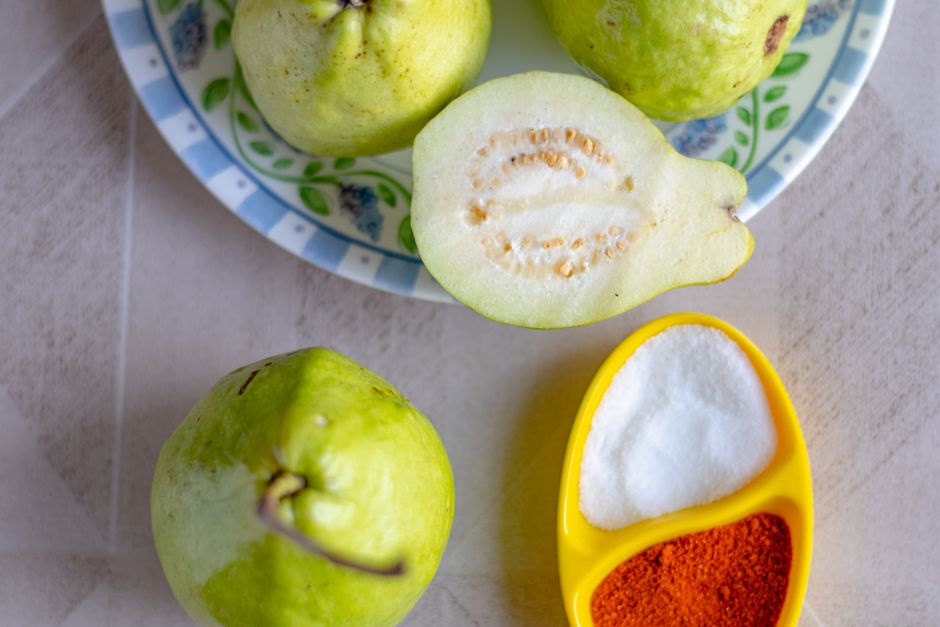
Guava is one of the most nutrient-dense fruits you can buy, and it is also one of the easiest to mishandle. Eat it when it gives slightly to gentle pressure, and you get a soft, fragrant fruit with a texture somewhere between a pear and a firm plum. Cook it when it is firm but ripe to make it softer and less tart. Store it on the counter until ripe, then move it to the refrigerator, where it keeps for a few days. Unripe guava should never go in the fridge, because cold stops the ripening process and leaves you with a hard, bland fruit.
What To Do With Guava Fruit Eat Cook And Store?
The simplest answer is to treat guava like a cross between a pear and a tomato. Let it ripen at room temperature. Eat it fresh when it softens. Cook it when you want to tame the tartness or use up a large batch. Store ripe fruit cold and short-term.
Guava is unusually high in vitamin C. According to USDA nutritional data, a single raw guava provides several times the vitamin C of an orange of similar weight. It also supplies fiber, potassium, and vitamin A. That nutrient profile is the main reason the fruit is worth the effort. It is also why you should not cook it to death. Vitamin C is heat-sensitive, so long simmering reduces it.
There are two broad types. The common white-fleshed guava has a soft interior and small seeds. The pink or red type is often slightly sweeter and more floral. Both work the same way in the kitchen and both ripen the same way on your counter.
How Do You Know When a Guava Is Ripe?
Ripe guava gives slightly to gentle pressure, like a ripe peach. That is the single most reliable sign.
Color alone tells you less than people assume. Many guavas turn from hard green to a lighter yellow-green as they ripen, but some varieties stay green even when fully ripe. Smell is a better guide. A ripe guava has a strong, sweet, musky fragrance near the stem end. If you cannot smell anything, it is probably not ready.
Here is a non-obvious point: a guava that feels rock hard is not merely unripe, it is unpleasant to eat raw. The flesh is dense and astringent, and the seeds are harder. Waiting two to four days on the counter usually changes that.
A few practical checks:
- Feel: Slight give under your thumb means ready to eat.
- Smell: Sweet and floral near the stem end.
- Skin: Smooth and unbroken. Small brown spots are fine. Large soft dark patches are not.
- Weight: Heavy for its size means juicy flesh, not dry.
If a guava is already very soft and smells fermented, it is overripe. It is still safe to cook into a sauce or jam if there is no mold, but it will not be good raw.
How Should You Eat Fresh Guava?
Fresh guava is best eaten out of hand, skin and all. The skin is edible and holds much of the fruit’s fiber and some of its vitamin C.
Wash it under running water and rub the surface with your hands, the same way you would wash an apple. Then bite in, or cut it into wedges. The seeds in the center are small and hard. Some people eat them without issue. Others find them gritty or mildly irritating to the gut, especially in large amounts. If the seeds bother you, scoop out the center with a spoon and eat the flesh around it.
A few ways to serve it fresh:
- Sliced into wedges and eaten plain, like a pear.
- Diced into fruit salad, where its tartness balances sweeter fruit.
- Blended into smoothies. Strain the seeds first if you want a smoother texture.
- Sprinkled with a little salt and chili powder, a common way to eat it in parts of Latin America and South Asia.
One caution worth stating plainly: guava is a choking hazard for young children because of the firm flesh and small seeds. Cut it into small, thin pieces for toddlers and supervise closely.
How Do You Cook With Guava?
Cooking guava softens the flesh, mellows the tartness, and turns the natural pectin into a thick, spreadable texture. Guava is high in pectin, the same gelling agent in apples and citrus peel, which is why it makes jam so easily.
Firm but ripe fruit works best for cooking. Very soft fruit breaks down too fast and turns watery.
Common ways to cook it:
- Stewed: Simmer peeled, sliced guava with a little water and sugar until soft, about 10 to 15 minutes. Serve over yogurt or oatmeal.
- Jam or paste: Cook chopped guava with sugar and a squeeze of lemon until thick. Guava paste, known as goiabada in Brazil, is a dense, sliceable version.
- Baked: Halve and seed the fruit, then bake with a little honey or brown sugar until tender.
- Grilled: Brush firm guava halves with oil and grill briefly. The heat caramelizes the sugars.
- Juice or nectar: Blend and strain the flesh for a drink. This is common in many tropical countries.
Keep in mind that cooking reduces vitamin C. If vitamin C is your main reason for eating guava, eat at least some of it raw. The fiber and minerals survive cooking largely intact.
How Do You Store Guava So It Lasts?
Store unripe guava on the counter at room temperature, away from direct sun. Store ripe guava in the refrigerator and eat it within a few days.
This is the single most useful storage rule. Refrigerating unripe guava is a common mistake. Cold temperatures slow or stop the ripening enzymes, so the fruit stays hard and never develops its flavor. Let it ripen first, then chill it.
Once ripe, guava is highly perishable. A ripe guava left at room temperature may soften and spoil within a day or two. In the refrigerator, it typically holds for about three to four days. Wrap it loosely or keep it in a breathable container. Sealed plastic traps moisture and speeds up mold.
For longer storage:
- Freeze: Slice or puree ripe guava and freeze in airtight containers for several months. Freezing changes the texture, so use thawed guava for smoothies, sauces, or baking rather than eating raw.
- Dry: Guava can be dried in slices, though it takes time and a food dehydrator works better than an oven.
- Preserve: Jam and paste last far longer than fresh fruit when properly sealed and stored.
Discard any guava with visible mold, a sour fermented smell, or a slimy surface. Do not try to cut around mold on soft fruit, because the mold’s root structure can spread invisibly through the flesh.
Is Guava Safe for Everyone to Eat?
Guava is safe for most people, but a few groups should take care. The seeds and firm flesh are a choking risk for young children. The fruit is also high in fiber, so eating a large amount at once can cause bloating or loose stools in people not used to it.
Guava is a source of potassium. People with kidney disease who have been told to limit potassium should ask their clinician before eating it regularly. This is not a reason for most people to avoid guava, but it matters for that group.
Some research suggests guava leaf extract may affect blood sugar, and guava leaf is sold as a supplement. That is a different product from the fruit, and the evidence for the extract is limited. No large human trials have confirmed a reliable clinical effect. If you take diabetes medication, talk to your clinician before using guava leaf supplements, because combining them could in theory lower blood sugar more than intended.
The fruit itself is not a known common allergen, but any food can trigger a reaction in a sensitive person. If you have never eaten guava, start with a small amount.
Frequently Asked Questions
Can you eat guava skin and seeds?
Yes, the skin and seeds are edible and the skin holds much of the fiber. Some people find the seeds gritty or mildly irritating, so scooping them out is fine if you prefer.
Should guava be refrigerated?
Only after it ripens. Keep unripe guava at room temperature so it can soften, then move ripe fruit to the refrigerator and eat it within a few days.
How long does guava last in the fridge?
Ripe guava typically keeps about three to four days in the refrigerator. Wrap it loosely rather than sealing it in plastic, which traps moisture and speeds up mold.
Can you eat guava when it is still hard?
It is not unsafe, but hard guava is dense, astringent, and unpleasant raw. Let it soften on the counter for a few days, or cook it to make it palatable.
