
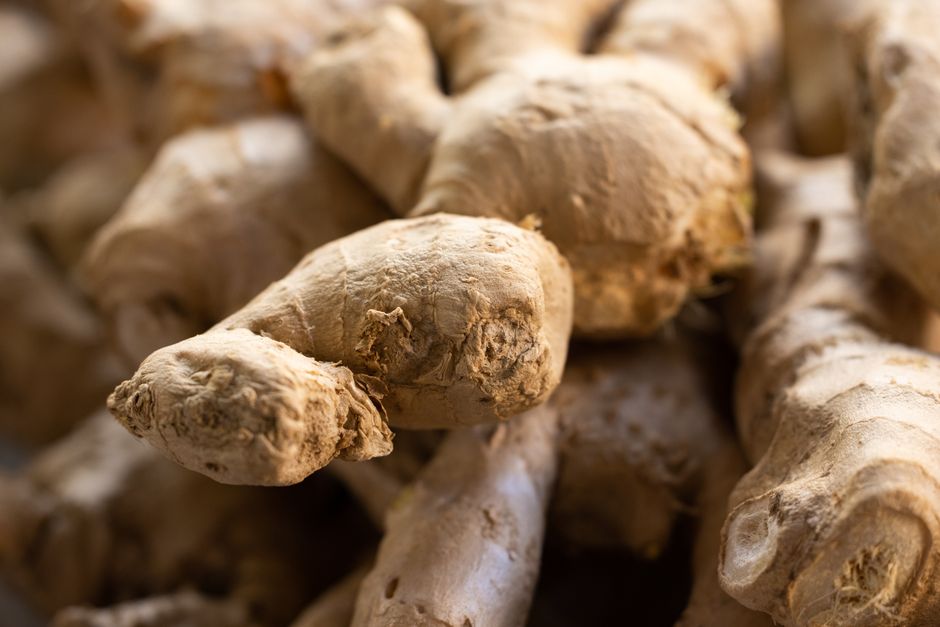
Ginger root is a spicy, aromatic rhizome used as a cooking ingredient, a traditional tea, and an herbal remedy for nausea. You can grate, slice, or mince fresh ginger into stir-fries, soups, and marinades, simmer it in hot water for tea, or use it in baking and dressings. The strongest evidence for ginger as a health remedy is for nausea, particularly motion sickness and nausea during pregnancy, though the research is not uniform across all types of nausea.
What To Do With Ginger Root in the Kitchen?
Fresh ginger root works in almost any dish that benefits from heat and aroma. The rhizome — the knobby underground stem sold in stores — has a thin brown skin and pale yellow flesh with a sharp, slightly sweet bite.
Peeling is optional. Young ginger has thin skin you can leave on. Mature ginger has a tougher skin that many cooks remove with a spoon rather than a peeler, which wastes less flesh. Grate it finely for dressings and marinades, julienne it for stir-fries, or slice it thin for poaching liquid.
Ginger pairs well with garlic, scallions, soy sauce, sesame oil, and citrus. A few slices added to a pot of rice or a batch of chicken stock gives a subtle warmth without overpowering the dish. In baking, ground dried ginger is the standard form — the flavor is more concentrated and disperses evenly through dough.
Store fresh ginger in the refrigerator in a paper bag or loosely wrapped, where it keeps for several weeks. You can also freeze it whole and grate it directly from frozen, which avoids the mushy texture that thawed ginger develops.
How Do You Make Ginger Tea?
Ginger tea is simple: steep fresh ginger in hot water. The strength depends on how much you use, how thin you slice it, and how long you steep it.
A common approach is to slice or grate a piece of fresh ginger roughly the size of your thumb, add it to a cup or two of water, and simmer gently for several minutes. Simmering extracts more flavor than simply pouring boiling water over the slices. Strain and drink. Honey and lemon are common additions; both change the flavor but neither is required.
Some people prefer to bring the water and ginger to a boil, then turn off the heat and let it sit covered for a longer period. Both methods work. The difference is intensity, not effectiveness.
What ginger tea does not do is cure a cold. It may soothe a sore throat and it has a warming quality that many people find comforting, but no clinical evidence shows that ginger tea shortens a cold or fights infection. The comfort is real; the cure is not.
Does Ginger Actually Help With Nausea?
Ginger has the strongest evidence base of any common kitchen remedy for nausea, though that evidence is uneven across different causes.
For motion sickness, some studies suggest ginger may help, but results vary and the quality of the trials is mixed. For nausea and vomiting during pregnancy, ginger is one of the more studied remedies, and some clinical guidance supports its use — but this is a situation where you should talk to your doctor first, because pregnancy care is not a place for self-treatment based on general information.
For post-operative nausea, some trials show benefit and others do not. For chemotherapy-induced nausea, the evidence is less consistent, and ginger is not a substitute for prescribed anti-nausea medication.
The honest summary: ginger is a reasonable, low-risk option to try for mild nausea, but it is not a reliable treatment for every kind of nausea, and it should not replace medical care for persistent or severe symptoms.
One clarification worth knowing — the gingerols and shogaols that give ginger its bite are thought to act partly on the digestive tract and partly on the nausea pathways in the brain, which is why the effect is not purely psychological. That mechanism is plausible and supported by some laboratory work, but the exact way it works in the human body is still not fully settled.
What Does the Science Say About Ginger and Inflammation?
Ginger contains compounds with anti-inflammatory activity in laboratory studies. Whether that translates into meaningful relief for people with inflammatory conditions is a different question, and the answer is less clear.
Some small trials have looked at ginger for osteoarthritis pain and found modest improvements compared with placebo. Other trials have found little difference. The studies tend to be small, short, and varied in the form and dose of ginger used, which makes firm conclusions difficult.
Ginger is not a replacement for prescribed anti-inflammatory medication, and no clinical evidence shows it slows or reverses any inflammatory disease. If you have a condition like arthritis, ginger may be worth discussing with your doctor as an add-on, not a substitute.
The same caution applies to claims about ginger and blood sugar, cholesterol, or weight. Some studies show small effects; many are small or preliminary. The marketing around ginger supplements often runs well ahead of the evidence.
Are There Risks or Side Effects to Ginger?
Ginger is generally well tolerated when eaten as a food or drunk as a tea. The most common side effects are mild: heartburn, stomach discomfort, and a burning sensation in the mouth.
Larger amounts — especially in concentrated supplement form — are more likely to cause digestive upset. There is no established safe upper limit for ginger in food amounts, but supplement doses are much higher than what you would get from cooking or tea.
Ginger may interact with blood-thinning medications such as warfarin. Some case reports suggest an increased bleeding risk when ginger is combined with these drugs. If you take a blood thinner, talk to your doctor before using ginger supplements or large amounts of ginger.
For pregnancy and breastfeeding, the picture is specific. Some clinical guidance supports ginger for pregnancy-related nausea, but the decision should be made with a clinician. For breastfeeding, there is no reliable dosing data, and no clinical guidelines currently exist for using ginger as a remedy during breastfeeding. That is an honest gap, not a green light.
For children, ginger tea in small amounts is generally considered safe as a food, but there are no established clinical guidelines for using ginger as a remedy in young children. Do not give ginger supplements to children without medical advice.
Fresh, Dried, or Supplement: Does the Form Matter?
The form of ginger matters more than most people realize. Fresh ginger, dried ground ginger, ginger tea, and ginger capsules are not interchangeable in terms of what they contain or how they are absorbed.
Fresh ginger has a high water content and a different mix of active compounds than dried ginger. Drying changes the chemistry — some compounds convert into others during the drying process. That is why dried ground ginger tastes sharper and more concentrated than fresh.
Supplements vary widely. There is no standard formulation, and the amount of active compound in a capsule can differ from what the label suggests. Some products are standardized to a specific percentage of gingerols; many are not.
If you are using ginger for cooking or tea, the form is simple: use fresh for savory dishes and tea, dried ground for baking and spice blends. If you are considering a supplement for a health reason, the evidence for most uses is limited, and the product quality is inconsistent. That is a reason for caution, not enthusiasm.
How Much Ginger Is Reasonable?
There is no official recommended daily amount of ginger for general health. Food amounts used in cooking and tea are generally considered safe for most adults.
For nausea during pregnancy, some clinical guidance cites amounts in the range of about 1 gram of ginger per day, but this is a decision to make with a doctor, not from a general article. Do not self-dose during pregnancy based on a number you read online.
For supplements, doses vary by product and by the condition being studied. Because there is no standard, and because supplement quality is inconsistent, the safest approach is to treat any specific dose as something to confirm with a clinician or pharmacist rather than assume.
Frequently Asked Questions
Can you eat ginger root raw?
Yes, fresh ginger root can be eaten raw — it is often grated or thinly sliced into dishes. The flavor is sharp and pungent, so small amounts are typical.
Does ginger tea help with a cold?
No clinical evidence shows that ginger tea shortens a cold or fights infection. It may soothe a sore throat and feel comforting, but it is not a treatment for the cold itself.
Is it safe to drink ginger tea every day?
For most adults, daily ginger tea in normal amounts is generally well tolerated. People taking blood thinners should check with their doctor first, because ginger may interact with these medications.
Can ginger help with period pain?
Some small studies suggest ginger may reduce menstrual pain compared with placebo, but the evidence is limited and not strong enough to replace standard pain relief. It is a reasonable option to discuss with a clinician.
