
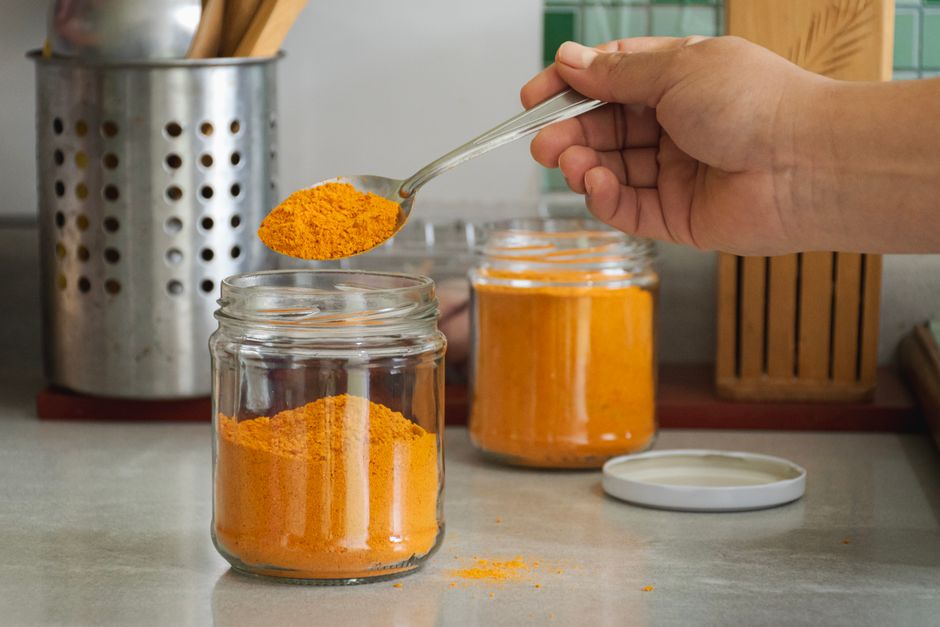
Expired turmeric powder is not automatically dangerous, but it is no longer at its best. The spice loses flavor, color, and much of its curcumin content over time, and old powder can pick up moisture or contaminants if it was stored poorly. The practical answer: check it first, then decide whether to toss it, compost it, or use it for something other than cooking.
Turmeric does not spoil the way fresh food does. It is a dried, ground rhizome with very low moisture, and that is what gives it a long shelf life. What changes is quality, not safety — until moisture gets in. Once clumps, mold, or a musty smell appear, the calculation shifts and the powder should go.
Does Turmeric Powder Actually Expire?
Yes, but “expiration” for a dried spice means a decline in quality rather than a hard safety cutoff. A printed date on the jar is a freshness marker set by the manufacturer. It is not a point after which the spice becomes toxic.
Turmeric’s active compound is curcumin, the pigment responsible for its yellow-orange color. Curcumin degrades with exposure to light, heat, and oxygen. That is why an old jar often looks duller and smells flatter than a fresh one. The color fading is a visible signal that the compounds you care about have broken down.
Most ground spices keep decent quality for roughly two to three years when stored properly, though turmeric’s color and potency fade gradually across that window. Whole dried turmeric root lasts longer than ground powder because less surface area is exposed to air. The USDA and food safety guidance generally treat dried spices as shelf-stable, with quality rather than safety being the limiting factor.
One clarification worth knowing: a “best by” date and a true expiration date are not the same thing. For dried spices, the date almost always reflects peak quality. That distinction matters when you are deciding whether to keep or discard.
How Can You Tell If Turmeric Powder Has Gone Bad?
Your senses are reliable here. Turmeric that has genuinely gone bad usually announces itself. Use sight, smell, and touch before you use taste.
- Smell: Fresh turmeric is earthy, warm, and slightly peppery. A musty, dusty, or “off” smell suggests it has degraded or absorbed moisture.
- Color: Bright golden-orange is a good sign. A pale, brownish, or washed-out tone means the pigments have faded.
- Texture: It should be a loose, dry powder. Hard clumps that do not break apart easily point to moisture.
- Visible mold: Any fuzz, discoloration, or dark patches mean discard it. Do not try to salvage it.
- Pests: Small insects or webbing in the jar are a clear reason to throw it out.
Clumping alone is not always a dealbreaker — humidity in the kitchen can cause mild clumping in powder that is otherwise fine. But clumping combined with a musty smell or dull color is a strong signal to let it go. When in doubt about mold, throw it out. Mold can produce compounds that are not destroyed by cooking, and dried spices are not something to gamble on.
Is It Safe to Cook With Expired Turmeric?
If the powder looks, smells, and feels normal, it is generally safe to cook with — it just will not deliver the flavor or color you expect. The main risk with old turmeric is not toxicity. It is that you use more of it to compensate, and the dish still tastes flat.
The safety question changes if the powder has been exposed to moisture. Damp spice can support mold growth, and some molds produce mycotoxins that survive normal cooking temperatures. There is no home test to confirm or rule this out, so the conservative move is to discard any turmeric with visible mold or a musty odor.
There is also a practical point about potency. If you use turmeric for its curcumin content — and many people do — old powder is a poor source. Curcumin degrades over time, so a faded, years-old jar likely contains far less than a fresh one. Cooking with it will not hurt you, but it probably will not give you what you were hoping for.
What To Do With Expired Turmeric Powder You Don’t Want to Cook With
There are several sensible uses for turmeric that has lost its culinary edge but is not moldy or contaminated. These are practical repurposing ideas, not health treatments.
Compost it
Turmeric is an organic plant material and breaks down in compost like any other kitchen scrap. Add it to your compost bin in normal amounts. Its bright color can temporarily tint compost, but that is cosmetic.
Use it as a natural dye
Turmeric has long been used as a fabric and paper dye. Its yellow-orange pigment can stain cloth, so it works for craft projects, tie-dye, or homemade play dough. Be aware it stains skin and surfaces readily — wear gloves and protect work areas.
Refresh garden soil color or use in plant care
Small amounts can be worked into soil, though there is no strong evidence turmeric provides meaningful plant nutrition. Treat this as a way to dispose of it rather than a gardening treatment.
Make a cleaning paste
Some people mix turmeric with water or vinegar for a scouring paste. It may help lift light stains, but it can also leave yellow marks on light surfaces and grout. Test a small hidden area first.
None of these uses require the powder to be potent. That is exactly why they suit turmeric past its cooking prime.
How Should You Store Turmeric So It Lasts Longer?
Proper storage is the single biggest factor in how long turmeric keeps its color and flavor. The enemies are light, heat, moisture, and air.
- Keep it in an airtight container. A screw-top glass jar with a tight seal works well.
- Store it away from the stove and out of direct sunlight. A cool, dark cabinet is ideal.
- Keep it dry. Do not dip a wet spoon into the jar.
- Buy in amounts you will use within a couple of years rather than bulk quantities that sit for a decade.
- Label the jar with the date you opened it so you can track freshness.
Whole dried turmeric root, if you can find it, keeps longer than ground powder. You grind it as needed, which preserves the volatile oils and color. For most home cooks, though, buying smaller amounts of ground turmeric more often is the simplest way to avoid the expired-jar problem altogether.
Can You Still Get Health Benefits From Old Turmeric?
Probably less than from fresh powder, but the honest position is that the evidence on turmeric supplements and health is already mixed — and old powder is a weaker starting point. Curcumin content declines as turmeric ages, so a faded jar is a poor source of the compound most studied for its effects.
It is also worth separating culinary turmeric from curcumin supplements. The amount of curcumin in a teaspoon of cooking turmeric is small, and curcumin is poorly absorbed on its own. Research on curcumin’s health effects has mostly used concentrated extracts, often with absorption enhancers, not kitchen spice. The evidence for those extracts is itself mixed and does not establish that eating old or fresh turmeric powder treats any condition.
If your goal is health benefits, expired powder is not the place to look. Replace it with fresh turmeric if you want the flavor, and talk to a clinician before relying on any turmeric product for a medical purpose.
When Should You Just Throw Turmeric Away?
Discard it without hesitation if you see mold, smell mustiness, spot pests, or find the powder has become damp and clumped beyond breaking up. Those are safety signals, not quality signals.
For turmeric that is merely old — faded color, weaker smell, no moisture or mold — you have options. Cook with it if you accept reduced flavor, repurpose it for dye or compost, or simply replace it. The cost of a new jar is small compared with the uncertainty of using compromised spice.
A simple rule: judge by condition, not by the printed date alone. A well-stored jar a year past its date may still be fine. A poorly stored jar within its date may already be compromised.
Frequently Asked Questions
Is expired turmeric powder safe to eat?
It is generally safe if it looks, smells, and feels normal, though flavor and potency will be reduced. Discard it if you see mold, smell mustiness, or find moisture and clumping.
How long does turmeric powder last after opening?
Ground turmeric keeps decent quality for roughly two to three years when stored in an airtight container away from light and heat. Whole dried root lasts longer than ground powder.
Can I use expired turmeric for anything besides cooking?
Yes. Turmeric past its cooking prime can be composted, used as a natural fabric or craft dye, or mixed into a cleaning paste. None of these uses require the powder to be potent.
Does old turmeric still have curcumin?
It contains less. Curcumin degrades with exposure to light, heat, and air, so a faded, old jar is a weaker source than fresh powder. The evidence for curcumin’s health effects is mixed regardless.
