
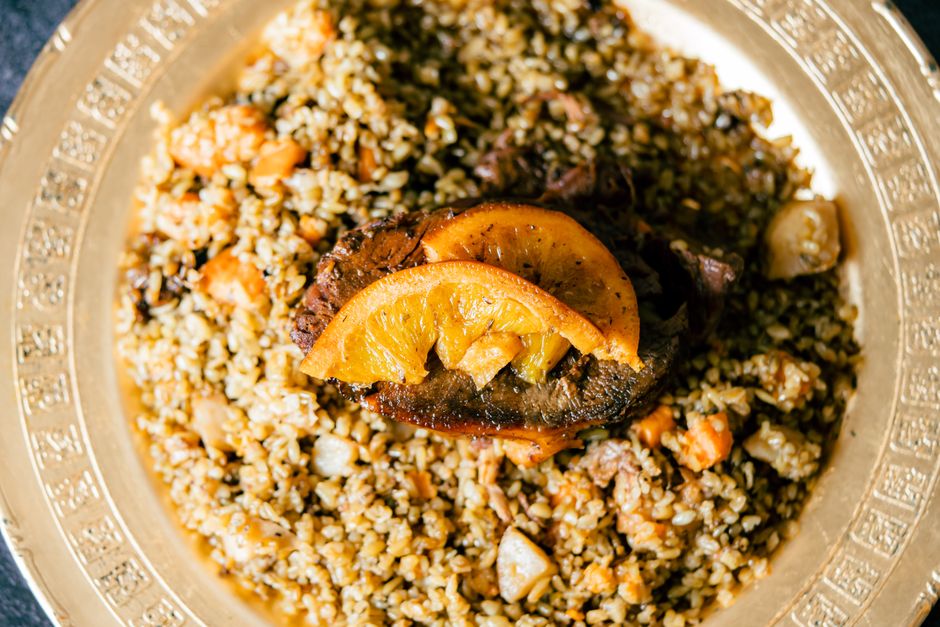
Bulgur wheat is cracked, parboiled wheat that cooks in about 10 to 15 minutes and works in salads, pilafs, soups, stuffed vegetables, and even breakfast bowls. You can use it anywhere you might use rice, couscous, or quinoa, though the texture and flavor differ. The main practical rule is simple: match the grind to the dish, since fine bulgur needs only soaking while coarse bulgur needs simmering.
What To Do With Bulgur Wheat Recipes And Tips?
The fastest way to use bulgur is to treat it as a base grain and build from there. It absorbs liquid well, holds up in the refrigerator for several days, and takes on whatever flavors you add.
Bulgur comes in four main grinds, and the grind determines how you cook it:
- Fine (#1): Used in tabbouleh and kibbeh. Usually softened with hot water or by soaking, no boiling needed.
- Medium (#2): Good for salads and stuffings. Brief simmer or soak.
- Coarse (#3): Works like rice in pilafs and soups. Simmered.
- Very coarse (#4): Best for hearty pilafs and casseroles. Longest cook time.
The standard cooking ratio is 1 cup dry bulgur to 2 cups liquid. Bring liquid to a boil, add bulgur, cover, and remove from heat. Let it stand about 15 to 20 minutes for medium and coarse grinds. Fine bulgur may need only 10 minutes of soaking in hot water.
One thing worth knowing: bulgur is already parboiled during processing. That is why it cooks faster than raw cracked wheat, which is a different product and needs longer cooking. If a recipe calls for cracked wheat and you substitute bulgur, reduce the liquid and the time.
What Is the Difference Between Bulgur and Other Grains?
Bulgur is not the same as cracked wheat, quinoa, or couscous, even though they can look similar in a bowl. Each behaves differently in cooking and offers different nutrition.
| Grain | Cook Time | Key Trait |
|---|---|---|
| Bulgur (medium) | 15-20 min | Parboiled, nutty, high fiber |
| Cracked wheat | 25-30 min | Raw, chewier, not parboiled |
| Quinoa | 15 min | Gluten-free, complete protein |
| Couscous | 5-10 min | Actually a pasta, not a grain |
Bulgur is a wheat product, so it contains gluten. People with celiac disease or gluten sensitivity should not use it. Quinoa and rice are the gluten-free alternatives here.
Compared with white rice, bulgur provides more fiber and protein per cooked cup, based on USDA nutritional data. That makes it a reasonable swap for people looking to add fiber to their meals. It is not a low-carb food, though. A cooked cup still contains a substantial amount of carbohydrate.
How Do You Cook Bulgur Without It Turning Mushy?
Mushy bulgur almost always comes from too much water or too much time. The grain keeps absorbing liquid as long as it sits in it.
Use these steps:
- Measure liquid precisely. The 1-to-2 ratio is a starting point, not a rule for every dish.
- For salads, use less water and let the grain stay slightly firm.
- After the standing time, fluff with a fork instead of stirring.
- If there is standing liquid, drain it before serving.
- Let it cool spread on a tray if you are using it cold, so it does not steam and clump.
Fine bulgur is the most forgiving for cold dishes because you are not boiling it at all. Pour hot water over it, let it sit, then squeeze out excess moisture with your hands or a clean towel before mixing with other ingredients.





What Are the Best Ways to Use Bulgur in Everyday Meals?
Bulgur fits into most meals once you stop thinking of it as a specialty ingredient. It works hot, cold, and at room temperature.
Salads. Tabbouleh is the classic, but you can build any grain salad with bulgur, chopped vegetables, herbs, and a simple oil-and-acid dressing. It holds up well for packed lunches because it does not get soggy as fast as leafy greens.
Pilafs and side dishes. Cook bulgur in broth instead of water, then stir in sautéed onions, nuts, or dried fruit. This is the closest use to rice and the easiest swap for weeknight dinners.
Soups and stews. Add coarse bulgur near the end of cooking. It thickens the broth as it releases starch. Start with a small amount, since it expands.
Stuffed vegetables. Use bulgur in place of rice for stuffed peppers, tomatoes, or grape leaves. It cooks faster, so adjust the total baking time.
Breakfast. Cook it like oatmeal with milk or a plant-based milk, then top with fruit and nuts. The texture is chewier than oats, which some people prefer.
Meatless meals. Bulgur works as a binder in veggie patties and as a base for grain bowls. It adds bulk and fiber without much effort.
Is Bulgur Wheat Healthy?
Bulgur is a whole grain, and whole grains are consistently linked with better heart health and digestive health in large population studies. That is the well-established part.
What is often overstated is the specific claim that bulgur itself does anything unique. The benefits come from eating whole grains as part of an overall diet, not from any single grain. Bulgur is one reasonable option among several, including oats, barley, brown rice, and quinoa.
Bulgur provides fiber, some protein, B vitamins, and minerals. The exact amounts depend on the grind and how it is prepared. If you are watching carbohydrate intake for diabetes or another condition, bulgur still counts as a carbohydrate source and should be factored into your plan. Talk with your clinician or a dietitian about how it fits your specific needs.
One caution: bulgur is wheat. Anyone with a wheat allergy or celiac disease should avoid it entirely. This is not a preference issue — it is a medical one.
How Should You Store Bulgur and Use Leftovers?
Dry bulgur keeps well. Store it in an airtight container in a cool, dark place, and it will last for many months. Check the package date for the manufacturer’s guidance.
Cooked bulgur should go into the refrigerator within two hours of cooking. Keep it in a covered container and use it within a few days. If it smells sour or looks slimy, throw it out.
Cooked bulgur freezes well. Spread it on a tray to cool, then transfer to freezer bags. It reheats quickly with a splash of water.
A practical tip: cook a large batch at the start of the week and portion it out. It saves time and makes it easier to reach for bulgur instead of a faster, less filling option.
What Mistakes Should You Avoid With Bulgur?
Most problems with bulgur come from a handful of avoidable errors.
- Confusing bulgur with cracked wheat and using the wrong cook time.
- Adding too much liquid, which leads to mush.
- Stirring instead of fluffing, which releases starch and makes it gluey.
- Using fine bulgur where coarse is needed, or the reverse.
- Forgetting that it contains gluten when cooking for guests.
- Underseasoning. Bulgur is mild, so it needs salt, acid, and herbs to taste like much on its own.
None of these are hard to fix once you know them. The grain is forgiving if you respect the ratio and the grind.
Frequently Asked Questions
Do you have to cook bulgur wheat?
Fine bulgur can be softened with hot water alone, no boiling required. Medium and coarse grinds are usually simmered or soaked in hot liquid to become tender.
Is bulgur wheat the same as couscous?
No, bulgur is a parboiled whole wheat grain while couscous is a small pasta made from semolina flour. They cook differently and have different textures and nutrition.
Is bulgur wheat gluten-free?
No, bulgur is made from wheat and contains gluten. People with celiac disease or a wheat allergy should avoid it and choose gluten-free grains like quinoa or rice instead.
How long does cooked bulgur last in the fridge?
Cooked bulgur keeps in a covered container in the refrigerator for a few days. Discard it if it smells sour or looks slimy.
