
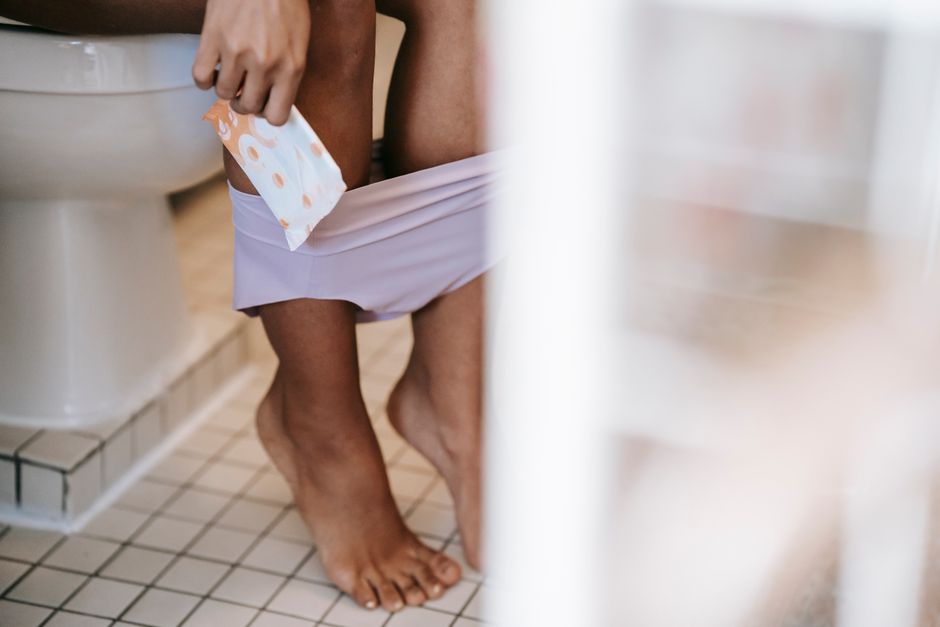
If poop is stuck, the first thing to do is stop straining. Straining is what turns a stuck stool into a painful problem, and it rarely moves the stool anyway. Most episodes of a hard, stuck stool can be handled at home with a few careful steps — but if you have severe pain, bleeding, or you have not passed any stool or gas for a day or more, that is a reason to get medical help rather than wait it out.
Below is what actually helps, what does not, and how to tell the difference between an ordinary bout of constipation and something that needs a doctor.
What To Do If Poop Is Stuck Right Now?
Start by changing your position and your breathing, not by pushing harder.
When you sit on the toilet, your rectum is partly kinked by the puborectalis muscle, which loops around the back of the rectum and pulls it forward. Squatting relaxes that muscle and straightens the angle. That is why squatting or raising your feet on a small stool with your knees above your hips makes passing stool easier.
Try this sequence:
- Rest your feet on a low stool so your knees are higher than your hips.
- Lean forward slightly and rest your forearms on your thighs.
- Breathe out slowly and let your belly relax rather than bracing it.
- Give a gentle, steady push — not a hard hold-your-breath strain.
- Stop after a few minutes if nothing moves. Sitting and straining longer does not help and can cause or worsen hemorrhoids.
If the stool is right at the opening and hard, a glycerin suppository can soften the surface and trigger the urge to go. These are available without a prescription and are generally used for short-term relief. They work locally, so they act faster than something you swallow.
Do not use enemas regularly or without guidance. Repeated enemas can irritate the rectum and, in some cases, cause problems with electrolyte balance. They are a short-term tool, not a routine fix.
If you have a known history of heart disease or uncontrolled high blood pressure, straining hard — called the Valsalva maneuver — briefly changes blood pressure and heart rate. That is another reason to avoid heavy straining.
Why Does Poop Get Stuck in the First Place?
Stool gets stuck when it stays in the colon long enough for the colon to absorb too much water from it. The longer it sits, the harder and drier it becomes.
The colon’s main job is to reclaim water from the material passing through it. Normally that process leaves stool soft enough to pass. When transit slows — from low fiber, low fluid intake, certain medications, or a sluggish bowel — more water gets pulled out and the stool turns into a hard mass.
Common contributors include:
- Not enough dietary fiber
- Not enough fluid
- Certain medications, including some pain relievers, antidepressants, and iron supplements
- Being inactive
- Pregnancy
- Irritable bowel syndrome, especially the constipation-predominant type
- Ignoring the urge to go, which lets stool sit and harden
- Older age, partly because of slower transit and more medication use
Sometimes the problem is not the stool itself but how the pelvic floor muscles coordinate. In a condition called dyssynergic defecation, the muscles that should relax during a bowel movement tighten instead. The stool may be soft and still be hard to pass. This is a real, diagnosable problem, and it does not respond to fiber alone.
What Helps Prevent a Stuck Stool From Happening Again?
Fiber and fluid are the foundation, and the evidence for them is strong for most people with ordinary constipation.
Most adults are advised to get roughly 25 to 30 grams of fiber a day, though needs vary by age and sex. Most Americans get well below that. Increasing fiber gradually matters — adding a lot at once can cause bloating and gas before your gut adjusts.
Good sources include whole grains, beans, lentils, fruits with the skin, and vegetables. If you increase fiber, increase fluid along with it. Fiber without enough water can make stool bulkier and harder to pass, which is the opposite of what you want.
Other steps that help:
- Drink water throughout the day rather than large amounts at once.
- Stay physically active. Movement helps stimulate normal bowel activity.
- Go when you feel the urge. Delaying lets stool harden.
- Set a regular time, often after a meal, when the colon is naturally more active.
- Use a footstool on the toilet to get into a better position.
If fiber and fluids are not enough, a bulk-forming laxative such as psyllium can help. It works by absorbing water and adding soft bulk to stool. It needs to be taken with plenty of water. For occasional hard stools, an osmotic laxative such as polyethylene glycol draws water into the stool and is generally gentler than stimulant laxatives.
Stimulant laxatives work but are best reserved for short-term use rather than daily long-term reliance, unless a clinician advises otherwise.




When Is a Stuck Stool a Medical Emergency?
Most constipation is uncomfortable, not dangerous. But some situations need prompt medical attention.
Get medical help if you have:
- Severe abdominal pain, especially pain that is constant or getting worse
- Vomiting, particularly with abdominal swelling
- No passage of stool or gas for a day or more
- Blood in your stool or bleeding from the rectum
- A hard, swollen, tender abdomen
- Constipation that is new and unexplained, especially after age 45
- Constipation that lasts more than a few weeks despite changes to diet and fluid
- Unexplained weight loss along with constipation
A complete blockage, called a bowel obstruction, is a serious condition. It can cause vomiting, a swollen abdomen, and the inability to pass gas or stool. It is not something to manage at home.
There is also a serious condition called fecal impaction, where a large, hard mass of stool cannot be passed. It can cause leakage of liquid stool around the blockage, which people sometimes mistake for diarrhea. If you have ongoing leakage along with a sense of blockage, that is worth a medical evaluation rather than more laxatives.
Does the Color or Shape of Your Stool Matter?
Yes, and some changes are worth paying attention to.
Stool color is mostly influenced by what you eat and by bile, a fluid your liver makes to help digest fat. Bile starts out greenish and turns brown as it moves through the gut.
Black, tarry stool can be a sign of bleeding higher up in the digestive tract. But it can also come from iron supplements or certain foods. Bright red blood on the stool usually points to bleeding closer to the rectum, often from hemorrhoids or an anal fissure. Neither should be ignored. Blood in the stool is a reason to see a doctor, even if you think it is just hemorrhoids.
Pale or clay-colored stool can indicate a problem with bile flow, and it warrants medical attention.
Shape matters too. Stool that is consistently very thin, like a pencil, can sometimes reflect a narrowing in the colon. That is another finding worth discussing with a clinician, especially if it is new and persistent.
What About Laxatives — Do They Actually Work?
Laxatives work, but they are not all the same, and matching the type to the problem matters.
There are several categories:
- Bulk-forming (psyllium, methylcellulose): adds fiber and water to stool. Good for prevention and mild constipation.
- Osmotic (polyethylene glycol, magnesium hydroxide): draws water into the colon. Generally effective and well tolerated for occasional use.
- Stimulant (senna, bisacodyl): triggers bowel contractions. Useful short-term, but not ideal as a daily long-term solution without medical guidance.
- Stool softeners (docusate): adds moisture to stool. Evidence for its effectiveness is weaker than for other options, and some reviews have questioned how much it helps on its own.
One point that surprises people: long-term use of stimulant laxatives does not cause the bowel to “stop working” in the way many believe. The colon does not become permanently dependent in the way that myth suggests. That said, relying on any laxative long-term without addressing the underlying cause is not a real solution, and it should be discussed with a clinician.
If constipation keeps coming back, the goal is to find out why, not to keep treating the symptom.
Frequently Asked Questions
How long can poop stay stuck before it is dangerous?
A single hard stool that passes within a day or so is usually not dangerous. If you have not passed stool or gas for a day or more, or you have severe pain or vomiting, seek medical care promptly.
Can I use my finger to remove stuck poop?
Some people do this for a stool that is right at the opening, but it can cause injury or bleeding if done roughly. If you cannot pass the stool and are in significant pain, it is safer to get medical help than to keep trying at home.
Does drinking more water really help?
Fluid helps keep stool soft, but water alone will not fix constipation that is caused by low fiber, medication, or a pelvic floor problem. It works best combined with adequate fiber and activity.
When should I see a doctor about constipation?
See a doctor if constipation is new and unexplained, lasts more than a few weeks, or comes with blood, weight loss, severe pain, or vomiting. These signs can point to something that needs evaluation.
