
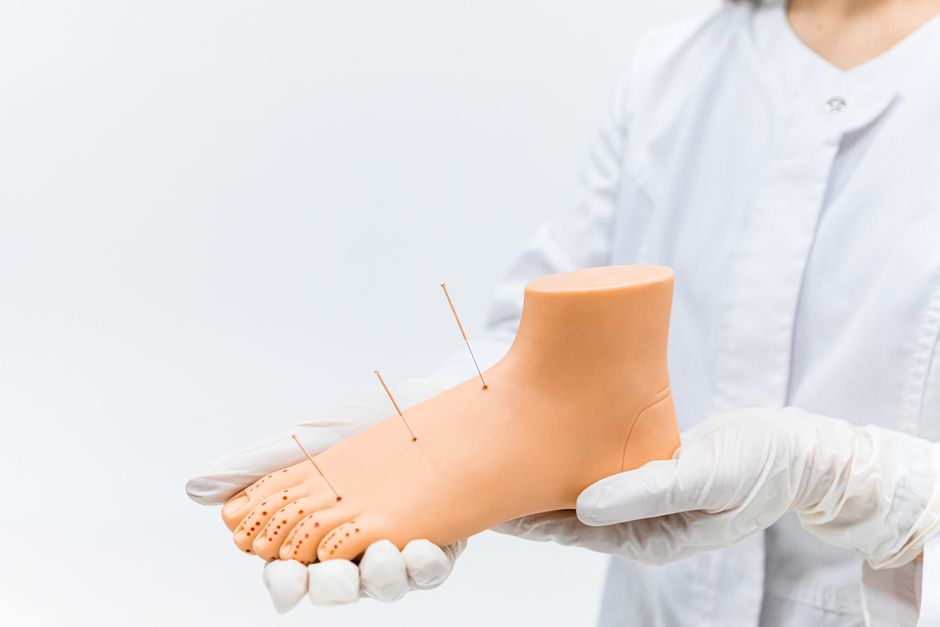
Neuropathy in the foot is nerve damage that often begins as numbness, tingling, or burning in the toes and soles. What you can do falls into four proven areas: control the underlying cause (tight blood sugar in diabetes is the most studied), treat the pain with medications that have real trial evidence, protect your feet from injury since you may not feel wounds, and add physical activity and balance training. No treatment currently reverses nerve damage, but several approaches reduce pain and lower the risk of serious foot problems.
What Is Neuropathy in the Foot?
Peripheral neuropathy means damage to the nerves outside your brain and spinal cord. In the feet, it usually affects the longest nerves first, which is why symptoms start in the toes and move upward.
Those long nerves carry sensory signals (touch, temperature, pain), motor signals (muscle control), and autonomic signals (sweat, blood flow). Damage to any of these produces different symptoms. Most people notice sensory changes first.
The classic pattern is “stocking-glove” — symptoms in both feet, often symmetric, sometimes spreading up the legs. Symptoms are frequently worse at night, and researchers believe this relates to fewer daytime distractions and changes in how the nervous system processes sensation during rest.
Diabetes is the most common cause in the US. Other causes include alcohol use disorder, vitamin B12 deficiency, thyroid disease, kidney failure, certain chemotherapy drugs, HIV medications, and inherited conditions. Sometimes no cause is found, which is called idiopathic neuropathy.
What Are the Most Common Symptoms?
Symptoms vary widely. Some people have constant pain; others have numbness with no pain at all. The pattern matters more than any single symptom.
- Numbness or the feeling that your feet are “wooden” or “dead”
- Tingling, prickling, or “pins and needles”
- Burning pain, especially at night
- Sharp, stabbing, or electric-shock-like pains
- Extreme sensitivity to touch (even bedsheets can hurt)
- Loss of balance, especially in the dark
- Muscle weakness or foot drop in advanced cases
- Changes in sweating or skin temperature
The numbness is the dangerous part. Pain gets attention. Numbness does not, and that is how foot ulcers and infections develop unnoticed.
What Should You Do First for Neuropathy in Foot?
Get a proper diagnosis. This is not a condition to self-treat, because the underlying cause determines what will actually help.
A clinician will typically take a history, test sensation with a monofilament, check reflexes and vibration sense, and may order blood tests. Common tests include fasting glucose or A1c, vitamin B12, thyroid function, and kidney function. Sometimes nerve conduction studies or a skin biopsy are used, though these are not always necessary.
Finding and treating a reversible cause can make a real difference. Vitamin B12 deficiency, thyroid disease, and poor blood sugar control are the most actionable. If you drink heavily, reducing or stopping alcohol is one of the few steps that can slow progression.
Does Blood Sugar Control Actually Help?
Yes, for diabetic neuropathy, this is the best-supported intervention. Research consistently shows that intensive glucose control reduces the risk of developing neuropathy and can slow its progression in people with type 1 diabetes.
The picture in type 2 diabetes is more nuanced. Studies have found that tight control helps prevent neuropathy but the effect is smaller than in type 1. Very tight control also carries a risk of hypoglycemia, so targets should be set with your clinician rather than pushed as low as possible.
Once nerve damage is established, improving blood sugar tends to slow further damage rather than reverse existing damage. That distinction matters. It is honest to say that glucose control is protective, not curative.
Which Medications Have Evidence for Nerve Pain?
A small number of medications have solid trial evidence for painful diabetic neuropathy. These are the ones most guidelines list as first-line options.
- Duloxetine — an antidepressant with strong evidence for reducing nerve pain
- Pregabalin and gabapentin — anticonvulsants with consistent, if modest, benefit
- Amitriptyline and nortriptyline — older antidepressants, widely used, evidence is moderate
- Tapentadol and tramadol — opioids with some evidence, generally reserved due to dependence risk
Most people get partial relief, not complete relief. A common clinical reality is that a medication reduces pain by a meaningful but incomplete amount. That is worth knowing before you start, so you do not conclude the treatment failed when it helped some.
Topical treatments like lidocaine patches or capsaicin cream have some evidence and fewer systemic side effects, though benefit is generally modest. No clinical guidelines currently recommend cannabis or CBD for neuropathy, and evidence remains limited.
What About Supplements and Vitamins?
This is where marketing outruns evidence. If you have a genuine deficiency, correcting it helps. If you do not, most supplements have not been shown to help.
Vitamin B12 is the clearest case. Deficiency causes neuropathy, and replacing it can improve symptoms. Testing before supplementing is the sensible approach.
Alpha-lipoic acid has been studied for diabetic neuropathy with mixed results. Some trials show modest pain reduction; others do not. The evidence is not strong enough to call it proven.
Benfotiamine, acetyl-L-carnitine, and vitamin E have all been studied, with inconsistent findings. No large human trials have confirmed reliable benefit for any of these.
Be cautious with high-dose vitamin B6. Excess B6 can itself cause neuropathy, which makes it one of the few supplements that can actively harm nerve health.
How Do You Protect Your Feet?
This is the most underrated part of care. Because you may not feel injuries, small problems become serious ones. Daily foot checks are not optional for anyone with significant numbness.
- Look at your feet every day, including between the toes and the soles. Use a mirror or ask for help.
- Wear well-fitting shoes with enough room in the toe box. Check inside shoes before putting them on.
- Never walk barefoot, even indoors.
- Test bath water with your elbow, not your feet.
- Keep toenails trimmed straight across, and see a podiatrist if you cannot safely do this yourself.
- Moisturize dry skin but avoid the spaces between toes.
- Stop smoking. It worsens circulation, which compounds the problem.
Call a clinician promptly for any cut, blister, redness, swelling, or drainage that does not heal. Delay is how minor issues become amputations.
Can Exercise and Balance Training Help?
Yes. Exercise has evidence for improving pain, function, and balance in peripheral neuropathy, and it addresses the fall risk that comes with reduced sensation.
Balance training is particularly valuable. People with neuropathy fall more often, and falls cause fractures and head injuries. Working on balance — standing on one foot with support, tai chi, or supervised physical therapy — has been shown to improve stability.
Aerobic activity and strength training are generally safe and beneficial. If you have significant numbness, choose activities with low injury risk, like cycling or swimming, and check your feet after any activity that involves impact or friction.
What Does Not Work or Is Unproven?
Several popular approaches lack solid evidence. It is fair to be skeptical of anything marketed as a cure.
Magnetic therapy, most “nerve support” supplements, and various electrical devices sold direct to consumers have not been confirmed in large trials. Some people report benefit, but reported benefit in an uncontrolled setting is not the same as demonstrated effect.
Surgical nerve decompression is performed by some specialists for certain patients. It is not a standard first-line treatment, and evidence for it is mixed. If it is offered, ask what trials support it in your specific situation.
Spinal cord stimulation is used in some refractory cases. It is generally reserved for people who have not responded to medication, and it is not a cure.
What Is the Honest Outlook?
For most people, neuropathy is managed rather than reversed. The goal is to reduce pain, protect the feet, maintain function, and slow progression where possible.
Some causes are reversible. Neuropathy from vitamin B12 deficiency, thyroid disease, or certain medication toxicities can improve when the cause is corrected. Diabetic neuropathy is generally progressive, though the rate varies and good glucose control can slow it.
This is not a condition where you should expect a single fix. It is a condition where a combination of cause management, evidence-based medication, foot protection, and activity does the most good. That is not a satisfying answer, but it is an accurate one, and it is the one that actually helps.
Frequently Asked Questions
Can neuropathy in the foot be reversed?
Sometimes, if the cause is reversible, such as vitamin B12 deficiency or an offending medication. Diabetic neuropathy is generally progressive, though good blood sugar control can slow it.
What is the best treatment for painful diabetic neuropathy?
Duloxetine, pregabalin, and gabapentin have the strongest trial evidence and are commonly used first. Most people get partial rather than complete pain relief from any single medication.
Does alpha-lipoic acid help neuropathy?
The evidence is mixed. Some trials show modest pain reduction and others do not, so it is not considered a proven treatment.
How often should I check my feet with neuropathy?
Every day if you have significant numbness, including between the toes and the soles. Daily checks are how small injuries are caught before they become serious.
