
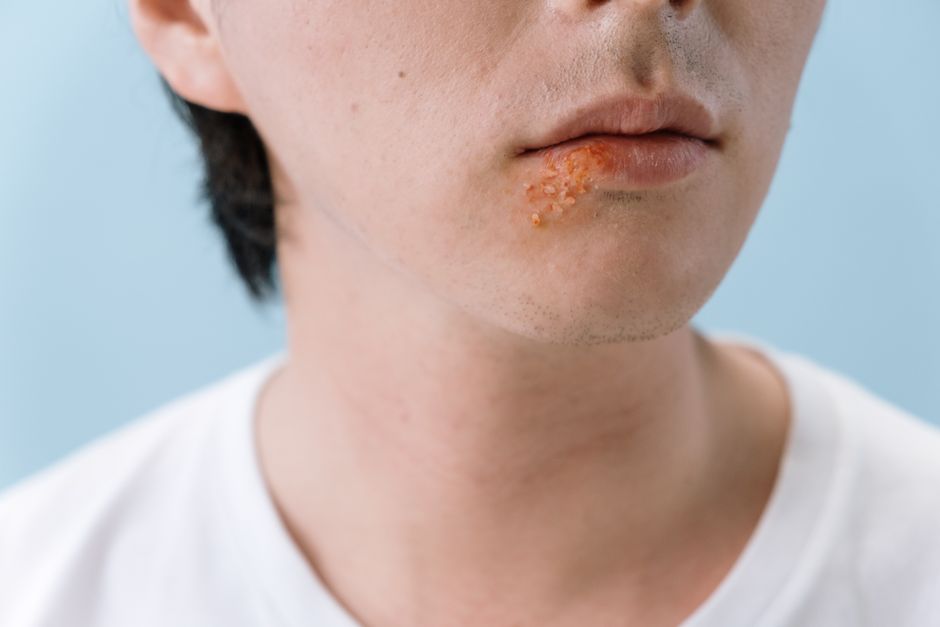
Most mouth sores heal on their own within one to two weeks. In the meantime, you can ease pain by avoiding spicy, salty, and acidic foods, keeping your mouth clean with a soft toothbrush and saltwater rinses, and using over-the-counter topical gels or rinses that numb the area. See a doctor or dentist if a sore lasts longer than two weeks, is very large, keeps coming back, or comes with fever. Those signs point to something that needs a closer look.
The word “mouth sore” covers a lot of ground. A canker sore inside the lip is a different problem from a cold sore on the outside. A denture rubbing the gum is different again. What helps depends on which one you have. This guide walks through the common types, what actually helps, and when to stop treating at home.
What Are the Most Common Types of Mouth Sores?
Two types account for most mouth sores people notice. Knowing which one you have changes what you should do.
Canker sores (the medical term is aphthous ulcers) form inside the mouth — on the tongue, the inside of the lips and cheeks, and the soft palate. They are round or oval, usually white or yellow in the center with a red rim, and they are not contagious. Minor canker sores are small and heal in about one to two weeks. A less common major form is larger, deeper, and can take several weeks to heal.
Cold sores (herpes labialis) are caused by the herpes simplex virus. They usually appear on or around the lips, often starting with tingling or burning before a blister forms. Cold sores are contagious, especially when a blister is present. They typically heal within about one to two weeks.
Other causes include irritation from braces, dentures, or a sharp tooth; burns from hot food; and, less often, nutritional deficiencies, certain medications, or medical conditions. A single sore with an obvious mechanical cause — a scrape from a chip, a burn from pizza — is usually straightforward. Sores that appear without a clear reason deserve more attention.
What To Do For Mouth Sores: What Actually Helps?
No treatment reliably makes a canker sore or cold sore disappear faster in every case. What you can do is reduce pain, protect the tissue, and avoid making it worse while your body heals it.
Start with what you put in your mouth. Spicy foods, citrus, tomatoes, salty snacks, and vinegar can sting an open sore and slow comfort. So can very hot drinks. Soft, bland foods are easier in the short term. Some people find cold foods — yogurt, ice pops, cool water — soothing.
Keep the mouth clean. Brush gently with a soft-bristled toothbrush and avoid scrubbing the sore. A saltwater rinse (about half a teaspoon of salt in a cup of warm water) is a traditional and widely used way to keep the area clean; it does not treat the sore itself but can help with comfort and hygiene. Do not swallow the rinse.
For pain, over-the-counter options include topical gels and rinses that numb the area, and protective barrier products that coat the sore. Some clinicians also suggest a topical anesthetic rinse for multiple sores. These manage symptoms; they do not cure the underlying cause. Follow the product label, and check with a pharmacist if you take other medicines or have health conditions.
For cold sores specifically, antiviral creams and oral antiviral medicines are available. Oral antivirals work best when started early, ideally at the first tingle. A pharmacist or doctor can advise on whether they are appropriate for you.
One clarification worth knowing: canker sores and cold sores are not the same, and treatments are not interchangeable. A cold sore cream is not meant for a canker sore inside the mouth, and vice versa. Matching the product to the sore matters.
What Should You Avoid When You Have a Mouth Sore?
Avoid anything that adds irritation to already damaged tissue. That includes picking at the sore, biting the inside of your lip, and rubbing the area with your tongue.
Skip harsh mouthwashes that contain high levels of alcohol, which can sting. Avoid very acidic or spicy foods until the sore settles. If a sharp tooth or a broken filling is the cause, see a dentist — no home remedy will fix the source.
For cold sores, avoid touching the blister and wash your hands after any contact. Do not share towels, utensils, or lip products while a blister is present. Avoid close contact such as kissing, especially with infants and people with weakened immune systems, until the sore has healed.
When Should You See a Doctor or Dentist?
Most mouth sores are minor and heal on their own. Some need professional evaluation. Seek care if any of the following apply:
- A sore that does not heal within two weeks
- A sore that is unusually large, deep, or very painful
- Sores that keep coming back or appear in clusters
- Mouth sores along with fever, weight loss, or feeling generally unwell
- A sore that bleeds easily or feels hard or firm
- White or red patches in the mouth that do not go away
- Difficulty swallowing, speaking, or opening the mouth
The two-week mark matters. A non-healing mouth ulcer can, in some cases, be a sign of oral cancer or another condition that needs assessment. Most non-healing sores turn out to be benign, but a dentist or doctor can examine the area and decide whether a biopsy or referral is needed. Do not wait on a sore that is not improving.
People with weakened immune systems, those undergoing chemotherapy or radiation, and people with certain chronic conditions should contact their care team earlier rather than watching and waiting.
Can Mouth Sores Be Prevented?
Some can, some cannot. Canker sores often have no clear trigger, and there is no proven way to prevent every one. But reducing known irritants can lower how often they appear for some people.
Avoiding trauma to the mouth helps — that means careful brushing, treating sharp teeth, and not biting the lips or cheeks. Some people notice canker sores after eating certain foods, such as acidic fruits, nuts, or chocolate; if you spot a pattern, limiting that food is reasonable, though the link is not firmly established for everyone.
Stress and lack of sleep are commonly reported triggers. The evidence for a direct cause-and-effect link is not strong, but managing stress and sleep is sensible for general health regardless.
Nutritional deficiencies — particularly of vitamin B12, iron, and folate — are associated with recurrent canker sores in some people. If sores are frequent, a doctor may check for deficiencies with a blood test. Do not start high-dose supplements on your own; excess of some vitamins can cause problems.
For cold sores, prevention centers on avoiding triggers and reducing spread. Sun exposure can trigger outbreaks in some people, and sun protection on the lips may help. Antiviral medicines prescribed by a doctor can reduce the frequency of outbreaks in people who get them often.
Do Home Remedies for Mouth Sores Work?
Many home remedies are widely used and generally low-risk, but the evidence for most is limited. That does not mean they are useless — it means no large, well-controlled trials have confirmed they speed healing.
Saltwater rinses, cold compresses, and avoiding irritants are reasonable comfort measures. Honey has been studied for wound healing in some contexts, but evidence specific to mouth sores is limited. Aloe vera and chamomile rinses are sometimes used; again, strong clinical evidence is lacking.
Be cautious with anything that claims to “cure” mouth sores quickly. No product has been shown to reliably cure canker sores or cold sores. The body clears most of these on its own. Products that numb or coat the sore can make the wait more comfortable, which is a real benefit even if it is not a cure.
If a remedy is expensive or promises dramatic results, that is a reason for skepticism, not a reason to try it. Simple, low-cost comfort measures plus time handle most cases.
What About Mouth Sores in Children?
Children get canker sores and cold sores too, and the same general approach applies. Keep them hydrated, offer soft bland foods, and avoid spicy or acidic items. Cold foods like yogurt or ice pops can help with comfort.
Children should see a doctor if a sore lasts more than two weeks, if they have trouble drinking or swallowing, or if they develop a fever. Young children can become dehydrated quickly if mouth pain keeps them from drinking, so watch fluid intake closely.
Do not give young children numbing products without checking with a doctor or pharmacist first. Some topical anesthetics carry warnings for use in young children, and dosing guidance differs by age. No single set of clinical guidelines covers every product for every age, so professional advice matters here.
Frequently Asked Questions
How long do mouth sores usually last?
Most minor canker sores and cold sores heal within one to two weeks. See a doctor or dentist if a sore has not healed after two weeks.
What is the fastest way to get rid of a mouth sore?
There is no proven way to make a mouth sore heal faster in every case. Avoiding irritants, keeping the mouth clean, and using over-the-counter numbing or barrier products can reduce pain while it heals.
Are mouth sores contagious?
Canker sores are not contagious. Cold sores are caused by herpes simplex virus and can spread through direct contact, especially when a blister is present.
When should I worry about a mouth sore?
Worry is the wrong frame, but you should get a sore checked if it lasts longer than two weeks, is very large or painful, keeps returning, or comes with fever or other symptoms.
