
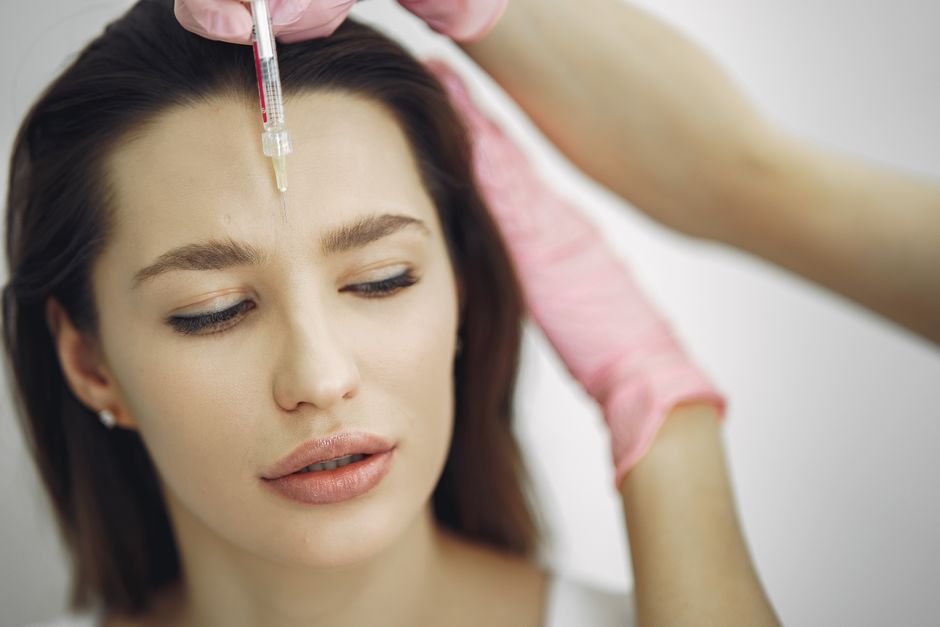
After forehead Botox, the most important things are simple: keep your head upright for about four hours, gently exercise your forehead muscles for the first hour, and skip strenuous exercise, alcohol, and rubbing the treated area for the rest of the day. These steps come from standard cosmetic practice and the medication’s own labeling, not from strict clinical trials. Most people can return to normal activity the next day.
Botox is a brand name for botulinum toxin type A, a purified protein that temporarily blocks the nerve signals telling muscles to contract. When injected into the muscles between your brows or across your forehead, it relaxes those muscles and softens the lines they create. The effect builds over several days and is not permanent. Understanding what helps and what does not can save you worry and protect your results.
What To Do After Forehead Botox Dos And Donts?
The short version: stay upright, use your forehead muscles a little, avoid pressure and heat, and hold off on intense exercise and alcohol for a day. Everything else is mostly about not undoing what you just paid for.
Here is a practical breakdown of what most injectors tell patients, and why.
Do: Stay upright for about four hours
Keeping your head above your heart for roughly four hours is the most common instruction after treatment. The reasoning is that staying upright may reduce the chance of the toxin drifting to nearby muscles and causing a droopy eyelid, a known side effect called ptosis. This guidance is widely followed in cosmetic practice. It is not backed by large controlled trials, so treat it as reasonable precaution rather than proven fact.
Do: Gently exercise your forehead for the first hour
Many injectors ask patients to raise their eyebrows, frown, and squint a few times in the first hour. The idea is that working the muscle may help the toxin spread to the receptors it needs to reach within that muscle. Some clinicians recommend this and some do not. The evidence is limited, and it is not an established requirement. If your injector gives you this instruction, following it is harmless.
Do: Keep the area clean and untouched
Leave the injection sites alone. Do not rub, massage, or press on your forehead. Do not lie face-down or have a facial. Pressure and manipulation are the main things thought to move the toxin where it should not go. Clean skin gently as normal.
Don’t: Exercise hard for the rest of the day
Skip the gym, hot yoga, running, and anything that gets your heart rate up and your face flushed for at least 24 hours. Exercise increases blood flow and, in theory, could move the toxin or increase bruising. This is standard advice rather than a proven rule, but it is easy to follow and low cost.
Don’t: Drink alcohol for 24 hours
Alcohol thins the blood and can increase bruising at the injection sites. Most injectors ask patients to avoid it for a day. This is a reasonable precaution, not a strict medical requirement.
Don’t: Use heat, saunas, or hot showers right away
Heat can increase blood flow to the face and raise the chance of bruising. Avoid saunas, steam rooms, and very hot showers for the first day. Warm water on your face in a normal shower is generally fine.
Don’t: Take blood-thinning pain relievers unless you need them
Aspirin, ibuprofen, and similar drugs can increase bruising. If you take one of these for a medical reason, do not stop it without talking to your doctor first. If you only take them occasionally for headaches or aches, holding off for a day may reduce bruising. This is a precaution, not a rule.
What Can You Expect in the First Few Days?
Botox does not work immediately. The toxin needs time to block the nerve signals, and the effect usually starts to appear within a few days. Full results typically show up around one to two weeks after treatment. If you look in the mirror the next morning and see no change, that is normal.
Mild swelling, redness, or small bumps at the injection sites are common right after treatment and usually settle within hours to a day or two. Small bruises can last a week or so. These are expected and not a sign that something went wrong.
It is also normal to feel a little “heavy” or strange in the forehead as the muscle relaxes. Some people notice a mild headache after treatment. This is usually temporary.
What Are the Side Effects to Watch For?
Most side effects are mild and short-lived. The more noticeable ones come from the toxin affecting muscles near the injection site.
- Droopy eyelid or brow (ptosis): The toxin relaxes a muscle that helps lift the eyelid or brow. This can happen even with a careful injector. It is usually temporary and often improves over a few weeks.
- Headache: Reported by some people after treatment. Usually mild and short-lived.
- Bruising and swelling: Common at injection sites. Bleeding under the skin from the needle, not the toxin itself.
- Asymmetry: One side may look different from the other if the muscle response varies. This often evens out or can be adjusted at a follow-up.
- Flu-like symptoms: Occasionally reported. Usually mild and brief.
Serious complications are rare with cosmetic doses. When they do occur, they are more often linked to the toxin spreading beyond the treated area. Symptoms can include trouble swallowing, speaking, or breathing, and muscle weakness. These are uncommon at cosmetic doses but are the reason to know the warning signs. Seek medical care right away if you have trouble swallowing, breathing, or speaking, or if you develop sudden muscle weakness.
One thing worth knowing: the effects of Botox are temporary. Results usually last around three to four months, though this varies from person to person. Some people find the effect lasts longer with repeated treatments, but this is not guaranteed.




What Should You Avoid for the First 24 Hours?
Think of the first day as a window where you protect the treated area from pressure, heat, and heavy blood flow.
- No rubbing, massaging, or pressing on your forehead.
- No lying face-down or sleeping on your stomach.
- No facials, face masks, or facial massage.
- No saunas, steam rooms, or hot tubs.
- No intense exercise or heavy lifting.
- No alcohol.
- No blood-thinning pain relievers unless medically necessary.
After the first day, most of these restrictions lift. You can usually shower, sleep normally, and return to your routine. Ask your injector if you have specific questions about your situation.
Does Aftercare Actually Change Your Results?
This is where honesty matters. The aftercare rules above are widely taught and widely followed, but they are not strongly supported by large controlled studies. Much of the guidance rests on biological reasoning and clinical experience rather than proven outcomes.
For example, the advice to stay upright for four hours is based on the idea that gravity could move the toxin. That is plausible. But no large trial has confirmed that staying upright versus lying down changes how many people get a droopy eyelid. The same is true for exercise and alcohol restrictions.
None of this means the advice is wrong. It means the evidence is limited. Following standard aftercare is low risk and may help. Skipping it does not guarantee a problem, and following it perfectly does not guarantee a perfect result. The skill of the injector, the dose, and your own anatomy matter more than most aftercare details.
What is well established: do not rub the area, and do not let anyone massage your forehead in the first day. Pressure is the one factor most consistently linked to unwanted spread.
When Should You Call Your Injector?
Contact your injector if you notice a droopy eyelid or brow that bothers you. In many cases it resolves on its own, and there are sometimes options to help while it does. Do not try to fix it yourself.
Call right away if you have any of these:
- Trouble swallowing, speaking, or breathing
- Sudden muscle weakness
- Severe or worsening headache
- Signs of infection at an injection site, such as spreading redness, heat, or pus
These are uncommon, but they are the reasons to seek care rather than wait.
How Should You Plan Your Next Appointment?
Results fade gradually, usually over three to four months. Many people schedule a follow-up around two weeks after treatment to check symmetry and see if a small touch-up is needed. After that, most re-treat when they start to see movement return.
If you are new to Botox, keep a simple note of when you were treated and when you first noticed the effect wearing off. That helps you and your injector plan timing. Everyone metabolizes the toxin a little differently, so your schedule may not match someone else’s.
One practical tip: avoid scheduling treatment right before a big event. Give yourself at least two weeks so any small bruise has time to fade and the full effect has time to appear.
Frequently Asked Questions
Can I wash my face after forehead Botox?
Yes, you can wash your face gently after treatment, but avoid rubbing or massaging the forehead. Pat the skin dry instead of scrubbing.
How long do I need to stay upright after Botox?
Most injectors ask patients to keep their head above heart level for about four hours. This is common practice rather than a proven requirement, and the goal is to reduce the chance of the toxin drifting to nearby muscles.
Can I exercise the day after Botox?
Light activity is usually fine the next day, but many injectors suggest waiting about 24 hours before intense exercise. The evidence for this restriction is limited, but it is easy to follow.
What happens if I rub my forehead after Botox?
An occasional light touch is unlikely to cause a problem, but repeated rubbing or massage in the first day could move the toxin to nearby muscles. If you are worried, call your injector.
