
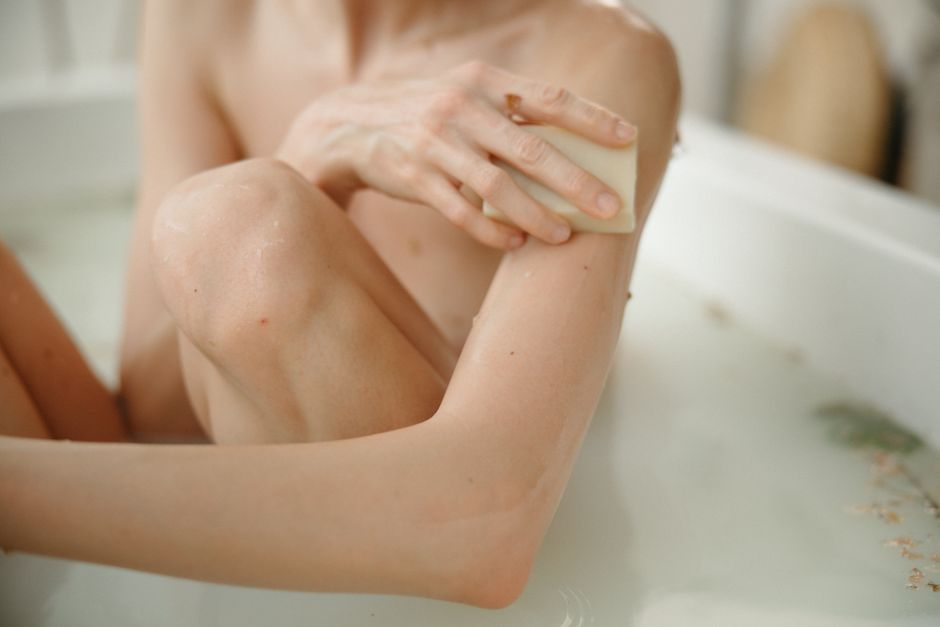
If your skin is itchy, the most reliable thing to bathe in is plain, lukewarm water with a gentle, fragrance-free cleanser — or, for many people, no cleanser on the itchy areas at all. Colloidal oatmeal is the bath additive with the best evidence behind it for soothing itch. Baking soda and finely ground oatmeal are reasonable, low-cost options. Hot water, heavily scented bath products, and long soaks tend to make itch worse, not better.
That is the short answer. The rest of this article explains why certain baths calm itchy skin, why others backfire, and how to tell when itch is a signal to see a doctor rather than a problem to soak away.
What To Bathe In For Itchy Skin That Actually Works
Lukewarm water plus colloidal oatmeal is the combination most consistently supported for general itchy skin. Colloidal oatmeal is finely milled oat that suspends in water and coats the skin. The FDA recognizes colloidal oatmeal as a skin protectant, which is why you see it in products labeled for eczema and irritation.
How it works: oat contains compounds called avenanthramides, along with beta-glucans and starches. These appear to calm the release of inflammatory signals in the skin and help form a light barrier that holds moisture in. That barrier effect matters because dry skin and itch are tightly linked.
You do not need an expensive product. You can buy colloidal oatmeal made for baths, or grind plain rolled oats to a fine powder in a blender and add a handful to a lukewarm bath. The water should be comfortably warm, not hot. Soak for about 10 to 15 minutes, then pat dry gently and moisturize right away while the skin is still slightly damp.
Plain lukewarm water on its own is not a disappointment. For many itchy conditions, especially when the skin is broken or raw, water alone cleans without stripping oils, and the brief soak can temporarily reduce the urge to scratch.
Why Does Hot Water Make Itching Worse?
Hot water feels wonderful on itchy skin for a few minutes and then reliably makes things worse. This is one of the most consistent findings in dermatology practice.
Heat dilates blood vessels and increases blood flow to the skin. That increased circulation can amplify the sensation of itch and trigger the release of histamine and other mediators. Hot water also strips away the skin’s natural oils and lipids faster than warm water does, leaving the skin drier afterward. Dry skin itches more.
There is a second effect. Scratching — and hot water is essentially a form of scratching — gives brief relief by activating a different set of nerve signals that temporarily override the itch. This is why a hot shower can feel so good. The relief is short-lived, and the itch typically returns stronger.
If you love a hot shower, keep it brief and cool the water down before you finish. That is a compromise, not a cure.
Does Baking Soda In The Bath Help Itchy Skin?
Baking soda baths are a long-standing home remedy for itchy skin, and they are reasonable to try. Baking soda (sodium bicarbonate) makes the water slightly alkaline and can soothe some forms of irritation. It is inexpensive and low-risk for most people.
The evidence here is limited. No large human trials have confirmed that baking soda baths reduce itch better than plain water. Many people report relief, and it is widely recommended by clinicians as a low-cost option, but it is not backed by strong trial data.
If you try it, add about half a cup to a full lukewarm bath. Skip it if you have open sores or broken skin, since it can sting. Rinse gently afterward and moisturize.
What About Epsom Salt, Apple Cider Vinegar, And Other Bath Additives?
Most popular bath additives for itch have little to no clinical evidence behind them. That does not mean they are harmful for everyone, but it does mean the marketing runs ahead of the science.
- Epsom salt (magnesium sulfate): Widely used for muscle aches, but no good evidence shows it reduces itch. It can be drying to some skin types.
- Apple cider vinegar: Often recommended online for itch, but vinegar is acidic and can irritate or burn sensitive or broken skin. No clinical evidence supports it for itch.
- Essential oils (peppermint, tea tree, lavender): These can feel cooling, but many are irritants and allergens. Fragrance and essential oils are common triggers for contact dermatitis. Avoid them on itchy or broken skin.
- Bleach baths: Diluted bleach baths are used in some eczema care plans to reduce bacteria on the skin, but this is a specific clinical recommendation for certain patients, not a general itch remedy. Do not try this without a doctor’s guidance, and never use full-strength bleach.
One clarification worth knowing: a bath product labeled “soothing” or “calming” is not regulated for itch relief the way colloidal oatmeal is. The label reflects marketing, not proof.
How Should You Bathe When Your Skin Is Itchy?
The method matters as much as what you put in the water. A few habits make a real difference.
- Keep the water lukewarm, not hot. Aim for a temperature that feels neutral on your wrist.
- Limit soaks to about 10 to 15 minutes. Long baths pull moisture out of the skin.
- Use a gentle, fragrance-free cleanser, or none on the itchy areas. Skip bar soaps with heavy fragrance or antibacterial agents.
- Pat dry with a soft towel. Do not rub.
- Apply a fragrance-free moisturizer within a few minutes of getting out, while the skin is still damp. This locks in water and is one of the most effective steps for reducing itch from dry skin.
- Avoid scratching. Keep nails short, and try cool compresses instead.
Moisturizing after the bath is not a minor step. For dry, itchy skin, consistent moisturizing does more over time than any single bath additive.
When Is Itchy Skin A Sign To See A Doctor?
Most itchy skin is annoying but not dangerous. Some itch, though, points to a condition that needs medical care.
See a doctor if itch is severe enough to disrupt sleep or daily life, if it lasts more than a couple of weeks without a clear cause, or if it comes with a rash that is spreading, blistering, or oozing. Itch that affects your whole body without a visible rash deserves a medical look, because it can occasionally signal an underlying condition such as a thyroid problem, liver issue, kidney disease, or a reaction to a medication.
Also seek care if you have signs of infection — increasing redness, warmth, swelling, pus, or fever — or if itch is accompanied by unexplained weight loss, night sweats, or fatigue.
Itch is genuinely complex. It has its own dedicated nerve pathways in the skin, separate from pain, and researchers are still working out exactly how they behave. That is part of why a single bath remedy will not fix every kind of itch. Conditions like eczema, psoriasis, and allergic reactions each have their own treatment approach, and a bath is a comfort measure, not a substitute for treating the underlying cause.
Does The Type Of Itch Change What You Should Bathe In?
Yes, to some degree. The right bath depends on why you are itchy.
For dry skin and mild eczema, colloidal oatmeal in lukewarm water followed by moisturizer is a sensible first step. For contact with poison ivy or another plant irritant, cool water and colloidal oatmeal can calm the skin while you wait for it to settle. For itchy skin with open scratches or infection risk, plain lukewarm water is safer than additives that can sting or irritate.
For chronic conditions like psoriasis or moderate-to-severe eczema, baths are supportive but not the main treatment. Those conditions usually need prescription care, and a doctor can tell you whether specific bath routines fit your plan.
If you are unsure what is causing your itch, start simple: lukewarm water, a gentle cleanser, colloidal oatmeal if you want an additive, and moisturizer afterward. If that does not help within a couple of weeks, or if the itch is severe, get it checked.
Frequently Asked Questions
What is the best thing to put in a bath for itchy skin?
Colloidal oatmeal has the strongest evidence for soothing itch and is recognized as a skin protectant. Add it to a lukewarm bath, soak briefly, and moisturize right after.
Does baking soda help itchy skin?
Baking soda baths are a reasonable low-cost option that many people find soothing, though strong trial evidence is lacking. Skip them if you have open or broken skin.
Should I take a hot bath if my skin itches?
No. Hot water strips oils and can amplify itch, often making it worse after brief relief. Lukewarm water is the better choice.
How often should I bathe if my skin is itchy?
Short lukewarm baths or showers are generally fine, and moisturizing afterward matters more than frequency. Avoid long, hot soaks, which dry the skin.
