
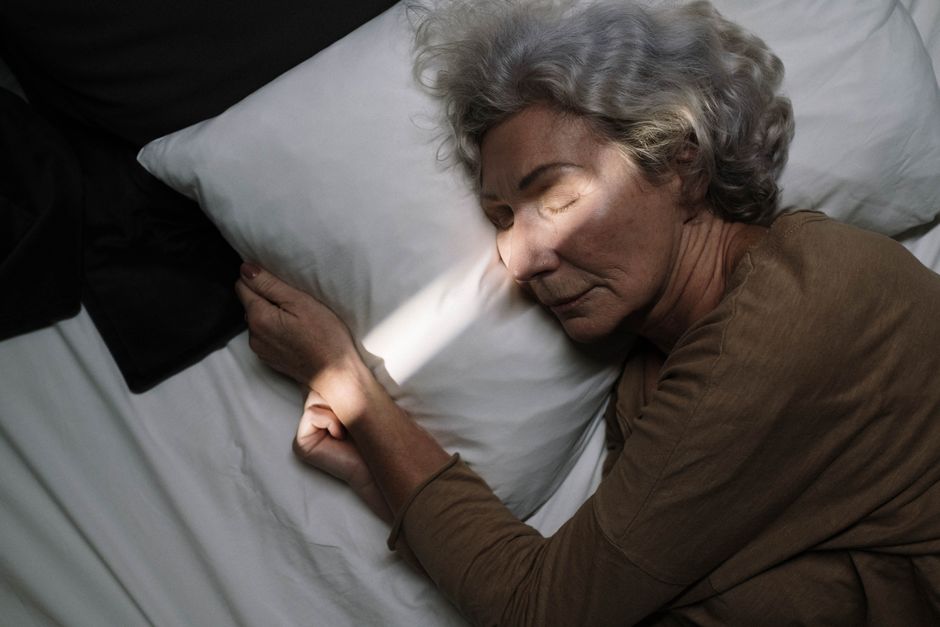
There is no single correct bedtime. What matters is the time your body naturally gets sleepy, counted backward from when you need to wake up and how much sleep you actually need. For most adults that means being asleep somewhere between 9:00 p.m. and midnight, with the average landing around 10:00 to 11:00 p.m. The better question is not “what time should I fall asleep” but “what time should I be asleep” — and that answer comes from your wake time, your age, and your own internal clock.
What Time Should I Fall Asleep Find Your Ideal Bedtime?
Your ideal bedtime is your required wake time minus your sleep need, minus about 15 to 20 minutes to actually fall asleep. That last part matters more than most people realize.
If you need to be up at 6:30 a.m. and you need eight hours of sleep, your target is 10:30 p.m. asleep — not 10:30 p.m. in bed with your phone. That means starting your wind-down around 10:00 p.m. Most healthy adults need seven to nine hours of sleep per night, a range consistently supported by sleep research and major sleep organizations. Teens need more, typically eight to ten hours. School-age children need nine to twelve.
Here is the part people skip. Sleep need is not a preference. It is closer to a biological requirement, and it does not shrink just because you have trained yourself to function on less. Chronic short sleep is linked to higher risk of high blood pressure, type 2 diabetes, weight gain, and impaired immune function. The link is well documented. What varies is how much any one person feels the damage day to day.
So the honest answer to “what time should I fall asleep” is: whatever time puts you asleep for your full sleep need before your alarm. For a 6:30 a.m. wake time and an eight-hour need, that is roughly 10:15 to 10:30 p.m. For a 7:00 a.m. wake time, closer to 10:45 p.m.
How Do I Calculate My Own Ideal Bedtime?
Work backward. It is simple arithmetic, but the inputs need to be honest.
- Pick your fixed wake time — the time you actually get up most days, not your weekend time.
- Decide your sleep need. Most adults fall in the seven-to-nine-hour range. If you regularly feel rested on eight, use eight.
- Add 15 to 20 minutes for sleep onset. Healthy sleepers typically take about 10 to 20 minutes to fall asleep after lights out.
- Subtract to get your lights-out time.
Example: 6:30 a.m. wake, eight-hour need, 20-minute onset. Lights out at 10:10 p.m. Asleep by 10:30 p.m. That is your target.
If you lie in bed awake for 45 minutes most nights, the problem is usually not your bedtime. It is your wind-down, your light exposure, or your caffeine timing. Moving your bedtime earlier will not fix that. It will just give you more time to lie there frustrated.
One clarification worth making: the “eight hours” figure is a population average, not a personal prescription. Some people genuinely do well on seven. A smaller number genuinely need nine. The way to find out is not a quiz. It is a stretch of nights where you sleep without an alarm and note when you wake naturally and how you feel.
Does My Age Change My Ideal Bedtime?
Yes, and the change is driven by two things: how much sleep you need and when your body clock shifts.
Sleep need drops through childhood and levels off in adulthood. The bigger shift is timing. During the teen years, the internal clock naturally delays — melatonin release happens later at night, so teens genuinely are not sleepy at 9:00 p.m. even when they have an early school start. This is a biological shift, not laziness.
In older adulthood, the clock often shifts the other way. Many adults over 60 feel sleepy earlier in the evening and wake earlier in the morning. Total sleep time may stay similar, but it becomes more fragmented, with more night wakings. That fragmentation is common and partly reflects normal aging of sleep architecture.
So a 16-year-old and a 66-year-old with the same 6:30 a.m. wake time may have very different natural bedtimes — and both can be normal.
What Does the Research Say About Sleep Timing and Health?
Timing itself appears to matter, separate from duration. Large observational studies have found that people who habitually go to sleep very late — after midnight, and especially those who stay up into the early morning — tend to have higher rates of cardiovascular and metabolic problems than those with earlier sleep timing.
That finding comes with an important caveat. Observational studies show association, not cause. People who sleep late often also have irregular schedules, more screen exposure at night, higher stress, or shift work. Untangling the bedtime itself from everything that comes with it is difficult, and researchers have not fully done so.
What is clearer: consistency matters. Going to bed and waking at roughly the same times every day — including weekends — supports your circadian rhythm. A wildly variable schedule acts like a mild version of jet lag, and the grogginess that follows is real.
A non-obvious point: the “social jet lag” of staying up late Friday and Saturday and sleeping in Sunday is not harmless recovery. It shifts your clock forward, then Monday morning yanks it back. That mismatch is linked to worse mood and attention on the days that follow.
Why Can’t I Fall Asleep at My Target Bedtime?
If your bedtime math is right but sleep will not come, the cause is usually one of a few well-understood factors.
Light exposure. Bright light in the evening, especially from screens held close to the face, can delay melatonin release and push your clock later. The effect size varies between people, but the mechanism is well established.
Caffeine. Caffeine has a half-life of roughly five to six hours in most adults, meaning a 3:00 p.m. coffee still has meaningful active caffeine in your system at 9:00 p.m. Sensitivity varies widely with genetics and age.
Irregular schedule. If you wake at 6:00 a.m. on weekdays and 10:00 a.m. on weekends, your clock never settles. Your Sunday-night insomnia is often the predictable result.
Lying awake in bed. Staying in bed while frustrated teaches your brain to associate the bed with being awake. Sleep clinicians generally advise getting up after roughly 20 minutes of wakefulness and doing something quiet until sleepy.
If you have tried these consistently for several weeks and still cannot sleep, that is worth a conversation with a clinician. Persistent insomnia is common and treatable, and cognitive behavioral therapy for insomnia is the first-line treatment recommended in clinical guidelines — ahead of medication in most cases.
Is There a “Best” Bedtime for Everyone?
No. A single universal bedtime does not exist, and any source claiming one is oversimplifying.
What exists is a window. For most adults with a typical daytime schedule, being asleep somewhere between 9:00 p.m. and midnight aligns well with the body’s natural sleep drive and circadian rhythm. Within that window, your personal ideal depends on your wake time, your sleep need, and your chronotype — whether you are naturally a morning person or a night person.
Chronotype is partly genetic and largely stable across adulthood. A true night owl forced into a 9:30 p.m. bedtime will often lie awake, then under-sleep, then compensate with caffeine. That cycle is worse than accepting a slightly later bedtime and protecting the wake time that matters.
The practical takeaway: pick a consistent bedtime inside the window that fits your life, protect your wake time, and give it two to three weeks before judging whether it works. Sleep timing is a habit your body learns, not a switch you flip.
Frequently Asked Questions
What is the healthiest time to go to sleep?
For most adults, falling asleep between 9:00 p.m. and midnight aligns best with natural circadian rhythm. Within that window, the healthiest bedtime is the one that lets you consistently get your full sleep need before your wake time.
Is 11 p.m. too late to go to bed?
It depends on your wake time and sleep need. If you wake at 6:00 a.m., an 11:00 p.m. bedtime gives you about seven hours, which is at the low end of the recommended range for adults.
How many hours of sleep do adults actually need?
Most healthy adults need seven to nine hours per night, according to widely accepted sleep guidelines. Individual need varies, and consistently feeling rested is a better personal gauge than any fixed number.
Can I train myself to fall asleep earlier?
Yes, gradually. Shifting your bedtime 15 to 20 minutes earlier every few days, keeping a fixed wake time, and reducing evening light exposure can move your clock earlier over two to three weeks.
