
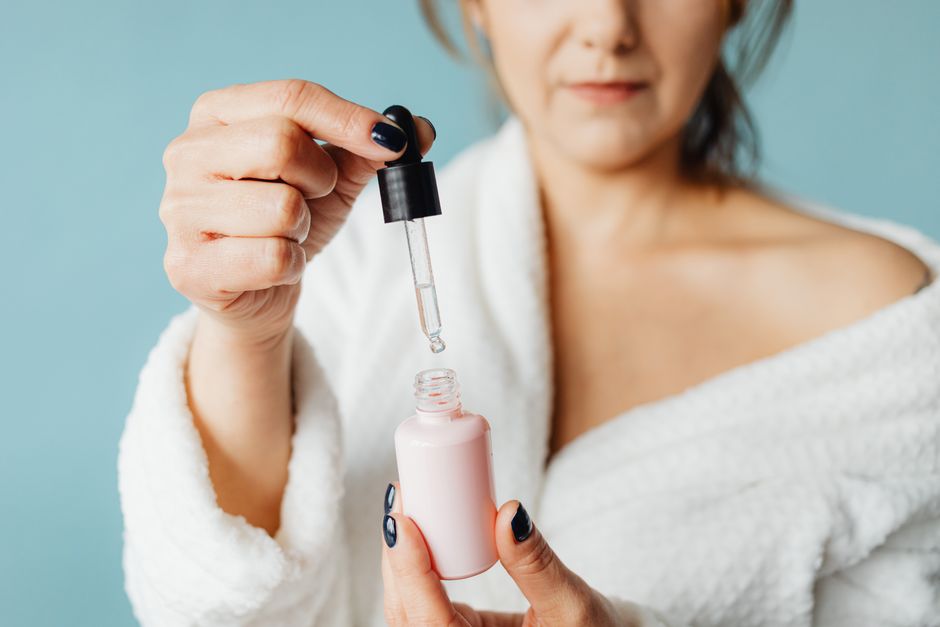
Skin tightening works through two main routes: treatments that injure the deeper layer of skin and trigger new collagen production, and topical products that support collagen or temporarily swell the skin’s surface. The strongest evidence supports in-office energy devices and retinoids. Most creams marketed for firming do far less than their labels suggest.
Skin loses firmness for a reason that is well understood. Collagen and elastin fibers in the dermis thin and fragment over time, and sun exposure accelerates that breakdown. Anything that genuinely tightens skin must either replace that structural support, stimulate the body to rebuild it, or create a temporary physical effect. Knowing which category a treatment falls into tells you most of what you need to know.
What actually causes skin to lose firmness?
The dermis is the support layer of the skin, and it is mostly collagen and elastin suspended in a gel-like matrix. Collagen gives skin its strength. Elastin lets it stretch and snap back.
From roughly the mid-twenties onward, collagen production declines gradually. Sun exposure speeds this up considerably. Ultraviolet light triggers enzymes called matrix metalloproteinases that break down collagen, and it damages the DNA in the cells that make new collagen. This is why firmness loss often shows up first on the face, neck, and hands — the areas that see the most sun.
Two other factors matter. Fat pads beneath the skin shrink and shift with age, which causes sagging that no cream can address. And the underlying bone structure changes. This distinction matters because it explains why some looseness responds to treatment and some does not. Skin that has lost collagen can be improved. Skin that is drooping because the scaffolding beneath it has moved usually needs a surgical or structural approach.
Which in-office treatments have the strongest evidence for tightening skin?
Energy-based devices that deliver controlled heat to the dermis have the most consistent clinical support. The heat damages collagen fibers and stimulates the skin’s repair response, which lays down new collagen over the following weeks and months.
Several categories exist, and they differ in how deep they reach and how much recovery they require.
- Radiofrequency devices heat the dermis while cooling the surface. Multiple treatments are typically needed. Some studies show measurable improvement in skin laxity, though results vary by device and by how the outcome is measured.
- Ultrasound with visualization focuses energy at specific depths, including the layer that sits on top of muscle. This is among the more studied options for lifting the lower face and neck, and improvement tends to build over several months.
- Fractional laser resurfacing removes columns of surface skin and heats the deeper layer. It has good evidence for improving texture and fine lines, and some for tightening. Recovery is longer than with radiofrequency.
- Microneedling with radiofrequency combines tiny punctures with heat delivery. Evidence is promising but less mature than for established radiofrequency and ultrasound devices.
One clarification worth knowing: results from these treatments are gradual and moderate. A common pattern in the literature is improvement that is visible but not dramatic, building over three to six months as new collagen matures. Anyone promising a facelift-like result from a device is overselling. How long results last is not well established, and touch-up treatments are common in practice.
Do firming creams and serums really tighten skin?
Most do not tighten skin in any structural sense. A small number contain ingredients with real evidence behind them, and the rest rely on temporary cosmetic effects.
The best-supported topical ingredient is retinoid, including prescription tretinoin and over-the-counter retinol. Retinoids are among the most studied skincare ingredients in existence. Research has found they increase collagen production and improve fine wrinkles with regular use over months. The effect is real but modest, and it takes time — typically several months before changes are visible. Retinoids can cause irritation and redness, especially at the start, and they increase sun sensitivity.
Other ingredients have some supporting evidence, generally weaker. Vitamin C is a cofactor in collagen synthesis, and some studies suggest topical formulations can improve the appearance of photoaged skin, though formulations vary widely and stability is a known problem. Peptides have plausible mechanisms and some small studies, but the evidence base is much thinner than for retinoids.
Then there is the temporary category. Many “instant firming” products contain film-forming polymers that dry on the skin and create a subtle tightening sensation. Others cause mild surface swelling that plumps fine lines for a few hours. Neither changes skin structure. The effect washes off.
What about at-home devices and microcurrent?
At-home radiofrequency and light devices are sold widely, and the evidence is thinner than for professional versions. Some small studies suggest modest benefit from certain home radiofrequency devices, but the power delivered is far lower than in a clinic, and independent research is limited. Results vary, and consistency of use matters a great deal.
Microcurrent devices deliver very low-level electrical current. They are popular, and some users report a temporary lifted appearance. The evidence for lasting structural change is limited, and no large controlled trials confirm that microcurrent builds collagen. A temporary effect on muscle tone and surface appearance is plausible. A permanent tightening effect is not established.
Home devices are generally low-risk when used as directed, but anyone with a pacemaker, implanted electronic device, or certain skin conditions should check with a clinician before using electrical or radiofrequency devices at home.
What can you do that genuinely protects skin firmness?
Prevention is the area where the evidence is strongest and the message is least exciting. Daily sunscreen use is the single most effective thing most people can do to slow collagen breakdown. Research on photoaging consistently shows that ultraviolet exposure is the main external driver of skin aging, and that protecting skin limits it.
Not smoking matters too. Smoking restricts blood flow to the skin and is associated with earlier wrinkling and worse skin quality in study after study. Beyond that, adequate sleep, not crash dieting, and treating dry skin so the barrier stays intact all support skin health, though none of these will tighten loose skin.
One non-obvious point: firmness and hydration are often confused. Well-hydrated skin looks plumper and smoother, and a good moisturizer can improve appearance within days. That is a real benefit. It is not tightening, and it does not restore collagen.
What results are realistic, and what are the risks?
Realistic expectations matter more than any single product choice. Energy devices typically produce gradual, moderate improvement in skin laxity. Retinoids produce modest improvement in fine wrinkles and texture over months. Neither reverses significant sagging. For substantial loose skin, especially on the neck and jawline, surgery remains the only approach with strong evidence of major change.
Every treatment carries risks. Energy devices can cause redness, swelling, blistering, and rarely scarring, and results depend heavily on the operator’s skill and the device used. Retinoids cause irritation and sun sensitivity. Lasers carry risks of pigment changes, especially in darker skin tones, which is why matching the treatment to skin type matters.
Anyone considering an in-office procedure should choose a clinician with appropriate training and credentials for that specific device. Results described in marketing materials are often best-case. Ask what the typical outcome is for someone with your skin, and how many treatments it usually takes.
Frequently Asked Questions
What is the most effective treatment for tightening skin?
Energy-based devices such as radiofrequency and focused ultrasound have the strongest clinical evidence for moderate skin tightening. Results are gradual and build over months, not immediately.
Do firming creams actually work?
Retinoid creams have real evidence for improving fine wrinkles and supporting collagen over months, though the effect is modest. Most other firming creams create only temporary cosmetic effects.
How long does it take to see results from skin tightening treatments?
Collagen rebuilding takes time, so results from energy devices usually appear gradually over several months as new collagen matures. Retinoids typically take several months of consistent use before changes are visible.
Can I tighten loose skin without surgery?
Non-surgical treatments can improve mild to moderate laxity, but they do not reverse significant sagging caused by fat and structural changes. For major loose skin, surgery remains the approach with strong evidence of substantial change.
