
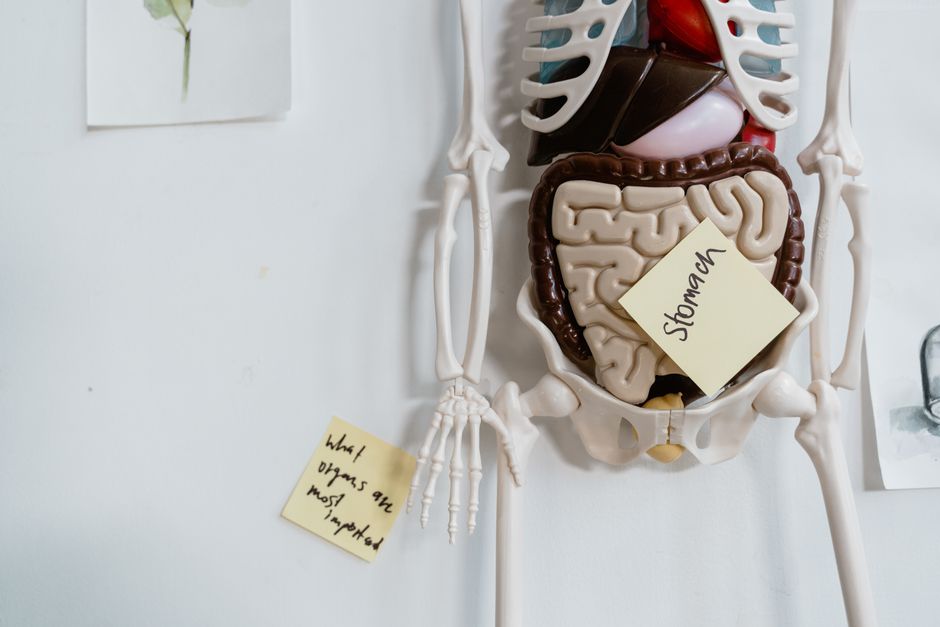
The gallbladder is part of the biliary system, which is itself a subsystem of the digestive system. Its job is to store, concentrate, and release bile — a fluid made by the liver that helps the body break down fats. When you eat, the gallbladder contracts and pushes bile into the small intestine, where fat digestion happens.
That answer sounds simple. The details behind it are where most people get confused. The gallbladder does not make bile. It does not absorb nutrients. It does not digest anything on its own. It is a storage tank with a muscular wall and a duct, and its entire role depends on signals from the gut and the liver working in sequence.
What System Is The Gallbladder In Digestive Role?
The gallbladder belongs to the biliary system, a network of organs and ducts that move bile from the liver to the small intestine. The biliary system is part of the digestive system, and it runs parallel to the pathway food itself travels.
The main parts are the liver, the gallbladder, and a series of ducts. The liver produces bile continuously. Between meals, most of that bile gets diverted into the gallbladder for storage. The gallbladder holds roughly 30 to 50 milliliters of bile, but it concentrates that bile by absorbing water and electrolytes through its lining. Concentrated bile is far more potent at emulsifying fat than the dilute fluid the liver first produces.
When you eat — especially a meal containing fat — the small intestine releases a hormone called cholecystokinin (CCK). CCK signals the gallbladder to contract and the sphincter of Oddi to relax. Bile flows out through the cystic duct, into the common bile duct, and into the duodenum, the first section of the small intestine.
One detail worth knowing: bile does not contain digestive enzymes. It does not chemically break fat down the way lipase does. Instead, bile acids act like detergents. They break large fat droplets into smaller ones, a process called emulsification. This gives fat-digesting enzymes more surface area to work on. Bile also helps the body absorb fat-soluble vitamins — A, D, E, and K — along with cholesterol and other fats.
How Does The Gallbladder Fit Into The Digestive System?
The digestive system has two broad jobs: move food through the gut, and break that food into molecules the body can absorb. The gallbladder supports the second job, but it does so indirectly and only for fat.
Trace the sequence. Food enters the stomach and gets partially broken down. It moves into the duodenum. Fat in that food triggers CCK release. CCK tells the gallbladder to squeeze. Bile enters the duodenum and emulsifies the fat. Pancreatic lipase, delivered through a nearby duct, then breaks the emulsified fat into fatty acids and monoglycerides. Those get absorbed through the intestinal wall.
Notice what the gallbladder actually contributes. It supplies the emulsifier at the right time and in the right concentration. Without it, fat digestion still happens, but less efficiently. The liver keeps making bile, and some of it drips into the intestine continuously. That baseline flow is enough to handle small amounts of fat. It is not enough to handle a large fatty meal well.
What Does The Gallbladder Do Between Meals?
Between meals, the gallbladder is not idle. It is filling and concentrating bile.
The sphincter of Oddi stays closed when you are not eating. That closure forces liver-produced bile backward into the gallbladder through the cystic duct. Once inside, the gallbladder lining actively absorbs water and sodium, shrinking the volume and raising the concentration of bile salts, cholesterol, and bilirubin.
This is where gallstones can form. When bile becomes too concentrated, or when the balance of cholesterol, bile salts, and bilirubin shifts, crystals can develop into stones. Cholesterol stones are the most common type in the United States. Pigment stones, made largely of bilirubin, are less common and often linked to certain blood or liver conditions.
Many people with gallstones never have symptoms. The stones sit quietly in the gallbladder. Problems start when a stone blocks a duct, which can cause pain, inflammation, or infection. That distinction matters — having gallstones and having gallbladder disease are not the same thing.


Can You Digest Food Without A Gallbladder?
Yes. The body can digest food without a gallbladder, and most people who have theirs removed go on to eat normally.
When the gallbladder is removed — a procedure called cholecystectomy — the liver keeps producing bile. Instead of being stored, bile flows more continuously into the small intestine. The body adapts to this steady drip. For many people, digestion continues without major issues.
Some people do notice changes. Because there is no storage tank to release a concentrated burst of bile for a fatty meal, some experience looser stools, urgency, or bloating after high-fat meals. This is more common early after surgery and often improves over time. A smaller share of people develop persistent diarrhea after gallbladder removal. The evidence on how often this happens varies across studies, and researchers do not fully agree on the underlying mechanism.
The takeaway is honest rather than reassuring: most people adapt well, but “most” is not “everyone.” Anyone with ongoing digestive symptoms after surgery should talk to a doctor rather than assume it will pass.
What Conditions Affect The Gallbladder?
Several conditions involve the gallbladder, and they are not interchangeable.
- Gallstones (cholelithiasis): Hardened deposits in the gallbladder. Common, and often symptom-free.
- Cholecystitis: Inflammation of the gallbladder, usually caused by a blocked duct. This is a medical concern that typically requires treatment.
- Biliary colic: Pain from a stone temporarily blocking a duct, often after a fatty meal.
- Choledocholithiasis: A stone lodged in the common bile duct, which can block bile flow and affect the liver or pancreas.
- Gallbladder polyps: Growths on the inner wall. Many are harmless, but some need monitoring.
- Gallbladder cancer: Rare, but more likely when gallstones or chronic inflammation have been present for a long time.
Symptoms that warrant prompt medical attention include steady pain in the upper right abdomen, pain that radiates to the right shoulder or back, nausea, fever, jaundice (yellowing of the skin or eyes), and dark urine with pale stools. These can signal a blocked duct or infection and should not be ignored.
How Do You Keep The Gallbladder Healthy?
There is no proven way to guarantee a healthy gallbladder, and no supplement or cleanse has been shown to prevent gallstones. The evidence on prevention is limited and mixed. What follows is general direction, not a prescription.
Some research suggests that maintaining a steady weight and avoiding rapid weight loss may reduce gallstone risk. Rapid weight loss — including from very low-calorie diets or weight-loss surgery — is associated with higher gallstone formation, so gradual loss is often advised. Regular physical activity has also been linked to lower risk in some studies.
Eating patterns may matter too. Diets high in fiber and healthy fats, and lower in refined carbohydrates, are generally associated with better gallbladder health in observational studies. But observational data cannot prove cause and effect, so these are associations, not guarantees.
Be skeptical of “gallbladder flushes” and cleanses sold online. There is no clinical evidence that they remove gallstones, and some can cause harm. If you have symptoms, see a doctor. Imaging such as ultrasound is the standard way to check for gallstones.
Why The Confusion About The Gallbladder Exists
People often assume the gallbladder is essential because it is part of the digestive system. It is part of the system, but it is not required for survival. That is an unusual combination, and it explains a lot of the misunderstanding.
The gallbladder is best understood as a support organ. It does not start digestion, and it does not finish it. It times and concentrates a fluid the liver already made. When it works, fat digestion runs smoothly. When it is removed, the body finds another way. When it is blocked, the consequences can be serious — which is why symptoms deserve attention rather than a wait-and-see approach.
Frequently Asked Questions
What system is the gallbladder in?
The gallbladder is part of the biliary system, which is a subsystem of the digestive system. It stores and concentrates bile made by the liver and releases it into the small intestine.
Does the gallbladder produce bile?
No. The liver produces bile continuously, and the gallbladder only stores and concentrates it. The gallbladder releases that stored bile when you eat, especially when the meal contains fat.
Can you live without a gallbladder?
Yes. The liver keeps making bile, and it flows more continuously into the small intestine after the gallbladder is removed. Most people digest food normally afterward, though some notice changes with fatty meals.
What happens if the gallbladder stops working?
If bile flow is blocked, it can cause pain, inflammation, or infection, and symptoms like jaundice may appear. A blocked duct is a medical concern that needs prompt evaluation, not home treatment.
