
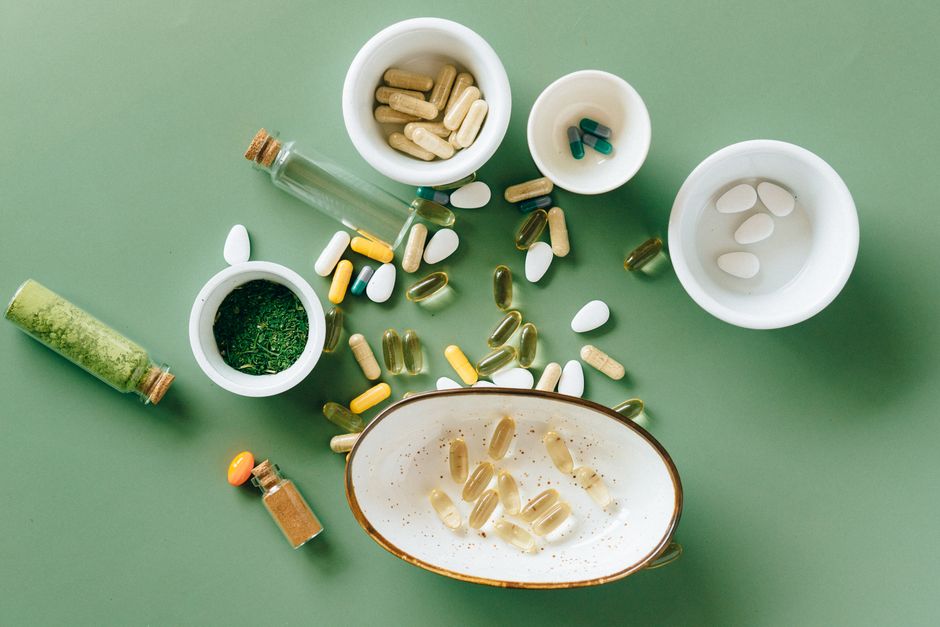
If you search for fertility supplements, you will find hundreds of bottles making bold promises. The honest answer is that only a small number have evidence behind them for fertility specifically. Folic acid is the one supplement with clear, strong evidence for anyone trying to conceive. A few others — vitamin D, omega-3 fatty acids, coenzyme Q10, and myo-inositol for women with PCOS — have some supporting evidence, though it is weaker or applies only to certain groups. Most fertility supplements on the shelf have no human trials showing they help anyone get pregnant.
Do Fertility Supplements Actually Work?
For most products sold as fertility supplements, no. The evidence is thin or absent.
The supplement industry in the United States is regulated differently from prescription drugs. Companies do not have to prove a product works before selling it. They also do not have to prove it is safe for people trying to conceive. That means a bottle can claim to “support fertility” without any study showing it helps anyone get pregnant.
A smaller group of nutrients does have real research behind it. These fall into two categories:
- Nutrients that correct a known deficiency, like folic acid and vitamin D
- Nutrients with plausible biological roles in egg or sperm quality, where some human data exists
Even in the second category, “some evidence” is not the same as “proven to help you conceive.” Many studies are small, short, or done in specific groups like women undergoing IVF. Results do not always carry over to people trying naturally.
One clarification worth knowing: fertility supplements are not the same as prenatal vitamins. Prenatals are designed for pregnancy and typically contain folic acid, iron, calcium, and other nutrients at levels meant to support a developing baby. Fertility supplements are marketed for conception. Some overlap, but they are not interchangeable.
What Supplements Should You Take To Increase Fertility?
Folic acid is the one supplement with strong evidence for anyone trying to conceive, for both women and men.
Folic acid is the synthetic form of folate, a B vitamin. It is well established that adequate folate before and during early pregnancy reduces the risk of neural tube defects — serious birth defects of the brain and spine. This is why public health guidelines recommend folic acid for anyone who could become pregnant.
The standard recommendation is 400 micrograms (mcg) of folic acid daily for most women planning pregnancy. Women with certain risk factors — such as a previous pregnancy affected by a neural tube defect, diabetes, obesity, or use of certain medications — are often advised to take a higher dose, typically 4,000 mcg (4 mg) daily. That higher dose should come from a doctor’s recommendation, not self-prescribing.
For men, folate also plays a role in sperm production. Some research suggests low folate intake is linked to poorer sperm quality, though the evidence for supplementation improving male fertility outcomes is not as strong as the evidence for folic acid in preventing birth defects.
Beyond folic acid, the supplements with the most discussed evidence are:
- Vitamin D — involved in reproductive tissue function; deficiency is common and correcting it is reasonable, but trials showing it improves pregnancy rates are mixed
- Omega-3 fatty acids — some studies suggest a link to better sperm and egg quality, but results vary
- Coenzyme Q10 (CoQ10) — studied mainly for egg and sperm quality, with small trials showing possible benefit
- Myo-inositol — studied specifically in women with polycystic ovary syndrome (PCOS), where it may support ovulation
- Zinc and selenium — involved in sperm formation; deficiency matters, but extra beyond needs is not clearly helpful
Notice the pattern. Most of these matter most when you are deficient. If your levels are already normal, adding more often does not help.
Which Supplements Have the Strongest Evidence?
Folic acid stands alone at the top. The link between folate and neural tube defects is one of the most solid findings in reproductive medicine.
For the others, the evidence is real but limited. Here is a plain summary:
| Supplement | Evidence Strength | Who It May Help |
|---|---|---|
| Folic acid | Strong | Anyone trying to conceive; prevents birth defects |
| Myo-inositol | Moderate (specific group) | Women with PCOS |
| Vitamin D | Mixed | People with deficiency |
| CoQ10 | Limited | Possibly egg and sperm quality |
| Omega-3s | Limited | Possibly sperm and egg quality |
| Zinc, selenium | Limited | People with deficiency |
Two honest points about this table. First, “moderate” and “limited” mean exactly that — not proven. Second, myo-inositol’s evidence is tied to a specific condition (PCOS), so it does not apply to everyone. Taking it without PCOS has not been shown to help.
If you have PCOS, myo-inositol is one of the more studied options. Some trials suggest it can improve ovulation and metabolic markers, sometimes compared with metformin. But results across studies are not fully consistent, and dosing varies. This is a conversation to have with your doctor.





What About Supplements for Male Fertility?
Male factors contribute to a substantial share of infertility cases, so sperm health matters. The supplements most studied here are CoQ10, zinc, selenium, folate, and antioxidants like vitamin C and E.
The logic is that sperm are vulnerable to oxidative stress — damage from unstable molecules — and antioxidants might protect them. That reasoning is sound. Whether supplementing actually improves pregnancy rates is less clear.
Some studies show improvements in sperm count, movement, or shape with antioxidant supplementation. Others show little or no effect. A key problem is that many of these studies are small and use different doses and combinations, making them hard to compare.
What is more reliable for male fertility:
- Correcting a genuine deficiency, such as low vitamin D or low folate
- Avoiding heat exposure, smoking, and excessive alcohol
- Treating underlying conditions like varicocele with a doctor
Zinc deserves a note. It is involved in sperm formation, and severe deficiency harms fertility. But taking high doses of zinc beyond what you need does not boost sperm, and too much zinc can interfere with copper absorption. More is not better.
Can Supplements Replace Medical Treatment for Infertility?
No. Supplements cannot replace a proper evaluation or treatment for infertility.
Infertility is defined as not conceiving after 12 months of regular unprotected sex (or 6 months if the woman is 35 or older). If you meet that definition, the most useful step is a medical workup, not another supplement.
Infertility has many causes — problems with ovulation, blocked fallopian tubes, sperm issues, hormone imbalances, and more. Some of these are treatable with medical care. A supplement will not unblock a tube or fix a hormonal disorder on its own.
That said, nutrition does matter. A balanced diet, healthy weight, and correcting deficiencies support reproductive health. Supplements are a small piece of that picture, not the whole thing.
One more caution: some supplements marketed for fertility contain herbs or blends with no safety data for pregnancy. “Natural” does not mean safe when you are trying to conceive. If you are already pregnant or could be, check with a doctor before starting anything.
How Should You Choose a Fertility Supplement?
Start with the one that has the strongest evidence: folic acid. For most women, 400 mcg daily is the standard. Confirm the dose with your doctor, especially if you have risk factors that call for a higher amount.
For everything else, follow a few practical rules:
- Get tested for deficiencies before supplementing — vitamin D and folate levels can be checked with a blood test
- Choose single nutrients over vague “fertility blends” with long ingredient lists
- Look for third-party testing seals, which indicate independent quality checks
- Avoid doses far above established daily recommendations unless a doctor advises otherwise
- Tell your doctor about everything you take, including herbs
A prenatal vitamin often covers folic acid plus other nutrients at appropriate levels, which can simplify things. Many clinicians suggest a prenatal for anyone trying to conceive. That is common practice, and it is reasonable, though the strongest evidence is specifically for the folic acid component.
Be skeptical of any product that promises a specific outcome or timeline. Fertility depends on many factors, and no supplement can guarantee conception.
What Else Matters for Fertility Besides Supplements?
Lifestyle factors often matter more than any supplement.
Weight, smoking, alcohol, and age all affect fertility in ways that are well documented. Smoking harms both egg and sperm quality. Heavy alcohol use affects fertility. Being significantly underweight or overweight can disrupt ovulation.
For women, age is the single biggest factor in natural fertility, largely because egg quantity and quality decline over time. No supplement reverses that. This is not meant to alarm anyone — it is simply what the data shows, and it is why timing and medical guidance matter.
For men, sperm are produced continuously, so lifestyle changes can affect sperm quality within a few months. That gives men a meaningful window to make improvements.
None of this means supplements are useless. It means they work best as one part of a broader approach: a healthy diet, a healthy weight, avoiding harmful exposures, and getting proper medical care when needed.
Frequently Asked Questions
What is the best supplement to take to increase fertility?
Folic acid has the strongest evidence, mainly for preventing birth defects, and is recommended for anyone trying to conceive. Other supplements like vitamin D, CoQ10, and myo-inositol have some evidence but it is weaker or applies to specific groups.
Do fertility supplements really help you get pregnant?
For most products, there is no evidence they help anyone get pregnant. A few nutrients have supporting research, but none guarantees conception, and most matter most when you have a deficiency.
How much folic acid should I take when trying to conceive?
The standard recommendation is 400 micrograms daily for most women planning pregnancy. Women with certain risk factors may be advised to take 4,000 micrograms (4 mg), but that higher dose should come from a doctor.
Can men take supplements to improve sperm quality?
Some studies suggest antioxidants like CoQ10, zinc, and selenium may improve sperm measures, but results are inconsistent. Correcting a deficiency is more reliable than taking extra when levels are normal.
