
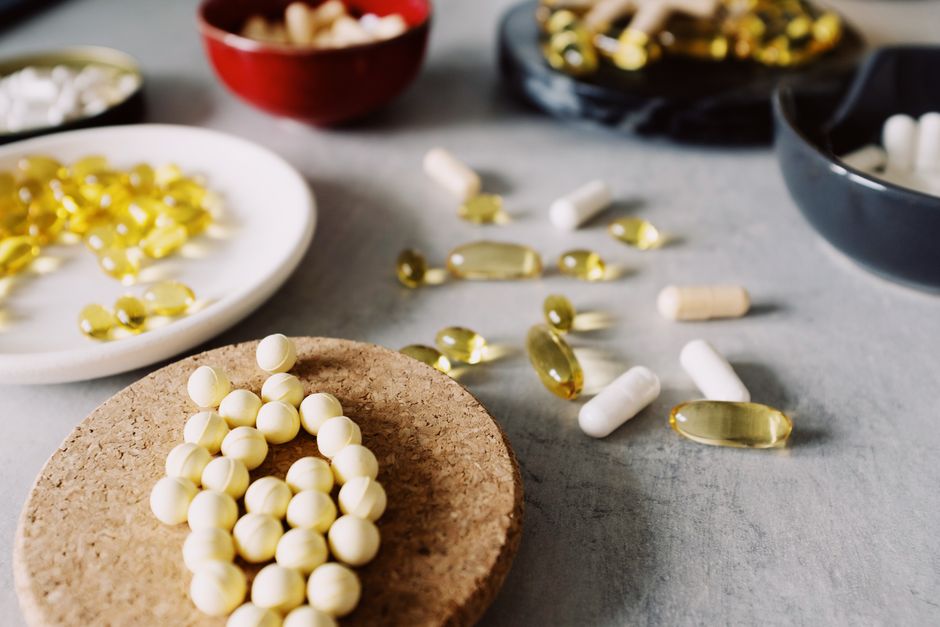
Most people searching for gut health supplements do not need a cabinet full of bottles. The evidence is strongest for a small number of situations: fiber when your diet falls short, probiotics in specific clinical contexts, and targeted replacement when a genuine deficiency exists. For most healthy adults, food comes first — and several popular gut supplements have little or no human evidence behind them.
The honest answer is that no supplement fixes a poor diet, and the gut health market runs far ahead of the science. Below is what research actually supports, what is promising but unproven, and what is mostly marketing.
What Supplements Should You Take For Gut Health?
For most adults, the best-supported approach is dietary fiber first, then a probiotic only if you have a specific reason for one. Fiber is the one gut supplement with broad, consistent evidence behind it.
Fiber feeds the bacteria in your colon. Those bacteria ferment it and produce short-chain fatty acids, mainly butyrate, which nourish the cells lining your gut and help regulate inflammation. This is well-established physiology, not a marketing claim.
Most Americans get well below the recommended fiber intake. General guidance is roughly 25 to 30 grams a day for adults, though needs vary by age and sex. Food sources — beans, lentils, oats, whole grains, vegetables, fruit, nuts — deliver fiber plus vitamins, minerals, and plant compounds a powder cannot replicate.
A fiber supplement makes sense when your diet genuinely falls short. Options include psyllium husk, which has the most research behind it, and soluble fibers like inulin and wheat dextrin. Start low. Increasing fiber quickly can cause gas and bloating before your gut bacteria adjust.
Do Probiotics Actually Help Gut Health?
Probiotics help in some specific situations and do surprisingly little in others. The evidence is strain-specific and condition-specific — not a general “good for gut health” effect.
Probiotics are live microorganisms. “Probiotic” is not one thing; it covers hundreds of different strains with different effects. A strain that helps one condition may do nothing for another. This is why sweeping claims about probiotics are hard to support.
Where evidence is reasonably strong:
- Certain strains help reduce antibiotic-associated diarrhea, a common side effect of antibiotics.
- Some probiotics show benefit for symptoms of irritable bowel syndrome, though results vary by strain and by person.
- Specific strains are used in some clinical settings for infectious diarrhea.
Where the evidence is weaker or mixed: general “gut health” in healthy people, weight management, and most marketing-driven claims. Some studies suggest probiotics can help certain people, but results are inconsistent, and healthy adults with a varied diet may see little measurable change.
One clarification worth knowing: probiotics are transient. Most do not permanently colonize your gut. They may influence your gut while you take them, and effects often fade when you stop. That does not make them useless — it just means they are not a permanent fix.
What About Prebiotics and Fermented Foods?
Prebiotics are the fuel; probiotics are the living bacteria. Prebiotics are types of fiber your gut bacteria ferment, and they occur naturally in foods like garlic, onions, bananas, oats, and legumes.
Prebiotic supplements exist, but the evidence for them as standalone products is more limited than the evidence for fiber-rich foods. Some people — especially those with irritable bowel syndrome — find prebiotic fibers like inulin trigger gas and discomfort. If that happens, food-based fiber is often gentler.
Fermented foods are not technically supplements, but they are worth mentioning. Some research suggests regular intake of fermented foods like yogurt, kefir, and sauerkraut may support gut bacterial diversity. The evidence is promising but not definitive, and not all fermented foods contain live cultures — check labels.
Which Supplements Have Weak or No Evidence for Gut Health?
Several popular gut supplements have little or no human evidence behind them. It is worth knowing which ones before you spend money.
- Collagen for gut lining. Marketing often claims collagen “heals” the gut lining. No large human trials confirm this. Your body breaks collagen down into amino acids before absorbing it.
- Glutamine for general gut health. Glutamine is an amino acid your gut cells use, and it has legitimate medical uses in specific clinical settings. For everyday gut health in healthy people, the evidence is limited.
- Digestive enzyme blends for general use. These have a role in specific conditions like exocrine pancreatic insufficiency, which is a medical diagnosis. For general bloating or “poor digestion,” evidence is weak.
- Detox and “gut cleanse” products. No clinical evidence supports the idea that these cleanse or reset your gut. Some contain strong laxatives that can cause problems with regular use.
The pattern here is biological plausibility without demonstrated clinical benefit. A supplement can make sense on paper and still fail to help real people in real trials. That gap matters.
Should You Take Supplements If You Have a Gut Condition?
If you have a diagnosed gut condition, supplement decisions belong with your doctor. Self-treating a condition like inflammatory bowel disease, celiac disease, or irritable bowel syndrome with supplements can delay effective treatment.
Some situations where a clinician may recommend specific supplements:
- Vitamin and mineral deficiencies. Gut conditions that impair absorption — celiac disease, inflammatory bowel disease, after certain surgeries — can lead to deficiencies in iron, vitamin B12, vitamin D, or others. These are identified by testing and treated specifically.
- Post-antibiotic recovery. Some clinicians recommend a probiotic after a course of antibiotics, though evidence varies by strain and situation.
- Fiber for constipation. Fiber supplements are commonly recommended, though the type and dose should match the person.
This is where testing matters. A deficiency confirmed by a blood test is a clear reason to supplement. Guessing at deficiencies and taking a handful of products is not the same thing.
How Should You Choose a Gut Health Supplement?
Choose based on a specific reason, not a general hope. If you cannot name what a supplement is supposed to do for you and why, it is probably not worth buying.
Practical points:
- Match the strain to the purpose. For probiotics, look for the specific genus, species, and strain on the label. “Probiotic blend” tells you little.
- Check the CFU count at time of use. Colony-forming units tell you how many live organisms are present. Counts on the label at manufacture may not reflect what is alive when you take it.
- Look for third-party testing. Supplements are not pre-approved for safety and effectiveness the way drugs are. Independent testing seals indicate a product was checked for purity and label accuracy.
- Be skeptical of “gut reset” and “cleanse” language. These terms are marketing, not medical.
- Start one at a time. If you add several products at once and feel unwell, you will not know which caused it.
Supplements can interact with medications and are not risk-free for everyone. People who are pregnant, breastfeeding, immunocompromised, or managing a serious illness should talk to a clinician before starting anything — including probiotics, which carry rare but real infection risk in severely immunocompromised people.
The Bottom Line on Gut Supplements
Fiber is the supplement with the broadest evidence, and food is the best source of it. Probiotics have real but narrow uses, mostly tied to specific conditions and strains. Prebiotics are better obtained from food for most people. Several popular products — collagen, general glutamine, enzyme blends, cleanses — lack human evidence for everyday gut health.
If you have persistent gut symptoms — pain, blood in stool, unexplained weight loss, lasting changes in bowel habits — see a doctor rather than experimenting with supplements. Those symptoms can signal conditions that need diagnosis, not a powder.
Frequently Asked Questions
What is the best supplement for gut health?
Fiber has the broadest evidence, especially psyllium husk, and food remains the preferred source. Probiotics help in specific situations but are not a general fix.
Do probiotics really work for gut health?
They work for some specific conditions, such as reducing antibiotic-associated diarrhea and easing some irritable bowel syndrome symptoms. Evidence for general gut health in healthy people is mixed and strain-dependent.
Can I take a probiotic every day?
Daily use is generally considered safe for healthy adults, though benefits vary and effects often fade when you stop. People who are immunocompromised should check with a doctor first because of rare infection risk.
Do I need supplements if I eat a healthy diet?
Most healthy adults who eat a varied, fiber-rich diet do not need gut supplements. A supplement makes sense mainly when a specific gap or deficiency is identified.
