
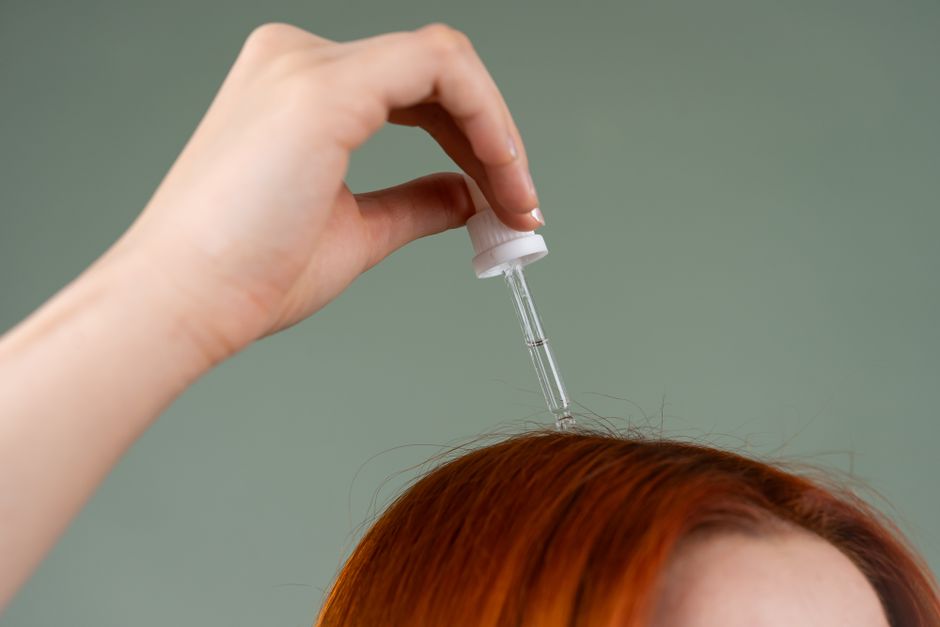
Hair is one of the few tissues in the body that grows continuously and then sheds on a schedule. Each strand cycles through growth, transition, and rest phases for years before falling out. What strengthens hair comes down to three things: enough of the nutrients that build the shaft, gentle handling that limits physical breakage, and habits that keep the scalp and follicles healthy. No single oil or supplement fixes hair on its own, but the right combination supports the biology that is already happening.
How Does Hair Actually Get Its Strength?
Hair is mostly protein. Specifically, it is built from a protein called keratin, packed into a tightly bonded structure. That structure is what gives hair its tensile strength — its ability to stretch before it snaps.
The visible part of the hair, the shaft, is already dead tissue. Once it emerges from the follicle, it cannot repair itself. This is why strengthening hair is really about two separate goals: supporting the follicle so new hair grows in strong, and protecting the existing shaft from damage it cannot undo.
Two chemical bonds matter most for strength. Disulfide bonds create the cross-links that hold keratin fibers together. Hydrogen bonds let hair temporarily change shape when wet. Heat, chemicals, and rough handling break these bonds. Some damage is reversible with water and careful drying. Some is permanent.
A strand of healthy hair can stretch roughly 30 percent of its length before breaking. That number drops sharply after bleaching, repeated heat styling, or chemical straightening. The goal of any hair-strengthening routine is to stop that number from falling.
Which Nutrients Actually Support Hair Growth?
Nutritional deficiencies can disrupt the hair growth cycle, and correcting a real deficiency can restore normal growth. The catch is that taking nutrients you already have enough of does not make hair grow faster or stronger. This is one of the most misunderstood points in the entire hair supplement market.
Several nutrients have solid roles in hair biology:
- Protein — hair is made of it. Very low protein intake can push hair into a shedding phase.
- Iron — needed for the follicle’s energy metabolism. Low iron stores are linked to shedding, particularly in menstruating women.
- Zinc — involved in hair tissue growth and repair. Deficiency is associated with hair loss.
- Biotin — a B vitamin involved in keratin production. Deficiency causes hair loss, but deficiency is rare in people eating a normal diet.
- Vitamin D — low levels have been associated with several forms of hair loss, though whether raising levels reverses the loss is not firmly established.
- Vitamin A and vitamin E — both involved in cell turnover and antioxidant defense, but excess intake of either has been linked to hair problems, not improvement.
The honest position on supplements is this: if you are deficient, correcting it helps. If you are not deficient, the evidence that extra nutrients strengthen hair is weak. A 2021 review of the supplement evidence found that most products marketed for hair contain ingredients with limited or no supporting data in people who are not deficient.
Biotin deserves a specific warning. The FDA has flagged that high-dose biotin can interfere with certain lab tests, including thyroid and cardiac tests, producing falsely abnormal results. That is a real safety issue, not a theoretical one.
Do Oils Strengthen Hair or Just Coat It?
Oils can reduce breakage. They do not repair hair from the inside, and they do not make hair grow faster. Understanding the difference prevents a lot of wasted money.
Here is what oils can realistically do:
- Reduce friction — a light coating lowers the friction between strands, so combing causes less mechanical damage.
- Slow moisture loss — some oils form a partial barrier that keeps water inside the shaft longer.
- Fill gaps in the outer layer — certain oils, particularly coconut oil, can penetrate the hair shaft to a degree and reduce protein loss during washing.
Coconut oil has the most research behind it for reducing protein loss from damaged hair. That is a specific, measurable effect. It is not the same as “repairing” hair.
Other commonly used oils — argan, jojoba, olive, castor — are popular and can improve how hair feels and handles. Castor oil in particular is widely promoted for growth, but the evidence that it speeds growth in humans is essentially absent. No well-designed human trial has confirmed it.
One point often missed: oils do not hydrate hair. Water hydrates hair. Oils help seal water in after washing. Applying oil to dry, brittle hair without any water underneath mainly adds surface shine.




What Habits Cause the Most Hair Damage?
Physical and chemical damage accounts for a large share of what people perceive as weak hair. This is the area where changes produce the fastest visible results, because you are stopping ongoing harm rather than waiting on biology.
The biggest offenders:
- Heat styling — flat irons and curling irons at high heat break the bonds inside the shaft. Frequent use at high temperatures causes cumulative, permanent damage.
- Bleaching and repeated coloring — these chemically break the structure of the hair and cannot be reversed.
- Chemical straightening — permanently alters the disulfide bonds that give hair its strength.
- Wet combing — hair is more fragile when wet and stretches more easily. Rough combing on wet hair causes breakage.
- Tight hairstyles — constant tension can damage the follicle over time, a condition called traction alopecia.
- Back-to-back washing with harsh shampoos — strips oils and leaves hair drier and more prone to snapping.
Lowering heat settings, letting hair partly air-dry before styling, using a wide-tooth comb on damp hair, and giving hair a break from tight styles all reduce breakage. These are not glamorous, but they work.
Can Stress and Health Conditions Weaken Hair?
Yes, and this is often overlooked when people focus only on products. The hair follicle is sensitive to what is happening elsewhere in the body.
Significant physical or emotional stress can push a large number of follicles into a resting phase at once. A few months later, those hairs shed together. This pattern is called telogen effluvium. It is usually temporary, and regrowth typically follows once the trigger resolves. The delay between the trigger and the shedding is why people often cannot connect the two.
Other conditions that affect hair strength and growth include:
- Thyroid disorders, both underactive and overactive
- Iron deficiency, even without anemia
- Polycystic ovary syndrome and other hormonal imbalances
- Autoimmune conditions that target the follicle
- Certain medications, including some used for cancer treatment, blood pressure, and depression
If hair loss is sudden, patchy, or accompanied by scalp inflammation, that warrants a medical evaluation rather than a new shampoo. A doctor can check for the conditions above with blood tests and a scalp exam.
One clarification worth making: male and female pattern hair loss is driven largely by genetics and hormones, not by nutrient deficiency or poor hair care. No oil or supplement reverses it. Treatments exist, but they are medical, and they work differently than anything sold as a “strengthening” product.
What Strengthens Hair Nutrients Oils And Habits That Work Together?
The realistic approach combines all three, and none of them works in isolation.
Start with the foundation. Eat enough protein. Get iron, zinc, and vitamin D checked if you have unexplained shedding. Do not take high-dose biotin without a reason, and tell any doctor ordering lab tests if you do.
Then reduce damage. Lower heat. Space out chemical treatments. Comb gently. Give tight styles a rest. This is where most people see the fastest change, because breakage stops immediately.
Use oils for what they do well — reducing friction and slowing moisture loss. Apply them to damp hair after washing. Expect better handling and less snapping, not faster growth.
Finally, treat hair as a health signal. Sudden or persistent changes deserve a medical look, not another product. Hair grows slowly, and real change takes months, not days. Anyone promising fast results is selling something the biology does not support.
Frequently Asked Questions
Does biotin actually strengthen hair?
Biotin only helps hair if you are genuinely deficient, which is rare in people eating a normal diet. High-dose biotin can also interfere with certain lab tests, so it is worth discussing with a doctor before taking it.
Can coconut oil repair damaged hair?
Coconut oil can reduce protein loss from hair during washing and lower friction that causes breakage. It does not repair hair from the inside, and it cannot reverse damage from bleach or heat.
How long does it take to see stronger hair?
Hair grows slowly, so visible changes usually take several months, not weeks. Reducing breakage from heat and rough handling can show results sooner than nutrient changes.
Is hair loss always caused by a nutrient deficiency?
No. Many cases are driven by genetics, hormones, thyroid problems, stress, or medications rather than diet. Sudden or patchy loss should be evaluated by a doctor rather than treated with supplements.
