
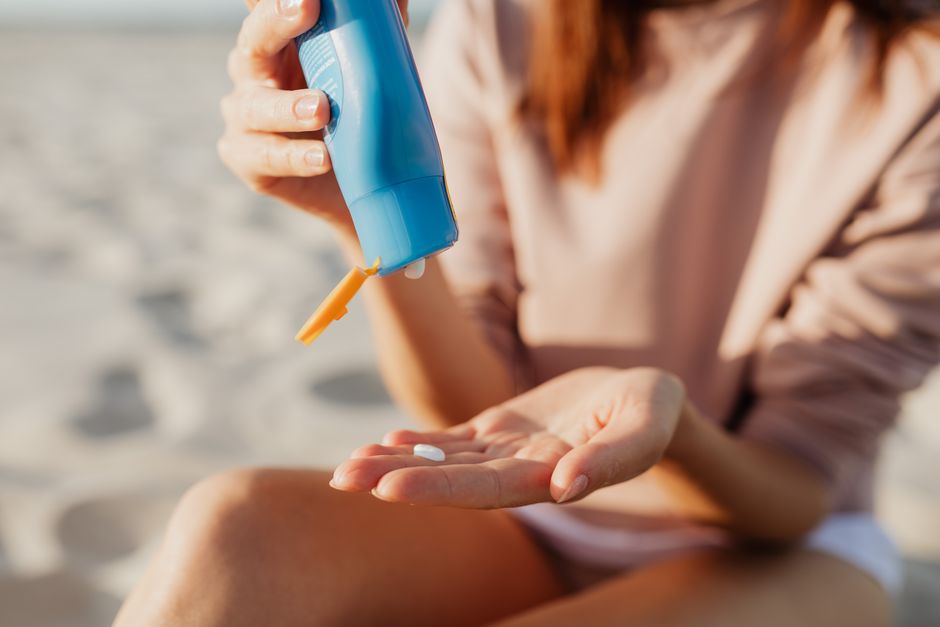
For everyday use, most dermatology and public health guidance points to SPF 30 as the practical minimum. SPF 30 blocks about 97% of UVB rays when applied correctly. Higher SPF adds some extra protection, but the difference between SPF 30 and SPF 50 is smaller than most people assume. How much you apply and how often you reapply matters more than chasing the highest number on the bottle.
What Does the SPF Number Actually Mean?
SPF stands for Sun Protection Factor. It measures how well a sunscreen protects against UVB rays, the ones that cause sunburn and play a major role in skin cancer.
The number is a ratio, not a percentage you can read directly. An SPF 30 sunscreen means skin protected with it takes about 30 times longer to burn than unprotected skin under the same conditions. SPF 15 gives roughly 15 times the protection, and so on.
Here is the part many people get wrong. The jump from no sunscreen to SPF 15 is huge. The jump from SPF 30 to SPF 50 is modest. When applied at the tested amount, SPF 30 blocks about 97% of UVB rays. SPF 50 blocks about 98%. SPF 100 blocks roughly 99%. That is a real difference, but it is not the doubling that the numbers suggest.
One more thing the SPF number does not tell you: anything about UVA rays. UVA penetrates deeper into skin, contributes to aging, and is linked to skin cancer too. In the US, look for the words “broad spectrum” on the label. That is the marker that a product meets a standard for UVA protection as well as UVB.
What SPF Sunscreen Do You Need for Everyday Use?
SPF 30 broad spectrum is the sensible default for daily life. That covers a commute, errands, a walk at lunch, and time near windows.
The American Academy of Dermatology recommends broad-spectrum sunscreen with SPF 30 or higher for general use. That is a widely cited position and reflects the consensus across dermatology and public health groups. SPF 30 is also the minimum many regulatory bodies require before a product can claim meaningful sun protection.
For most people, an SPF 30 you will actually wear every day beats an SPF 70 that sits in a drawer. Texture, feel, and whether it stings your eyes matter more than the last few points of SPF. Pick a formula you do not mind putting on. Consistency is where the real protection comes from.
If you have fair skin, a history of skin cancer, or a condition that makes you sun-sensitive, a higher SPF can be a reasonable choice. It adds a margin of error for the fact that almost everyone under-applies.
When Do You Need a Higher SPF?
Higher SPF earns its place in specific situations: long outdoor exposure, high altitude, reflective surfaces like water and snow, and intense midday sun.
Reflection is the reason. Snow can reflect a large share of UV radiation back at you, and water and sand reflect too. At altitude, there is less atmosphere to filter UV. In these settings, SPF 50 or above gives extra room for the reality that sunscreen wears off, sweats off, and gets applied unevenly.
There is a catch with very high SPF products. People tend to feel overprotected and stay out longer or reapply less. The number can create false confidence. A high SPF does not last longer on your skin. It still needs reapplying on the same schedule as a lower one.
For children and infants, follow pediatric and regulatory guidance rather than reasoning from adult products. Sunscreen is generally not recommended for infants under 6 months, and shade and protective clothing are the preferred approach at that age. Ask a pediatrician about the right product for an older baby or child.
How Much Sunscreen Should You Apply?
Most people apply far less than the amount sunscreens are tested with, which means the SPF on the label is not the protection they actually get. Applying too little can drop real-world protection well below the number on the bottle.
The commonly cited guide for the body is about one ounce, roughly a full shot glass, to cover exposed skin. For the face and neck, a common approach is about a nickel-sized amount, though this varies with face size and product. These are practical estimates, not precise measurements.
Reapplication matters just as much. Sunscreen should be reapplied at least every two hours during sun exposure, and sooner after swimming, heavy sweating, or toweling off. No sunscreen is truly waterproof. Labels that once said “waterproof” now say “water resistant,” and that resistance has a time limit stated on the label.
Here is a point that often gets missed: UV exposure happens on cloudy days and through windows. Up to a large share of UVA passes through glass, which is why daily sunscreen makes sense even for people who work indoors near a window.
Does Higher SPF Mean Better Protection?
Higher SPF does mean more protection, but with diminishing returns. The gains shrink as the number climbs, and the practical benefit depends heavily on correct use.
| SPF | Approximate UVB blocked |
|---|---|
| 15 | About 93% |
| 30 | About 97% |
| 50 | About 98% |
| 100 | About 99% |
These figures assume the sunscreen is applied at the tested amount, which is more than most people use. In real life, the gap between products can narrow or widen depending on application.
The honest summary: moving from SPF 15 to SPF 30 is a meaningful step. Moving from SPF 30 to SPF 50 is a smaller one. Moving beyond SPF 50 buys very little extra UVB protection and is not a substitute for reapplying.
What Else Matters Besides the SPF Number?
Broad-spectrum coverage, water resistance, and consistent use matter as much as the SPF value. A sunscreen can carry a high SPF and still leave you exposed to UVA if it is not broad spectrum.
- Broad spectrum: confirms UVA protection alongside UVB.
- Water resistant: check the time limit on the label if you swim or sweat.
- Expiration date: sunscreen loses effectiveness over time.
- Storage: heat and direct sun can degrade a product, so do not leave it in a hot car.
Two main types exist. Mineral sunscreens use zinc oxide or titanium dioxide and sit on the skin’s surface. Chemical sunscreens absorb UV and convert it to heat. Both can work well. The best one is the one that suits your skin and that you will use consistently.
Sunscreen is one layer of protection, not the whole strategy. Shade, timing, hats, and protective clothing reduce exposure before sunscreen has to do the work. No sunscreen blocks 100% of UV, so reducing direct exposure still matters.
Frequently Asked Questions
Is SPF 50 much better than SPF 30?
SPF 50 blocks only slightly more UVB than SPF 30, about 98% versus 97% when applied correctly. The bigger factor is applying enough and reapplying every two hours.
Can I use SPF 15 for everyday wear?
SPF 15 offers some protection but falls below the SPF 30 minimum most dermatology guidance recommends for daily use. If you spend time outdoors or near windows, SPF 30 broad spectrum is the safer default.
Do I need to reapply sunscreen if it has a high SPF?
Yes. A higher SPF does not last longer on your skin. Reapply at least every two hours during sun exposure, and sooner after swimming or heavy sweating.
Does SPF protect against UVA rays?
The SPF number only reflects UVB protection. To cover UVA, choose a product labeled broad spectrum.
