
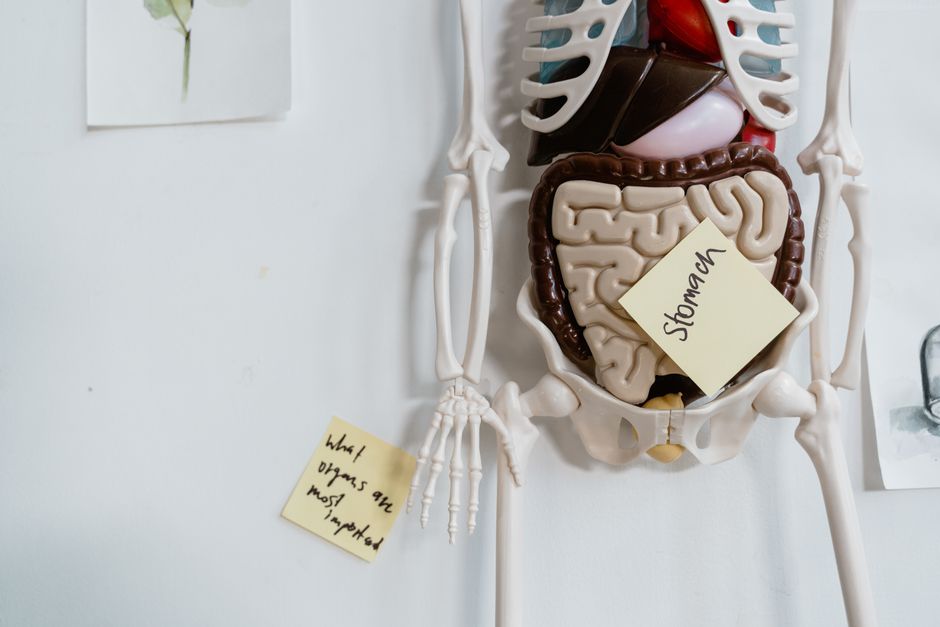
If you have ever felt bloated after a meal, you have probably wondered which way to turn. The left side is the best side to lay on for digestion. Lying on your left side uses gravity to help food move more smoothly through your stomach and into the small intestine. This position also keeps the junction between your stomach and esophagus above the level of stomach acid, which can reduce heartburn symptoms.
Why Does the Left Side Help Digestion?
The answer comes down to anatomy. Your stomach is a curved, J-shaped organ that sits mostly on the left side of your abdomen. The outlet of the stomach, called the pylorus, is on the right side of the belly.
When you lie on your left side, the stomach’s contents settle in the lower part of the organ. This positions the pylorus higher than the liquid and food inside the stomach. Gravity then assists the movement of partially digested food into the small intestine. It is a simple mechanical advantage that does not require any special effort from your body.
Lying on your right side does the opposite. The stomach contents pool over the pylorus, which can slow the release of food into the intestines. This is not dangerous, but it can make you feel fuller and more uncomfortable after a large meal.
What the Research Actually Shows
Clinical studies on sleep position and digestion have focused mainly on acid reflux, not general digestion speed. Research published in the Journal of Clinical Gastroenterology found that lying on the right side significantly increases the amount of time stomach acid stays in contact with the esophagus.
The same study showed that left-side lying reduced acid exposure compared to both right-side and back positions. This is why many gastroenterologists recommend left-side sleeping for patients with gastroesophageal reflux disease, or GERD.
For general digestion, the evidence is more limited. Some studies suggest that left-side positioning may help the stomach empty faster, but large human trials have not confirmed this with certainty. The physiological reasoning is sound, but the clinical data is not as strong as the data for acid reflux.
Is the Right Side Ever Better?
There are a few situations where the right side may be preferable. If you have had gallbladder surgery or have issues with your pancreas, the right side might feel more comfortable. This is because these organs sit on the right side of the body, and some people report less pressure in that position.
Pregnant women often find left-side lying most comfortable and safest for blood flow. This is a separate issue from digestion, but it is worth noting that the left side remains the recommended choice for most pregnant women.
For people with delayed stomach emptying, a condition called gastroparesis, the evidence is mixed. Some clinicians recommend left-side lying after meals, but no strong clinical guidelines currently exist for this specific condition. If you have gastroparesis, talk to your doctor about what position works best for your symptoms.





How Long Should You Stay on Your Left Side?
There is no official guideline for how long to lie on your left side after eating. Most digestive experts suggest staying in this position for 10 to 15 minutes after a meal if you want to aid digestion. This gives the stomach time to begin moving food into the small intestine.
If you are lying down to sleep, staying on your left side for the entire night is not necessary. Your body naturally shifts positions during sleep, and that is fine. The benefit comes from starting in the left-side position, especially after a heavy meal.
One important note: lying down immediately after eating is never ideal, regardless of which side you choose. Gravity works best when you are upright. If you can stay seated or standing for at least 30 minutes after a meal, your digestion will benefit more than any sleeping position can provide.
What About Sleeping on Your Back or Stomach?
Sleeping on your back is generally neutral for digestion, but it can worsen acid reflux. In this position, your stomach and esophagus are level with each other. This makes it easier for acid to flow backward, especially if your lower esophageal sphincter is weak.
Sleeping on your stomach is the least helpful for digestion. This position puts pressure on your abdominal organs and can make bloating feel worse. It also forces your neck into an awkward angle, which can cause neck and shoulder pain that disturbs sleep quality.
If you cannot tolerate left-side lying, your next best option is back sleeping with your head elevated. Raising the head of your bed by 6 to 8 inches can reduce acid reflux significantly. This is an established clinical recommendation for people with nighttime heartburn.
Does This Help with Bloating and Gas?
Left-side lying can help with gas and bloating, but the effect is modest. The same anatomical reasoning applies: gas bubbles in the stomach can move toward the pylorus more easily when you are on your left side. This may help you pass gas more comfortably.
However, most bloating occurs in the intestines, not the stomach. Intestinal gas takes hours to move through the digestive tract, and changing your position for a few minutes will not speed that process significantly. If you are dealing with frequent bloating, dietary changes and regular movement are more effective than sleep position.
Walking after meals is one of the most evidence-supported ways to reduce bloating. A gentle 10-minute walk stimulates intestinal activity and helps gas move through your system. This is more effective than any lying position.
What Side Is Best to Lay on for Digestion at Night?
For nighttime, the left side remains the best choice. This is especially true if you eat within three hours of going to bed. The left-side position reduces acid reflux and helps your stomach empty more efficiently while you sleep.
If you wake up with a sour taste in your mouth or a burning sensation in your chest, your current sleep position may be contributing to the problem. Switching to the left side is a simple change that many people notice helps within a few nights.
You can make left-side sleeping more comfortable by placing a pillow between your knees. This keeps your hips aligned and reduces lower back strain. A body pillow can also help you stay in position if you tend to roll over during the night.
When Should You See a Doctor?
Sleep position is not a treatment for digestive disease. If you experience frequent heartburn, regurgitation, or abdominal pain, see a healthcare provider. These symptoms can indicate GERD, a hiatal hernia, or other conditions that require proper evaluation.
Occasional bloating or fullness after a large meal is normal. But if you have persistent digestive symptoms more than twice a week, do not rely on sleep position alone. A doctor can determine whether you need medication, dietary changes, or further testing.
Left-side lying is a useful habit, not a cure. It works best as part of a broader approach that includes eating smaller meals, avoiding late-night eating, and staying active during the day.
Frequently Asked Questions
Is it bad to sleep on your right side after eating?
It is not bad, but it is less helpful than the left side. Right-side lying can slow stomach emptying and increase acid reflux symptoms in some people.
How long should I wait to lie down after eating?
Most experts recommend waiting at least 30 minutes before lying down. Waiting three hours before bed is best for people prone to nighttime heartburn.
Does sleeping on your left side help you lose weight?
No. There is no evidence that sleep position affects weight loss. Digestion position may improve comfort, but it does not change how many calories you absorb.
Can left-side sleeping help with nausea?
It may help if your nausea is related to slow stomach emptying. The left-side position assists gravity in moving stomach contents forward, which can reduce that full, queasy feeling.
