
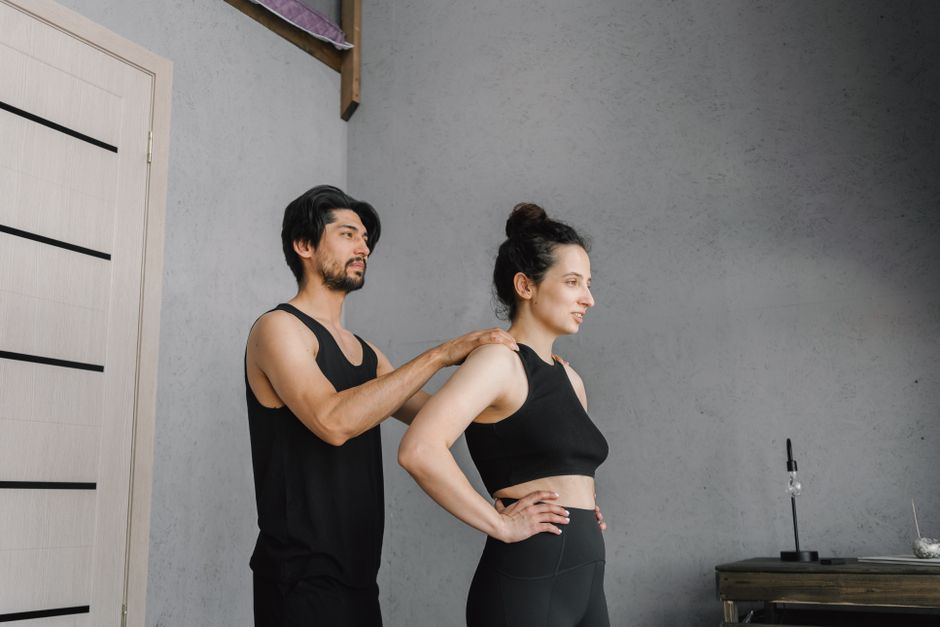
Dextroscoliosis is a spinal curve that bends to the right. If you have this condition, the main things to avoid are heavy lifting, high-impact sports, and prolonged slouching. You should also avoid exercises that twist the spine forcefully, like certain golf swings or yoga poses done incorrectly. The goal is to protect your spine from added stress while staying active in ways that support your posture and core strength.
What Exactly Is Dextroscoliosis?
Dextroscoliosis is a type of scoliosis where the spine curves to the right side of the body. The curve most often appears in the thoracic spine, which is the middle section of your back. It can also occur in the lumbar spine, the lower back, but that is less common.
The curve can be mild or severe. A mild curve might not cause any symptoms at all. A more significant curve can cause uneven shoulders, a prominent shoulder blade, or one hip higher than the other. Some people experience back pain, but many do not.
Doctors measure the curve using an angle called the Cobb angle. A curve is generally considered significant when it measures 10 degrees or more. Curves under 25 degrees are often just monitored. Curves between 25 and 45 degrees might be treated with bracing, especially in growing children. Surgery is usually considered only for curves over 45 to 50 degrees.
What Movements and Activities Should You Avoid?
The activities you should avoid depend on the size of your curve and whether you have symptoms. There is no single list that fits everyone. But some general principles apply to most people with dextroscoliosis.
Heavy lifting puts compressive force on the spine. This can worsen pain if you already have it. If you need to lift something heavy, use your legs and keep the object close to your body. Avoid lifting while twisting, as this combines compression with rotational stress.
High-impact activities like running on hard surfaces, jumping, or contact sports can jar the spine. This is not necessarily harmful for everyone. Some people with mild curves run marathons without issue. But if you experience pain during or after these activities, they are probably not a good choice for you.
Forceful twisting movements are generally the most problematic. Sports like golf, tennis, and baseball involve repeated rotational loading of the spine. This does not mean you cannot play these sports. It means you should pay attention to your form and stop if you feel pain.
Which Exercises Should You Skip or Modify?
Exercise is generally beneficial for people with scoliosis. Strong core muscles support the spine. But some exercises can do more harm than good if performed incorrectly.
Avoid unsupported forward bends like touching your toes from a standing position. This stretches the hamstrings but also puts the spine in a flexed position under gravity. A seated hamstring stretch is a safer alternative.
Be careful with backbends like the cobra pose in yoga. These can compress the facet joints in the spine. If you enjoy yoga, work with an instructor who knows about scoliosis and can offer modifications.
Sit-ups and crunches can be problematic because they repeatedly flex the spine. Planks are a better option for building core strength without spinal flexion. Side planks are especially useful because they engage the oblique muscles, which help stabilize the spine.
Avoid exercises that work one side of the body much more than the other without balancing the opposite side. For example, repeatedly doing single-arm rows with the same arm can create muscle imbalance. This may not directly worsen the curve, but it can contribute to uneven muscle tension.



What Posture Habits Should You Change?
Prolonged sitting is one of the biggest challenges for people with scoliosis. When you sit for hours, the spine settles into whatever position the chair and your habits encourage. If you already have a curve, this can increase stiffness and discomfort.
Avoid slouching for long periods. This does not mean you need to sit perfectly straight all day. That is not realistic. But it does mean you should change positions regularly. Stand up every 30 to 45 minutes, even if just for a minute or two.
Avoid carrying heavy bags on one shoulder all the time. A heavy bag pulls the shoulder down on one side. This adds an uneven load to the spine. If you carry a bag, use a backpack with both straps or switch sides regularly.
Sleeping position matters too. Sleeping on your stomach puts the neck in a rotated position for hours. This can strain the cervical spine. Sleeping on your back or side is generally better. If you sleep on your side, place a pillow between your knees to keep the hips level.
What Should You Do Instead of Avoiding Things?
Focusing only on what to avoid can make you overly cautious. The bigger picture is what you should do to support your spine.
Strengthen your core. The deep abdominal muscles and the muscles along the spine act as a natural brace. A physical therapist can teach you specific exercises that target these muscles without aggravating your curve.
Stay active. Swimming is often recommended for people with scoliosis because the water supports the body and reduces gravitational stress on the spine. Walking is also a safe, low-impact option that most people can do regularly.
Consider scoliosis-specific physical therapy. There are approaches like the Schroth method that use specific exercises to address the curve pattern. Research on these methods is growing, and some studies suggest they can improve posture and reduce pain. The evidence is not strong enough to say they can correct the curve, but they may help with symptoms.
When Should You See a Doctor?
You should see a doctor if you have not had your curve evaluated recently. This is especially important if you notice changes in your posture or if you develop new pain.
Seek medical attention promptly if you experience numbness, weakness, or tingling in your arms or legs. These symptoms can indicate nerve involvement, which is not typical for routine scoliosis. Also seek care if you have bowel or bladder changes, as this can signal a more serious spinal condition.
Most adults with mild dextroscoliosis do not need treatment. Their curve stays stable and does not cause problems. But getting a baseline evaluation is wise. Your doctor can measure your curve and give you personalized advice about activity restrictions.
What Should I Avoid If I Have Dextroscoliosis: Key Facts to Remember
The most important thing to remember is that dextroscoliosis is not a reason to stop moving. It is a reason to move thoughtfully.
What you need to avoid is largely about symptom management. If an activity causes pain, stop doing it. If it does not cause pain, it is probably fine for you. The curve itself does not dictate what you can do. Your symptoms and your doctor’s advice do.
Heavy lifting, high-impact sports, and forceful twisting are the categories most likely to cause problems. But the actual threshold varies from person to person. A powerlifter with a mild curve might continue lifting with proper form. A person with a larger curve and back pain might need to avoid it entirely.
The evidence does not support the idea that specific activities can make the curve worse. No study has shown that a particular exercise or sport increases the degree of curvature in adults. The curve is generally stable after skeletal maturity. What activities can do is increase pain, strain muscles, or cause discomfort. That is the real reason to avoid certain movements.
If you are unsure what is safe for you, ask for a referral to a physical therapist who works with scoliosis patients. They can assess your curve, your strength, and your movement patterns. They can then give you specific guidance that applies to your situation.
Frequently Asked Questions
Can I lift weights with dextroscoliosis?
Yes, many people with dextroscoliosis lift weights safely. Avoid heavy overhead presses and deadlifts that compress the spine, and focus on controlled movements with good form.
Is running bad for dextroscoliosis?
Running is not automatically bad, but high-impact running on hard surfaces can aggravate symptoms in some people. If running causes pain, try lower-impact cardio like swimming or cycling instead.
Can yoga make dextroscoliosis worse?
Yoga itself does not worsen the curve, but certain poses with deep twisting or unsupported forward bending can strain the spine. Work with an instructor who can modify poses for your curve pattern.
Does dextroscoliosis get worse with age?
In most adults, the curve stays stable after growth stops. Some curves can progress slowly in later adulthood, but this is not guaranteed and depends on the curve size and other factors.
